
Testing for Radon

When to Test
- Before Renovating: Test first and include potential mitigation costs in your renovation budget.
- After Renovations: Test again if you’ve added insulation, changed windows, replaced your heating system, or improved air tightness.
- Moving into a New Home: Test during your first heating season.
-
Purchasing a Home:
- Conduct a short-term RADON screening (minimum 4 days) during the transaction for initial insight.
- After moving in, complete a long-term test (91+ days) to confirm if a mitigation system is needed.
Every home can be fixed.
Even if testing wasn’t done before purchase, you can always test and mitigate afterward.
How to Test
- Pick a room on the lowest occupied level (where you spend 4+ hours per day).
- Place the device according to instructions.
- For most single-family homes, duplexes, or apartments, one test is enough.
- For larger homes, consider testing two different areas on the lowest occupied level.
For most single-family homes, duplexes, or apartments, one test is enough.
For larger homes, consider testing two different areas on the lowest occupied level.
Health Canada and C-NRPP provide placement guidelines and list approved devices.
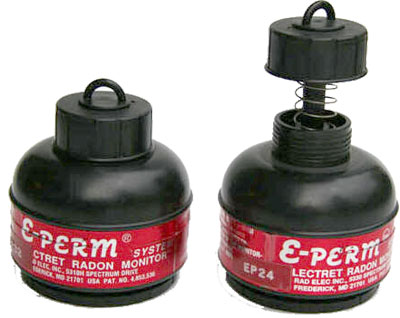
Radon Clean uses E-Perm® professional devices, recognized by C-NRPP.
Types of Tests
Long-Term Test (91+ days):
Measures your annual average RADON level.
Recommended for deciding whether to mitigate.
Short-Term Test (3–90 days):
Used for quick screenings or to check mitigation performance.
Useful after installing a RADON mitigation system (minimum 48 hours test, at least 24 hours after system activation).