Radon Screening for Real Estate Transactions (CARST Guideline)
This CARST guideline outlines how to perform a short-term RADON screening assessment (minimum 4 days) during a real estate transaction. Tests must be conducted by C-NRPP certified professionals using approved devices under closed-house conditions. Results are categorized as Green (≤75 Bq/m³), Yellow (≤400 Bq/m³), or Red (>400 Bq/m³). A long-term follow-up test (≥91 days) is required after purchase. Screening helps buyers and sellers identify potential mitigation costs early. Homes above 200 Bq/m³ should be mitigated by a certified professional following Health Canada and C-NRPP standards.
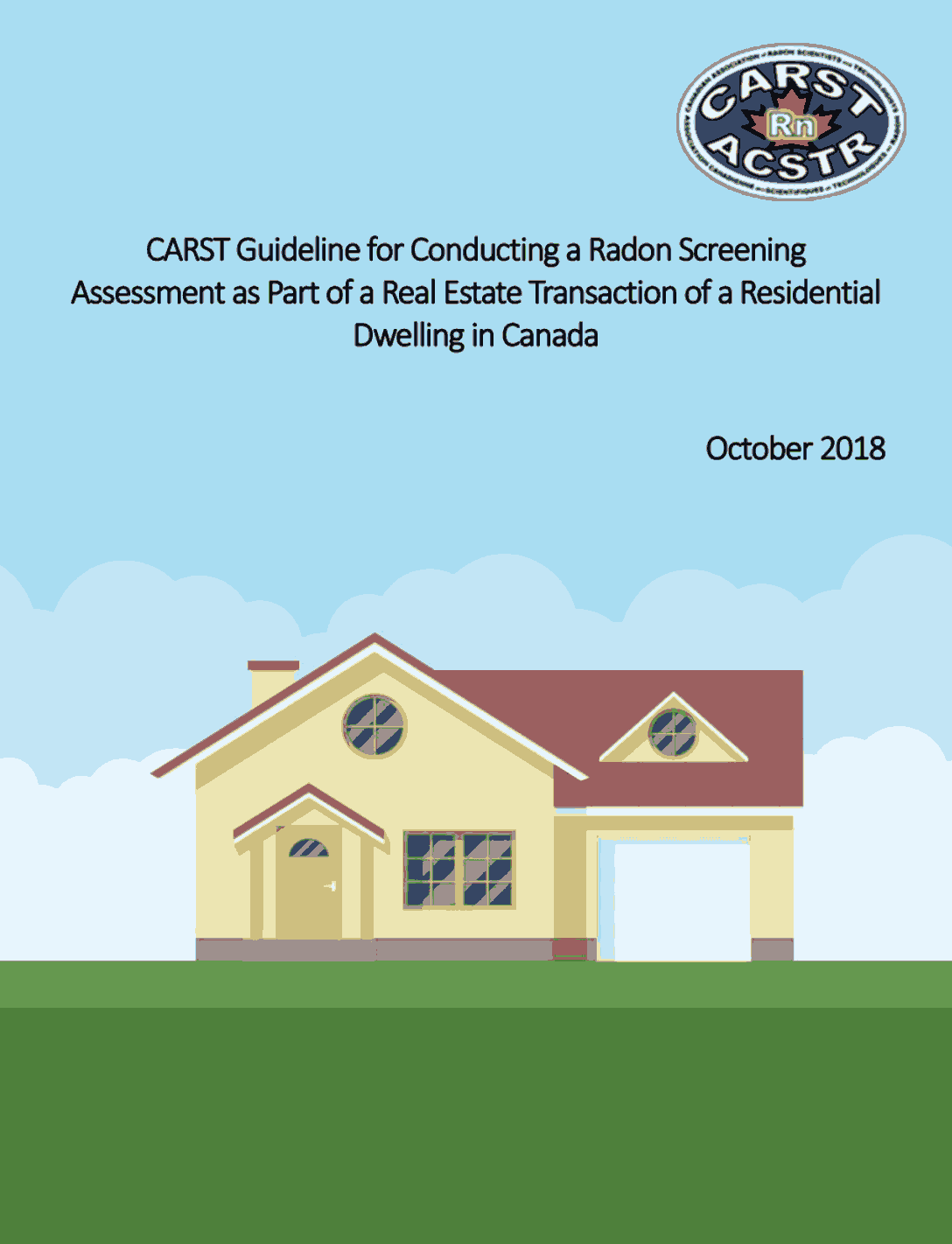
Raising RADON Awareness in Canada
Only 4% of Canadians have tested their homes for RADON, despite it being the second leading cause of lung cancer. The National Building Code includes radon-control rough-ins - such as gravel layers, sealed membranes, sump pits, and rough-in pipes - but these do not fix RADON. Homeowners must still test after occupancy and have a C-NRPP certified professional activate the system if levels exceed 200 Bq/m³. CARST urges updates to the Canadian Labour Code and Residential Tenancies Act to make testing and mitigation mandatory, ensuring every home and workplace is Radon Safe across Canada.
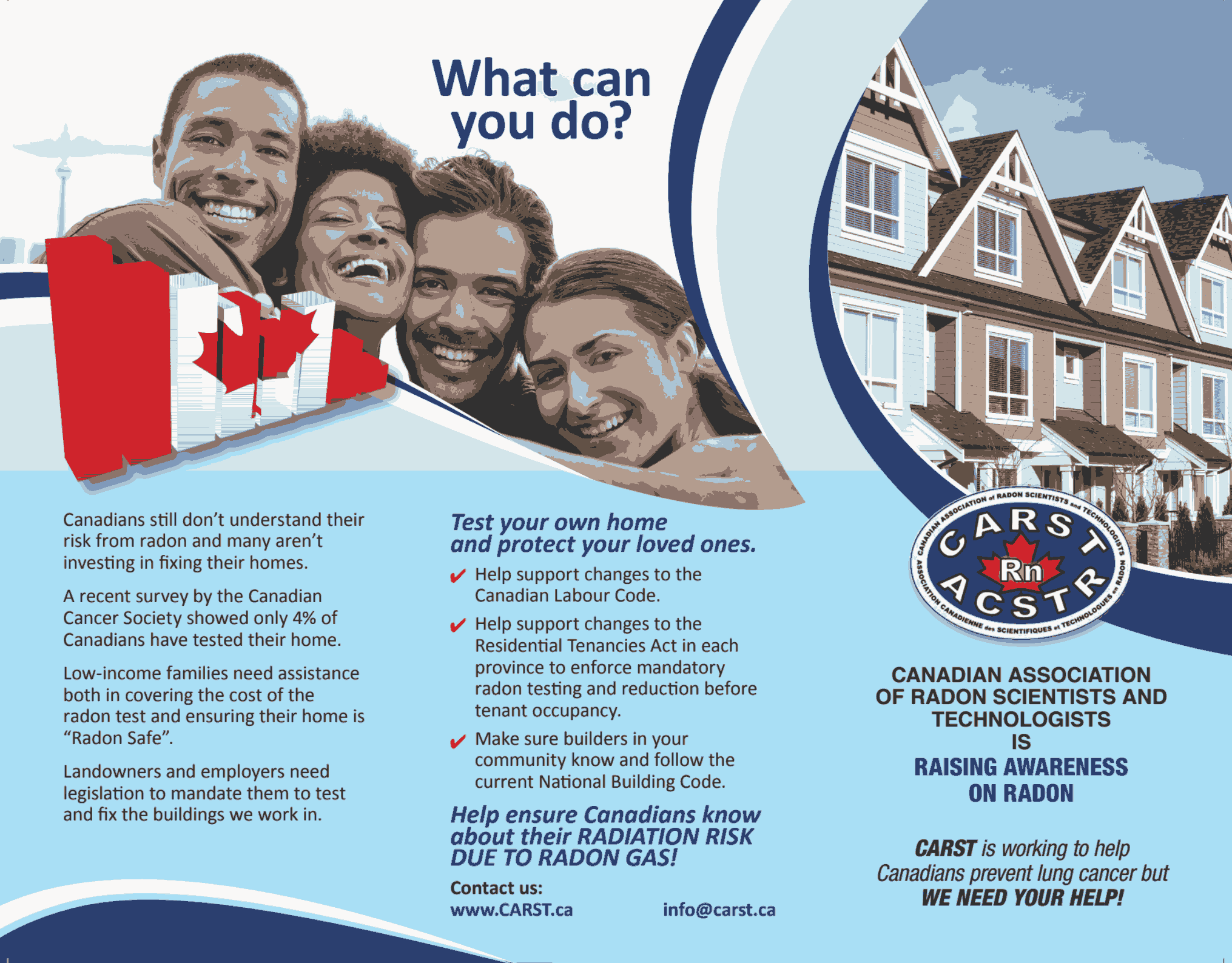
RADON Information for Renters
RADON is a colourless, odourless radioactive gas found in every home across Canada. Long-term exposure increases the risk of lung cancer, the leading cause among non-smokers. Testing is simple and affordable with a DIY kit or through a C-NRPP-certified professional, ideally for 91 days in winter. Homes above 200 Bq/m³ should be fixed within one year. Renters should discuss testing and mitigation with landlords, as laws require safe, habitable housing. Visit CARST.ca or takeactiononradon.ca for testing campaigns, rebates, and guidance on reducing RADON and maintaining a healthy indoor environment.
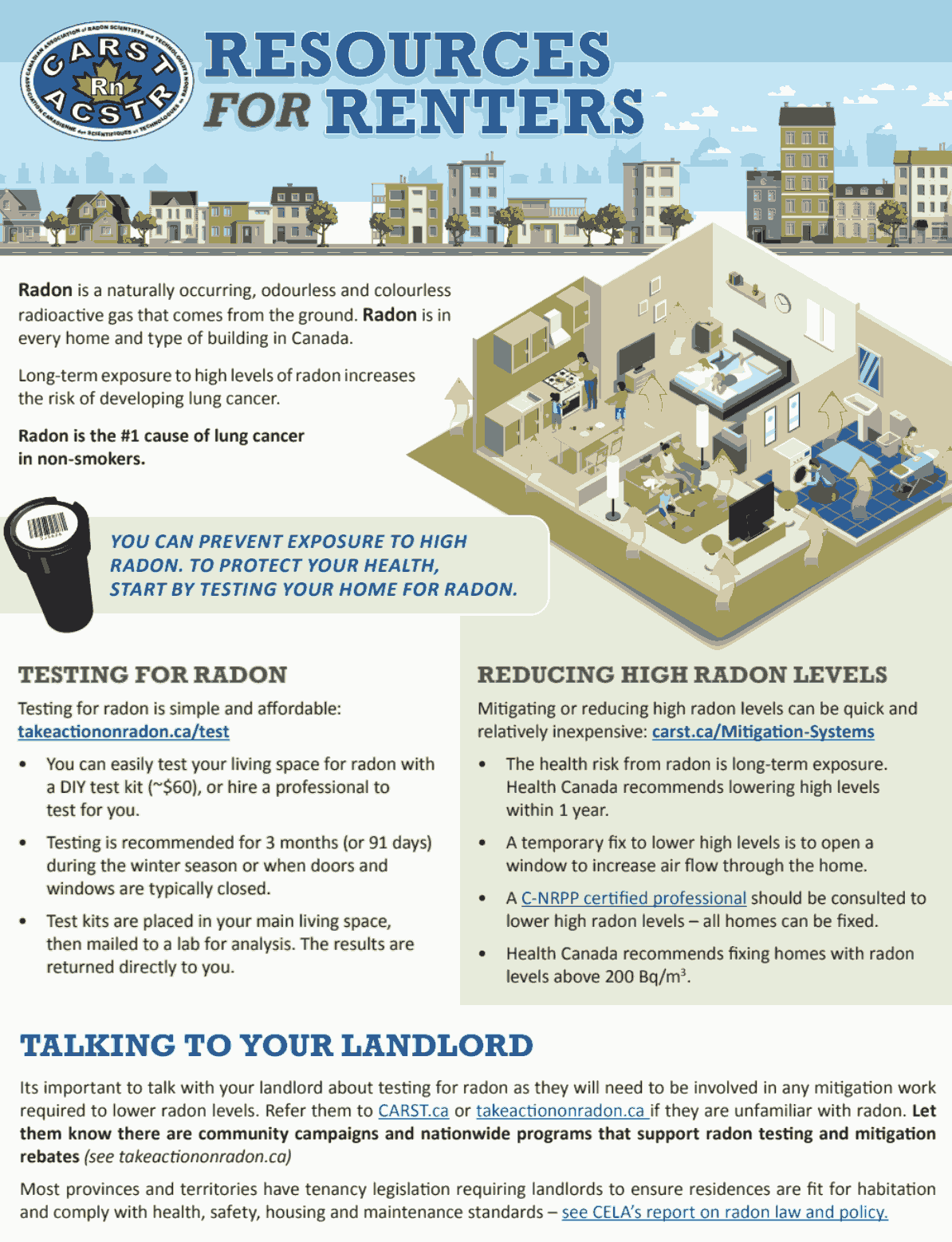
RADON Information for LANDLORD
RADON is an invisible, odourless radioactive gas that enters buildings through cracks in floors, pipes, and walls. Long-term exposure to high levels increases the risk of lung cancer. Testing for radon is simple and affordable using a DIY kit or C-NRPP certified professional. If levels exceed 200 Bq/m³, mitigation should be completed promptly by a certified expert. All homes and commercial buildings in Canada contain some level of radon - testing is the only way to know if it’s too high. Landlords should test rental properties to ensure safe, healthy living spaces and reduce liability.