2018 National Radon Awareness Survey
A nationwide survey of 1,900 Canadians found that 64% were aware of radon, though only 6% had tested their homes. Awareness and knowledge improved since 2013, but many still view radon as difficult to remove. The main barriers to testing are lack of information and the belief that radon poses little personal risk. Most respondents said they would test or mitigate if aware of high levels, especially if radon testing became a requirement during home sales. The study highlights the need for more education and easy access to certified testing and mitigation services across Canada.
(Source: Health Canada / Environics Research, 2018)
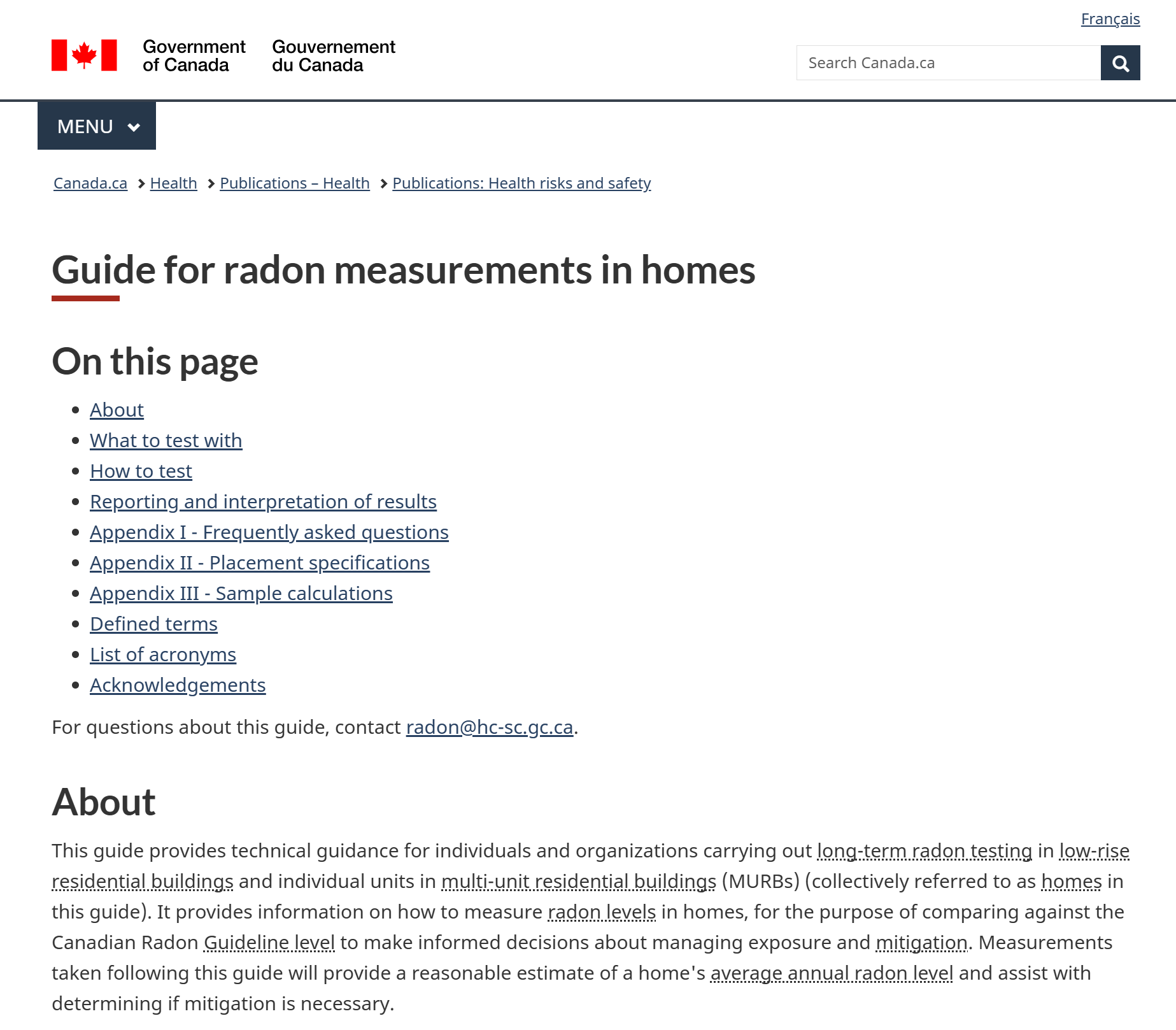
Radon Measurements in Residential Dwellings (Homes)
Radon Testing Guide - Key Points
Health Canada’s guide provides technical instructions for measuring radon in homes - covering device selection, placement, testing duration (minimum 91 days), and result interpretation. Canada It reinforces that testing is the only way to determine actual radon levels, since radon is invisible and varies greatly even between neighbouring homes. Canada The national guideline recommends corrective action if the average annual radon level exceeds 200 Bq/m³; the principle of “as low as reasonably achievable” still applies. Canada Devices must be placed in a normal-occupancy room on the lowest lived-in level, and testing should ideally occur during the heating season for a realistic annual estimate. Canada
Radon Measurements in Public Buildings - (Schools, Hospitals, Care Facilities, Detention Centres)
This guide provides targeted instructions for measuring radon in high-occupancy or long-stay public buildings - such as schools, hospitals, care centres and workplaces. Canada Key aspects include:
- Using long-term testsl (ideally ≥3 months) and certified radon devices in lowest-level or high-use rooms. Canada
- Placing devices per building use and configuration (including service shafts, elevator wells, levels above grade). Canada
- Interpreting results against the Canadian guideline of 200 Bq/m³ and determining whether mitigation is necessary to protect occupants’ long-term health. Canada
Reducing Radon Levels in Existing Buildings: A Canadian Guide for Professional Contractors
This Canadian National Standard outlines technical methods to reduce indoor radon in existing buildings. It identifies Active Soil Depressurization (ASD) as the most effective technique - typically lowering levels by 90 % or more - and balanced ventilation (HRV/ERV) as a complementary or alternative solution. The standard covers fan sizing, pipe requirements, communication testing, and sealing practices, aiming to achieve radon concentrations below 200 Bq/m³, in line with Health Canada guidelines, and emphasizes work by C-NRPP-certified professionals
Canadian Guidelines for the Management of Naturally Occurring Radioactive Materials (NORM)
These guidelines establish national principles for the control, classification, handling, and disposal of naturally occurring radioactive materials (NORM) - such as uranium, thorium, radium and their decay products including radon. Canada+2Canada+2 Their purpose is to ensure persons exposed to NORM face the same radiation protection standards as other regulated sources. Canada Although primarily aimed at industrial settings, they underscore that elevated radon levels from ground sources should be managed by certified professionals. These guidelines help homeowners and service providers understand broader radiation protection frameworks.
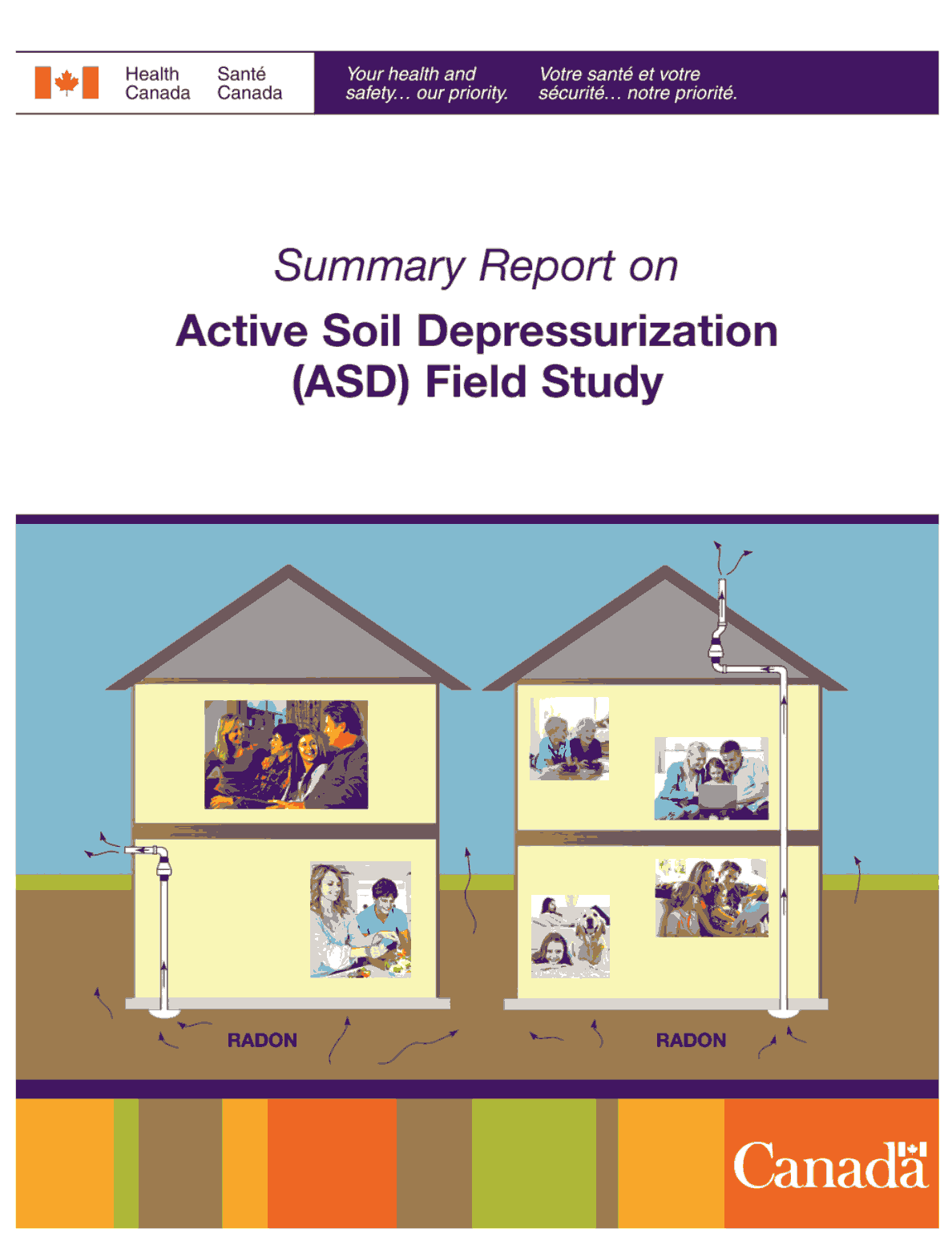
Summary Report on Active Soil Depressurization (ASD) Field Study
A study of 52 Canadian homes using indoor-mounted fans with side-wall discharge (instead of rooftop stacks) found an average radon reduction of ≈ 90.7 %, with all homes achieving levels below the Canadian guideline of 200 Bq/m³. Canada The alternative geometry proved effective even in cold-climate conditions and did not lead to indoor fan leakage or radon re-entrainment. The study also noted exhaust radon concentrations dissipate rapidly (within 1-2 m of discharge) when properly located. Canada
Cross-Canada Survey of Radon Concentrations in Homes - Final Report
The 2009-2011 national survey measured indoor radon in roughly 14,000 Canadian homes across 121 health-regions. Canada It found approximately 6.9% of homes exceeded the guideline of 200 Bq/m³. Canada Significant variation occurred by region and housing type: higher risks in rural areas, single-detached homes, and provinces such as Manitoba, New Brunswick, Saskatchewan and the Yukon. Canada The findings reinforce that testing every home is essential because no region is completely free of elevated radon.
Radon - Another Reason to Quit
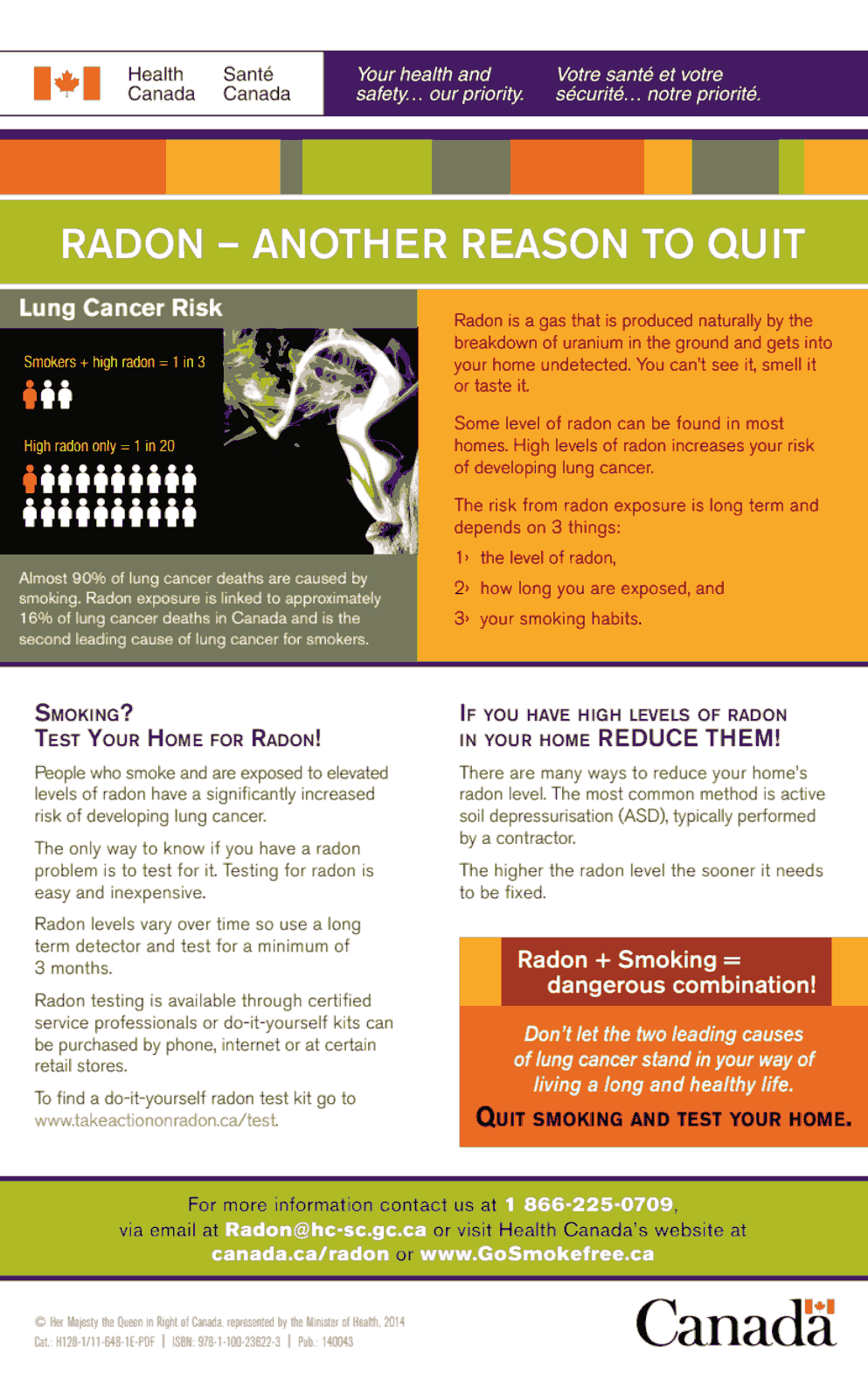
Exposure to elevated indoor radon levels and smoking together significantly increase lung cancer risk. A smoker exposed to high radon can face a 1-in-3 chance of developing lung cancer, compared with about 1-in-20 for a non-smoker at high radon. Canada Radon is an invisible, odourless radioactive gas; the only way to know your home’s level is to test with a long-term detector (minimum three months). Canada If levels exceed guidelines, reduce them - especially if you smoke. Quit smoking and test your home. Canada
Radon gas: it's in your home
Radon is an invisible, odorless radioactive gas that naturally emanates from soil and can enter homes through cracks, drains, or gaps in foundations. Health Canada’s guideline for indoor radon is 200 Bq/m³ - levels above this should trigger mitigation, but no level is risk-free. Homeowners are advised to carry out a long-term test (minimum 3 months), ideally during the heating season, using certified methods. If results exceed guideline, remediation (e.g., active soil depressurization) by a certified professional is recommended. Early testing and action help protect against increased lung cancer risk. canada.ca
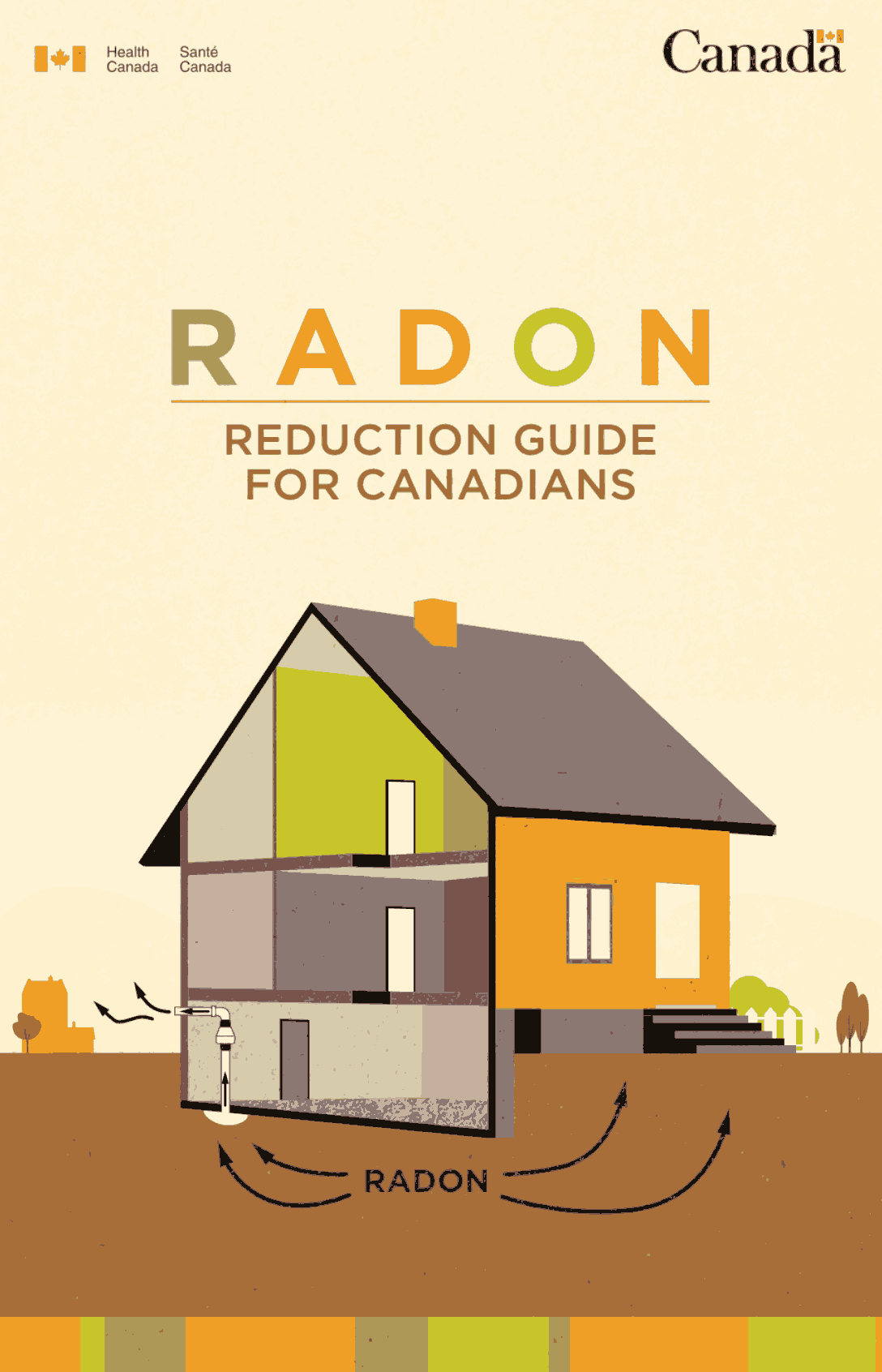
Radon - Reduction Guide for Canadians
The guide outlines practical steps homeowners can take when indoor radon levels exceed the guideline of 200 Bq/m³. It recommends hiring a certified professional (via Canadian National Radon Proficiency Program (C‑NRPP)) to design and install mitigation such as active soil depressurization (ASD). Simple methods like sealing large cracks or improving ventilation may help, but their effectiveness is limited at higher levels. Follow-up testing after mitigation is essential to verify performance. The guide emphasizes that although no level of radon is completely risk-free, reducing exposure “as low as reasonably achievable” yields health benefits.