FAQ : About Testing Condition
This section explains About the Proper Testing Conditions required to ensure accurate and consistent RADON measurements.
You’ll learn what to do before and during the test, including ventilation requirements, seasonal considerations, and how to maintain closed-house conditions.
Following the correct testing environment guidelines is essential for obtaining reliable results and ensuring that your RADON test truly reflects the air you breathe every day.
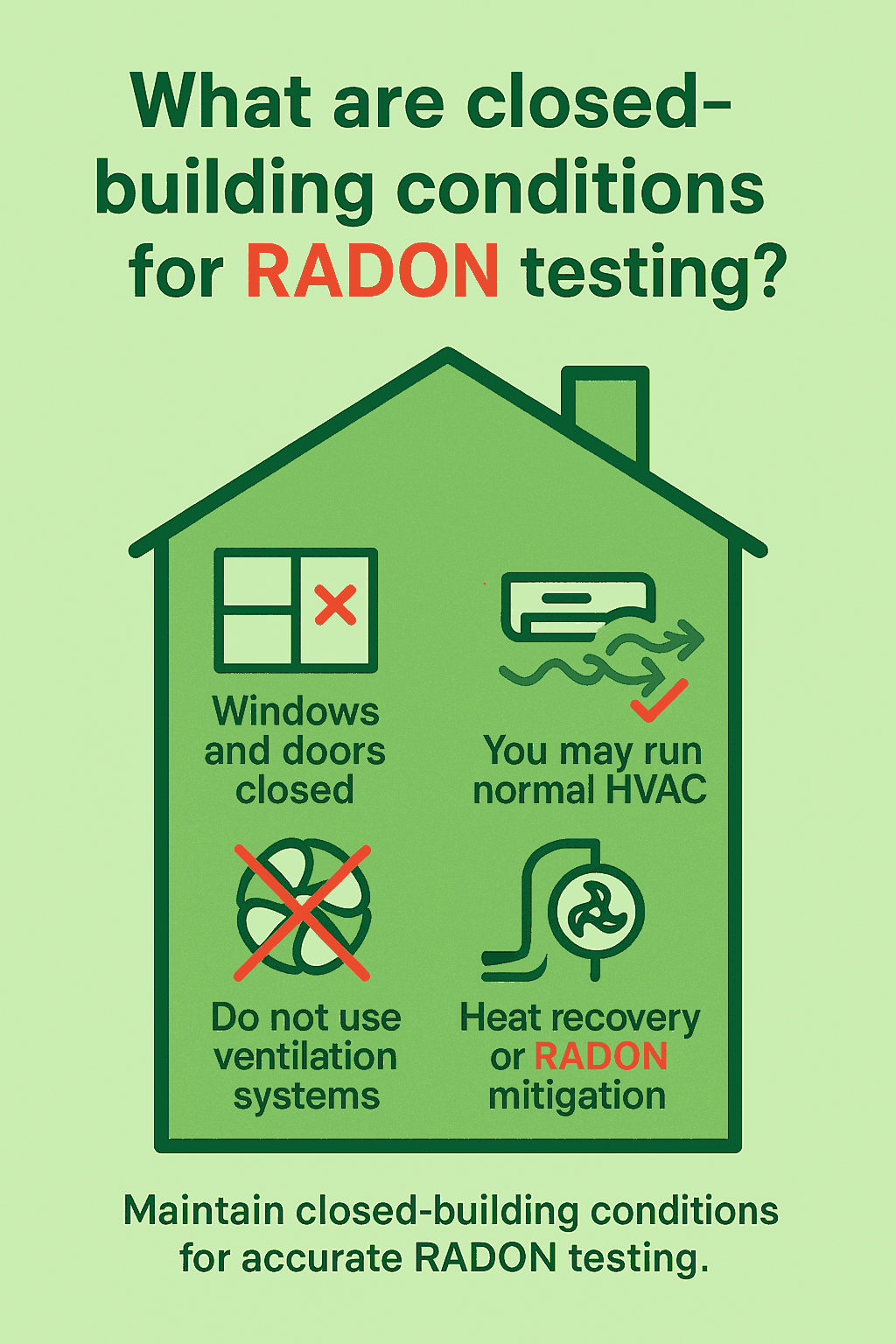
Closed-building conditions help ensure accurate RADON test results by keeping indoor air stable. This means:
- Keep all windows and exterior doors closed, except for brief entry or exit.
- Do not use ventilation systems that bring in outdoor air (like large fans or fresh-air intakes).
- You may run normal HVAC or A/C systems that recycle indoor air.
- Heat recovery or RADON mitigation systems should operate as usual during the test.
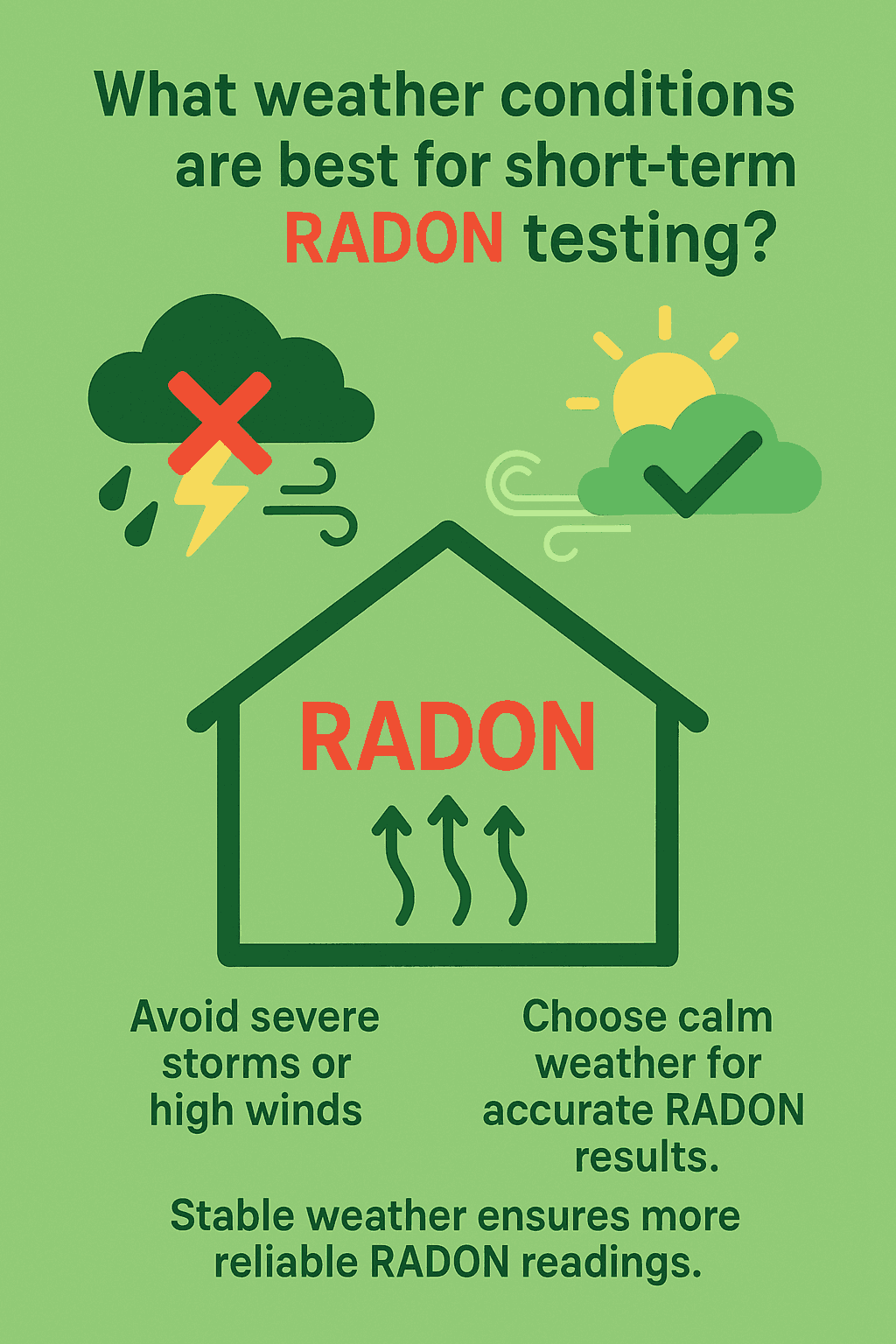
Avoid testing during severe storms or very windy weather.
Sudden changes in air pressure or strong winds can affect indoor RADON levels and make results less accurate.
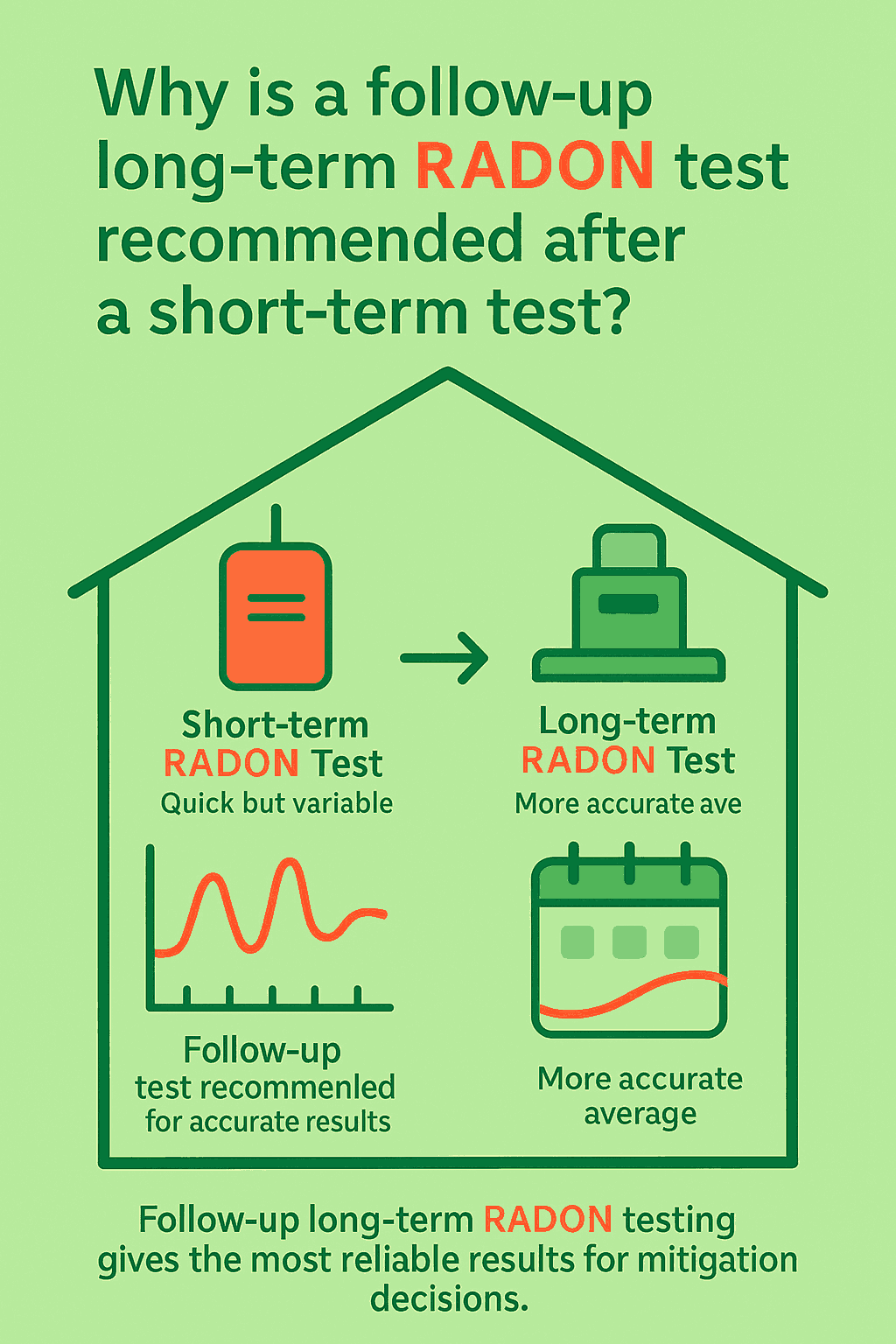
RADON levels change over time, so a short-term test only shows a snapshot.
A follow-up long-term test-done in the same location-gives a more accurate average and helps you make the right decision about mitigation.
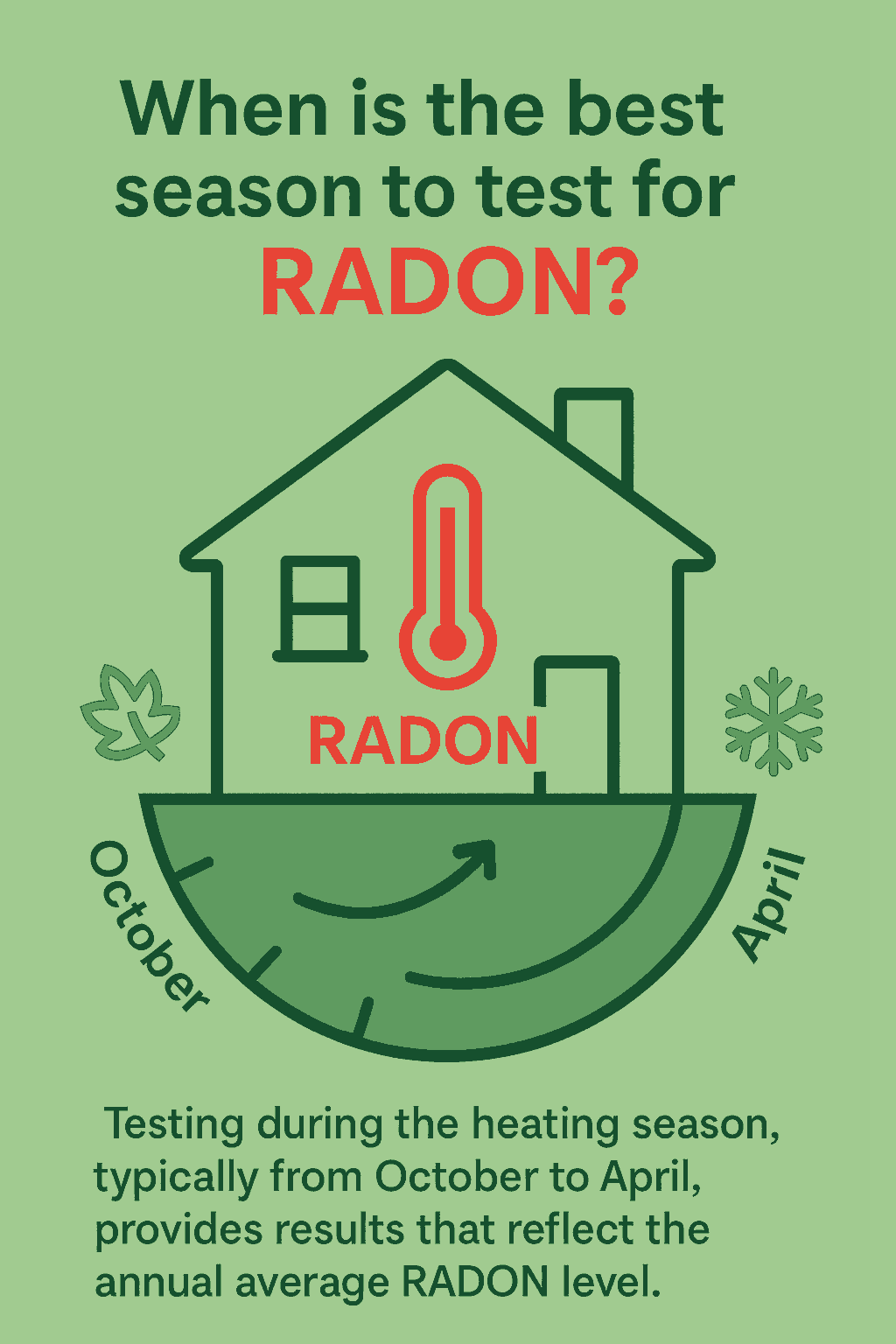
The best time to test for RADON is during the heating season - typically from October to April - when windows and doors are usually closed.
This helps get results that reflect your home’s annual average RADON level.
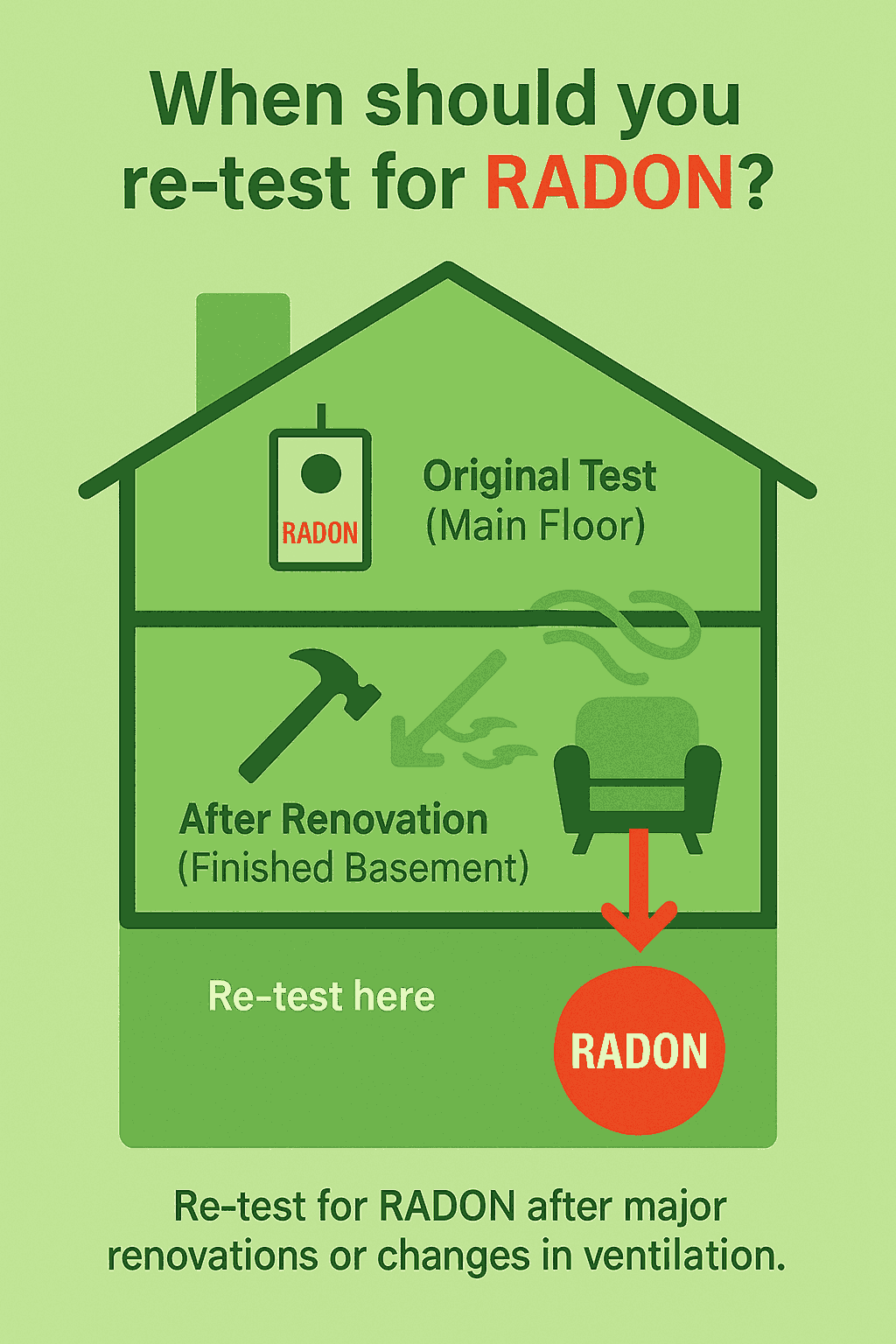
You should re-test for RADON whenever major home renovations are done - especially if they change ventilation, airflow, or how rooms are used.
For example, if you finish your basement and your first test was done on the main floor, it’s important to re-test in the basement afterward.