Take Action if Your RADON Levels Are High
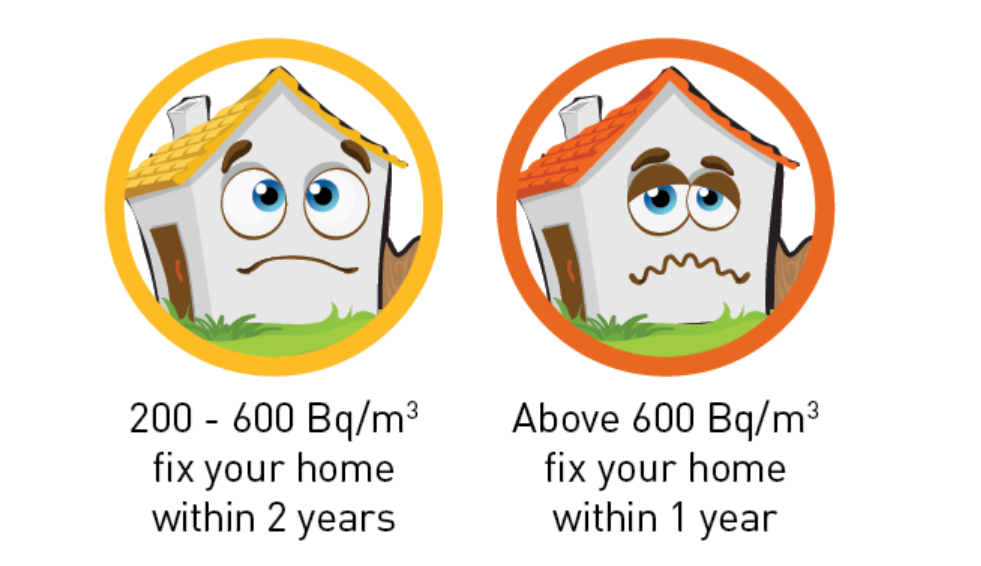
If your RADON level exceeds 200 Bq/m³ - the Canadian guideline - Health Canada recommends taking action to reduce concentrations as soon as possible.
The higher the RADON level, the sooner you should act to bring it as low as reasonably achievable.
So Your Home Has High RADON Levels… Now What?
No matter how high your RADON level is, your home can be fixed.
A RADON mitigation system is a proven and efficient solution that significantly reduces RADON concentrations in indoor air.
Normal RADON Fluctuations
It’s completely normal for RADON levels to rise and fall over a few days - especially during bad weather or changes in air pressure and humidity. That’s why long-term testing (91+ days) provides the most reliable picture of your true exposure.
Understanding Your RADON Number
Your RADON test result shows the average amount of RADON you were exposed to during the test period.
Different health authorities set slightly different action levels:
| Organization | Action Level | Equivalent (pCi/L) |
|---|---|---|
| Health Canada | 200 Bq/m³ | 5.4 pCi/L |
| U.S. EPA | 148 Bq/m³ | 4.0 pCi/L |
| World Health Organization (WHO) | 100 Bq/m³ | 2.7 pCi/L |
If your home’s result is above these thresholds, it’s time to plan mitigation.
A Healthy Home is a Mitigated Home!
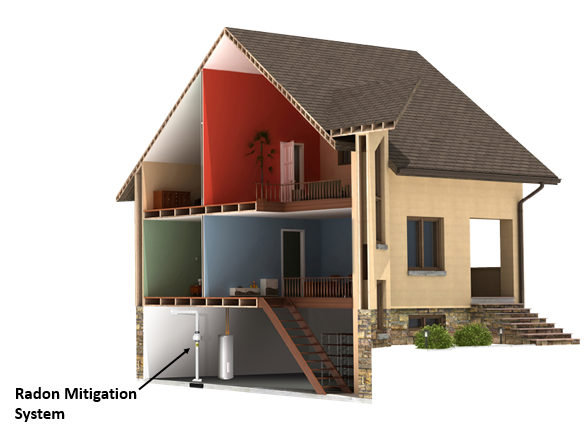
RADON mitigation can take different forms depending on your home’s design and foundation type.
That’s why it’s important to work with trained and certified professionals who ensure your system is safe, effective, and properly installed.
A RADON mitigation system is a simple and proven method to reduce indoor RADON levels. Through careful diagnostics, we determine the best system location and correct fan size for your home. Once installed, the system safely draws RADON from beneath the foundation and vents it outside, instead of allowing it to enter your living space.
Understanding Your Test Results

The Canadian guideline for radon in indoor air is 200 Bq/m3.
- Below 200 Bq/m³: No action required, but lower levels further reduce health risk.
- 200–600 Bq/m³: Reduce levels within 2 years.
- Above 600 Bq/m³: Reduce levels within 1 year.
(Average outdoor level: ~15 Bq/m³)
If your test was conducted outside the heating season or for less than 91 days, retest for more accurate results.