FAQ : About Testing
This section answers common questions About RADON Testing - including how it works, when to test, and where to place your devices for the most accurate results.
You’ll learn the difference between short-term and long-term testing, the recommended testing conditions, and how to ensure reliable and verifiable measurements.
Our goal is to help you understand the testing process clearly so you can interpret your results confidently and take the right steps toward a safer indoor environment.
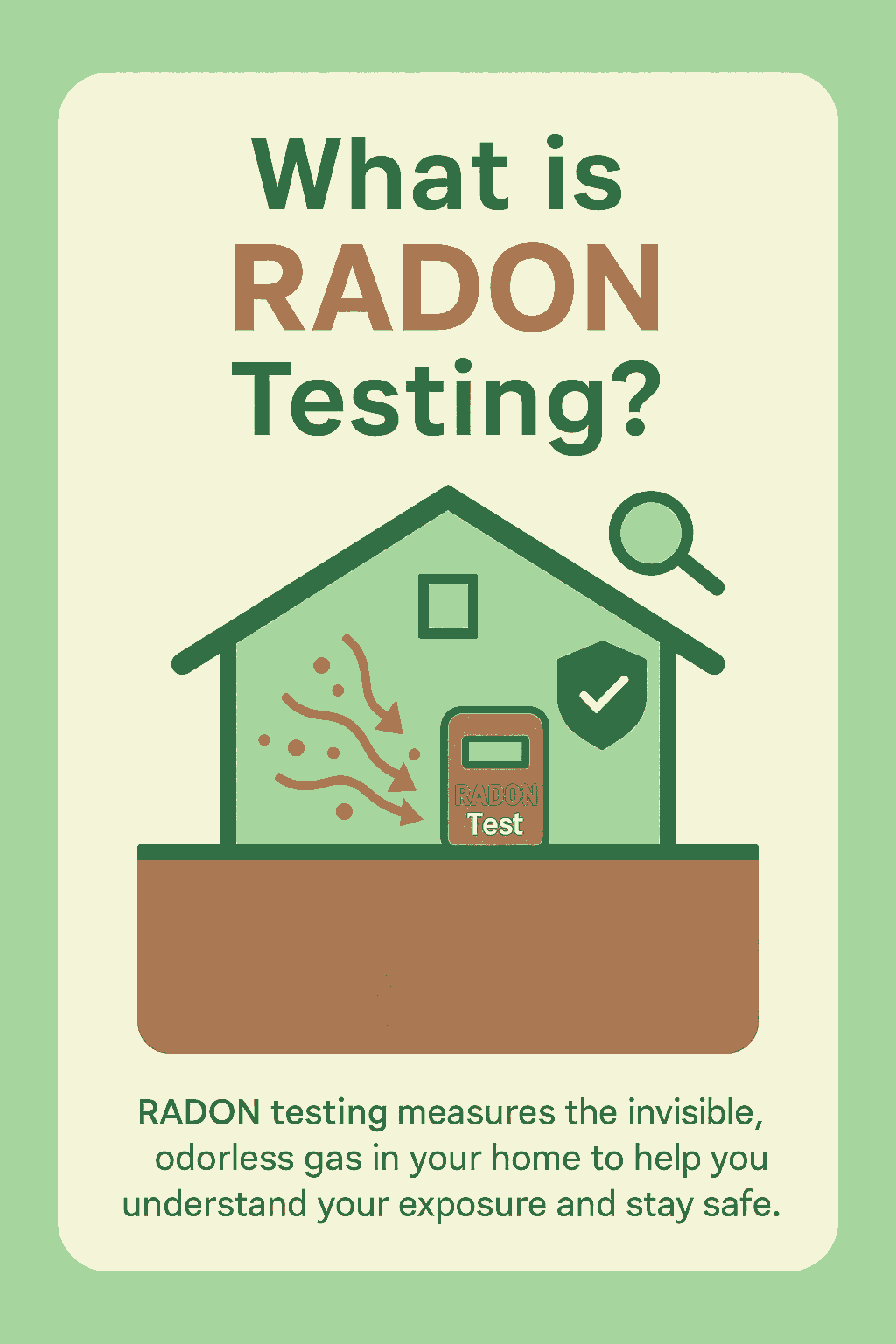
RADON testing measures the amount of invisible, odorless RADON gas in your home to help you understand your exposure level and whether any action is needed.
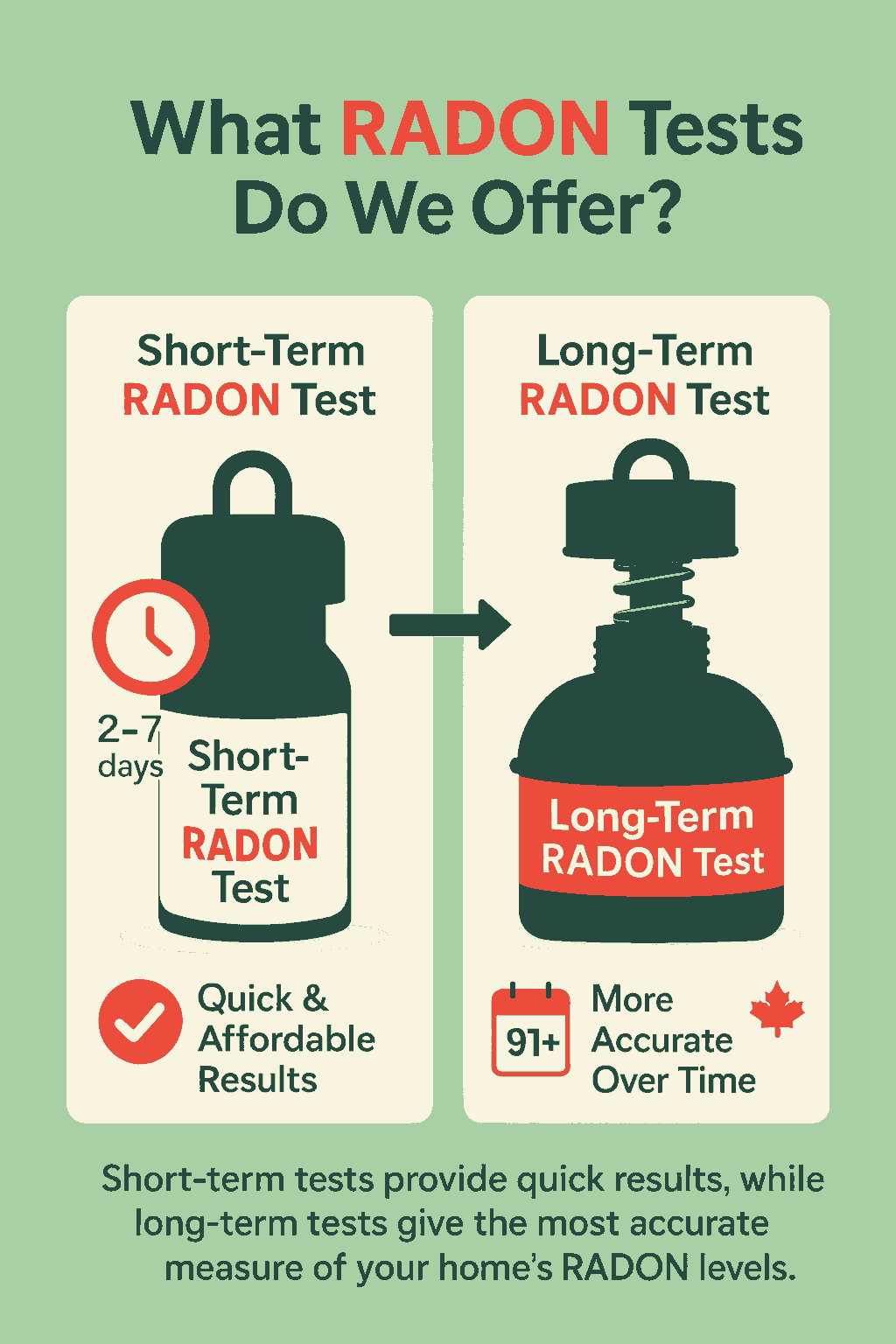
We offer both short-term and long-term RADON test kits.
The short-term test gives quick, affordable results, while the long-term test (91+ days, as recommended by Health Canada) provides the most accurate measurement of your home’s RADON levels.
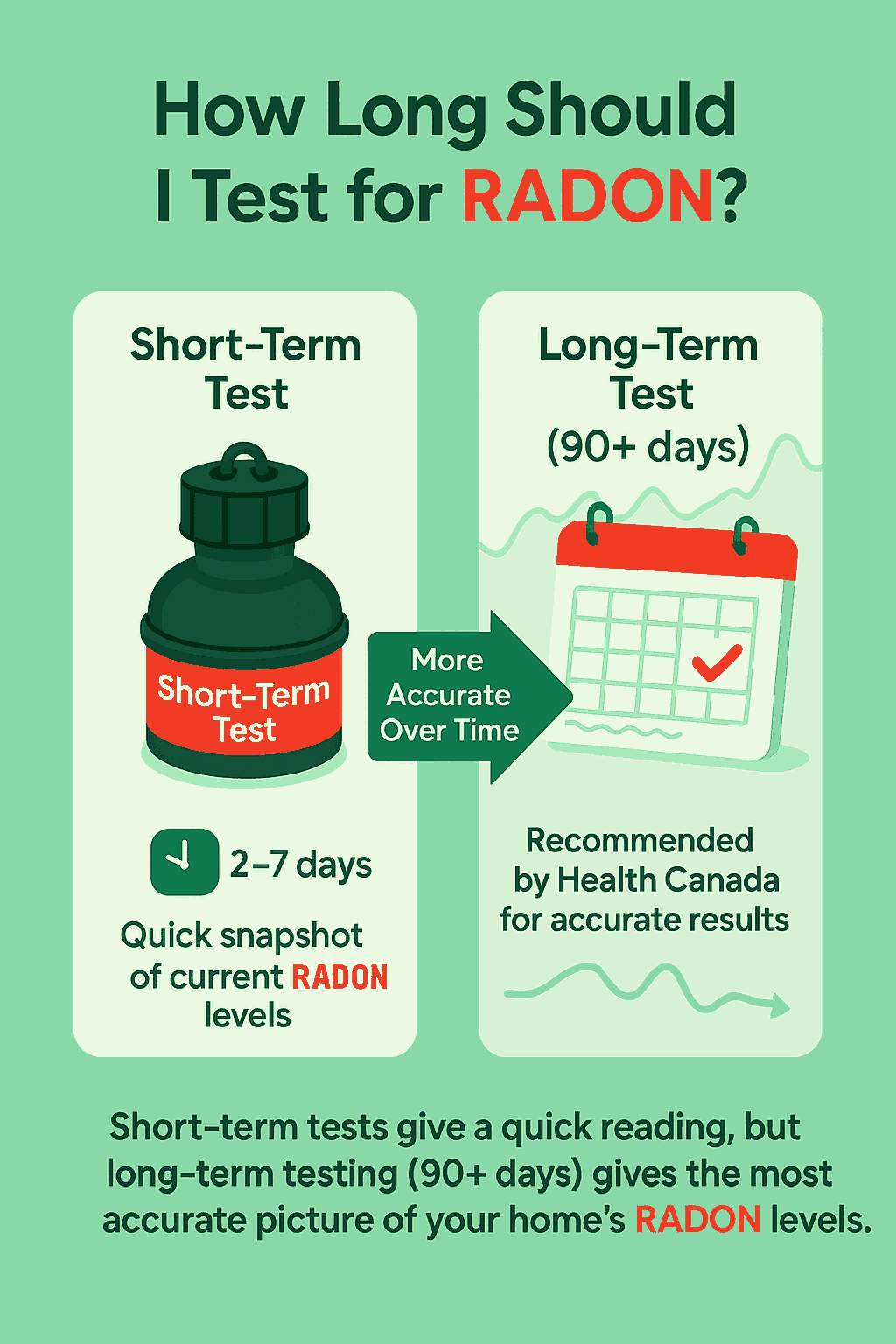
A short-term test gives a quick snapshot of your current RADON levels, but since levels can fluctuate, Health Canada recommends a long-term test (90+ days) for the most accurate results.
The longer you test, the better your data.
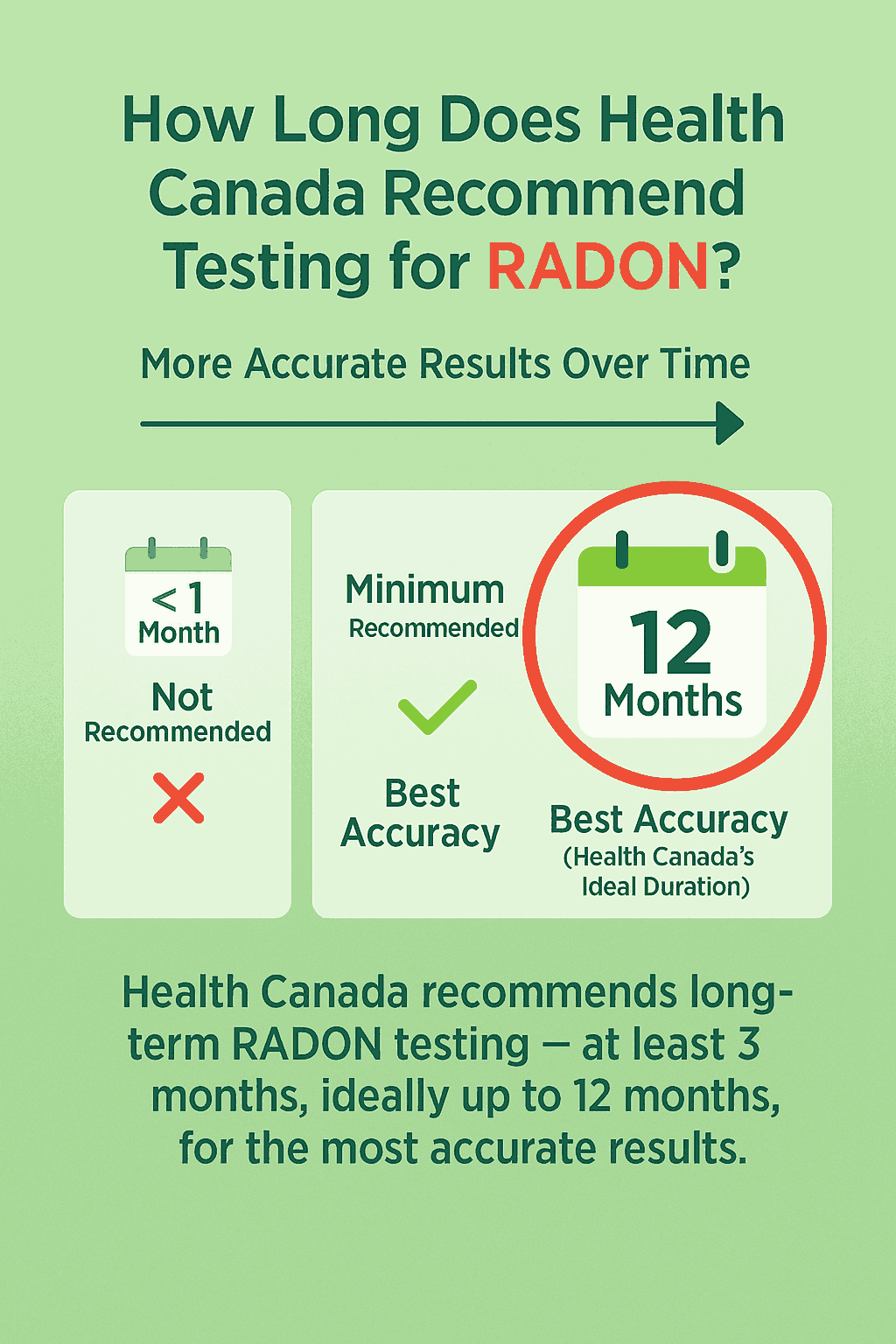
Health Canada recommends a long-term RADON test of at least 3 months, ideally up to 12 months, for the most accurate results. Short-term tests (less than 1 month) are not recommended.
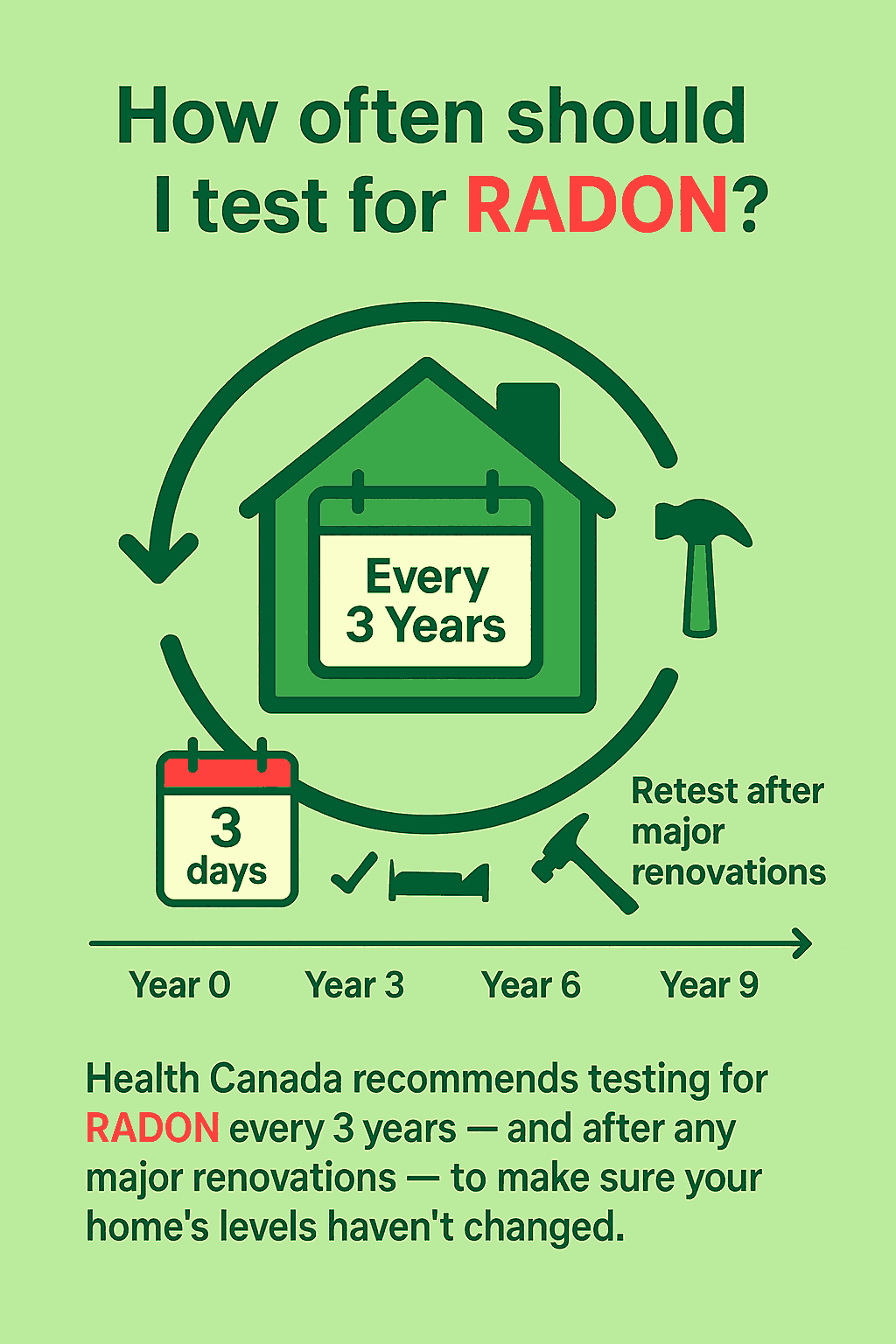
Health Canada recommends retesting your home every 3 years, or after any major renovations, to make sure your RADON levels haven’t changed.
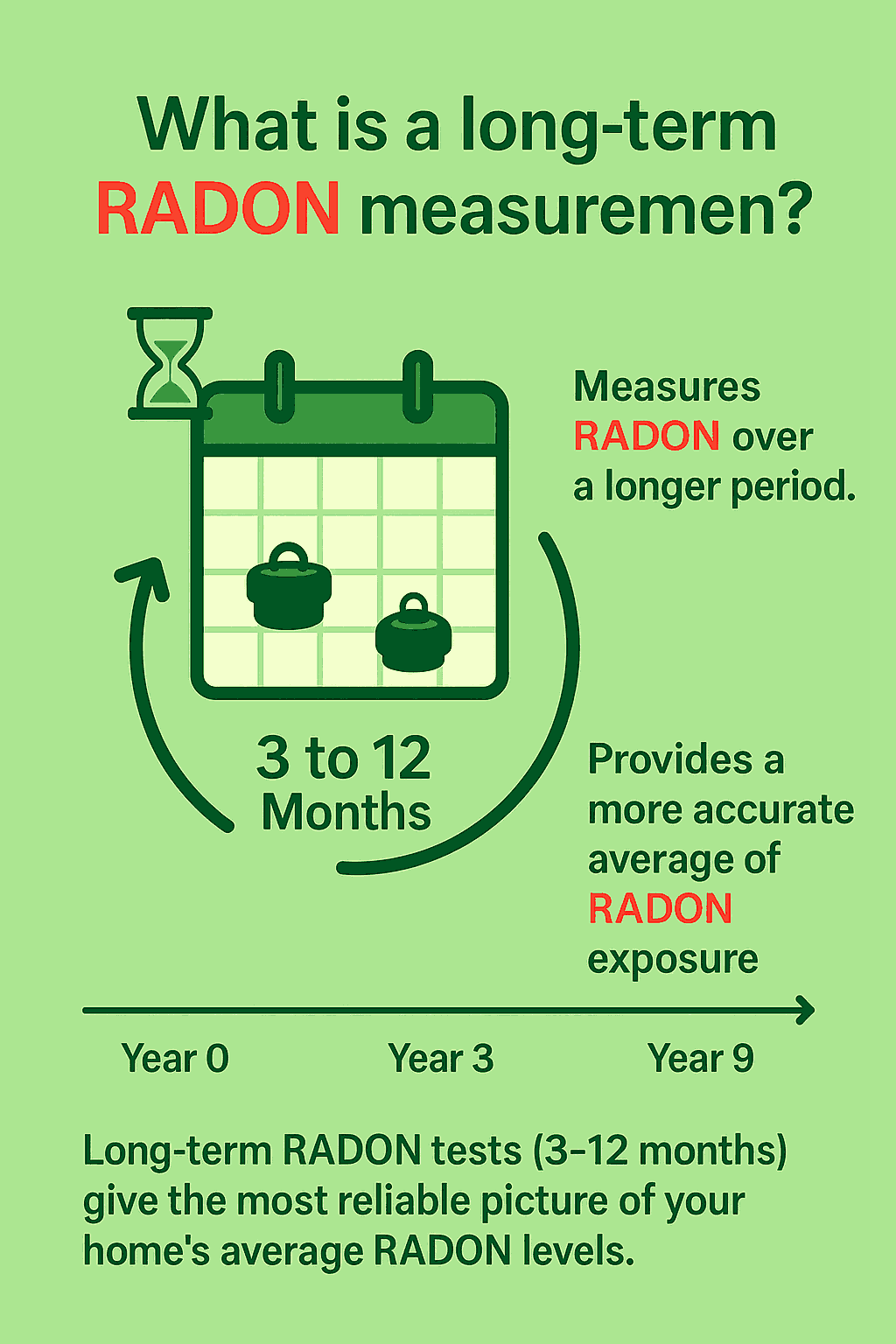
A long-term RADON test measures your home’s RADON levels over 3 to 12 months, giving a more accurate picture of your average exposure.
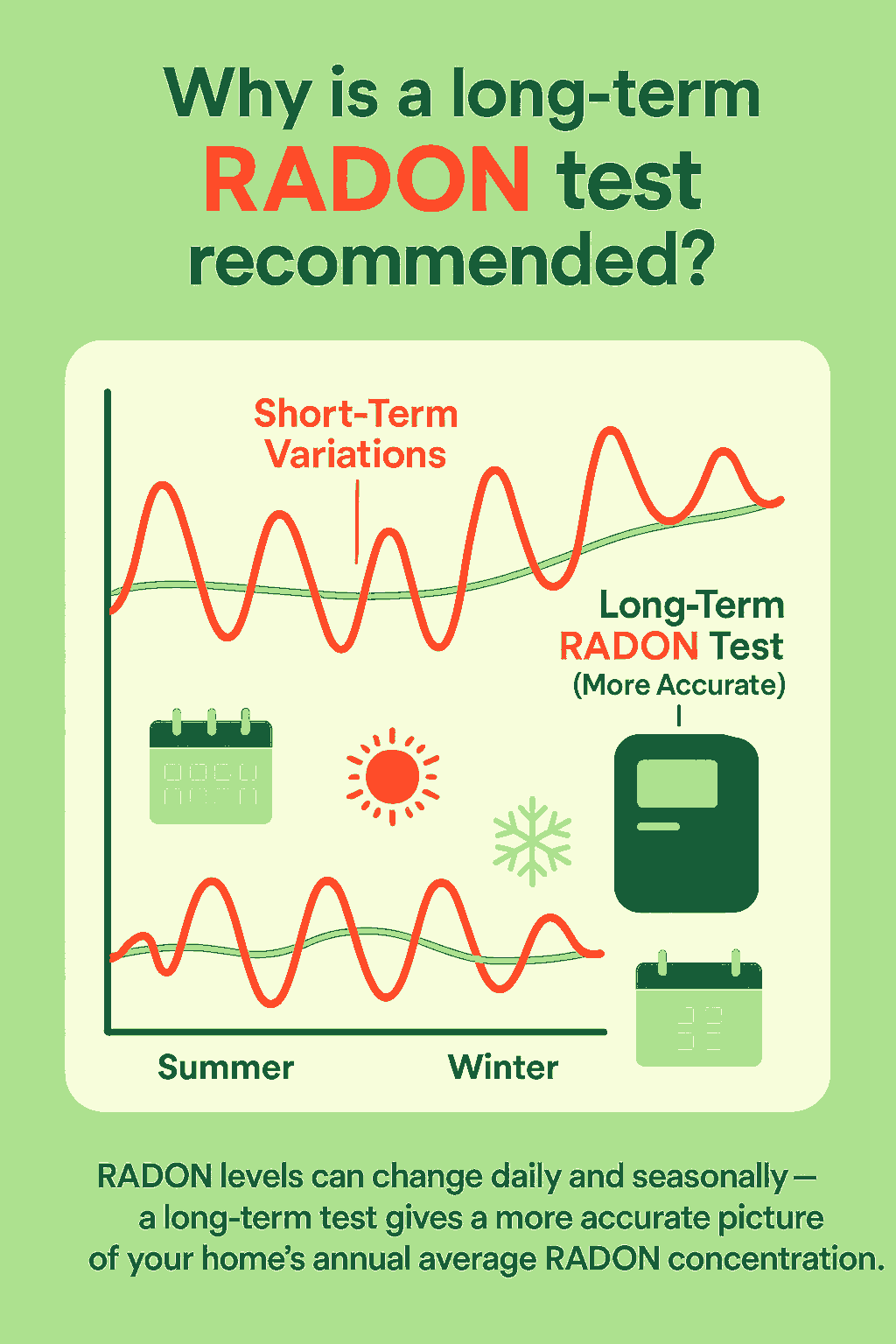
RADON levels can change daily and seasonally - often higher in winter. A long-term test gives a more accurate picture of your home’s annual average RADON concentration than a short-term test.
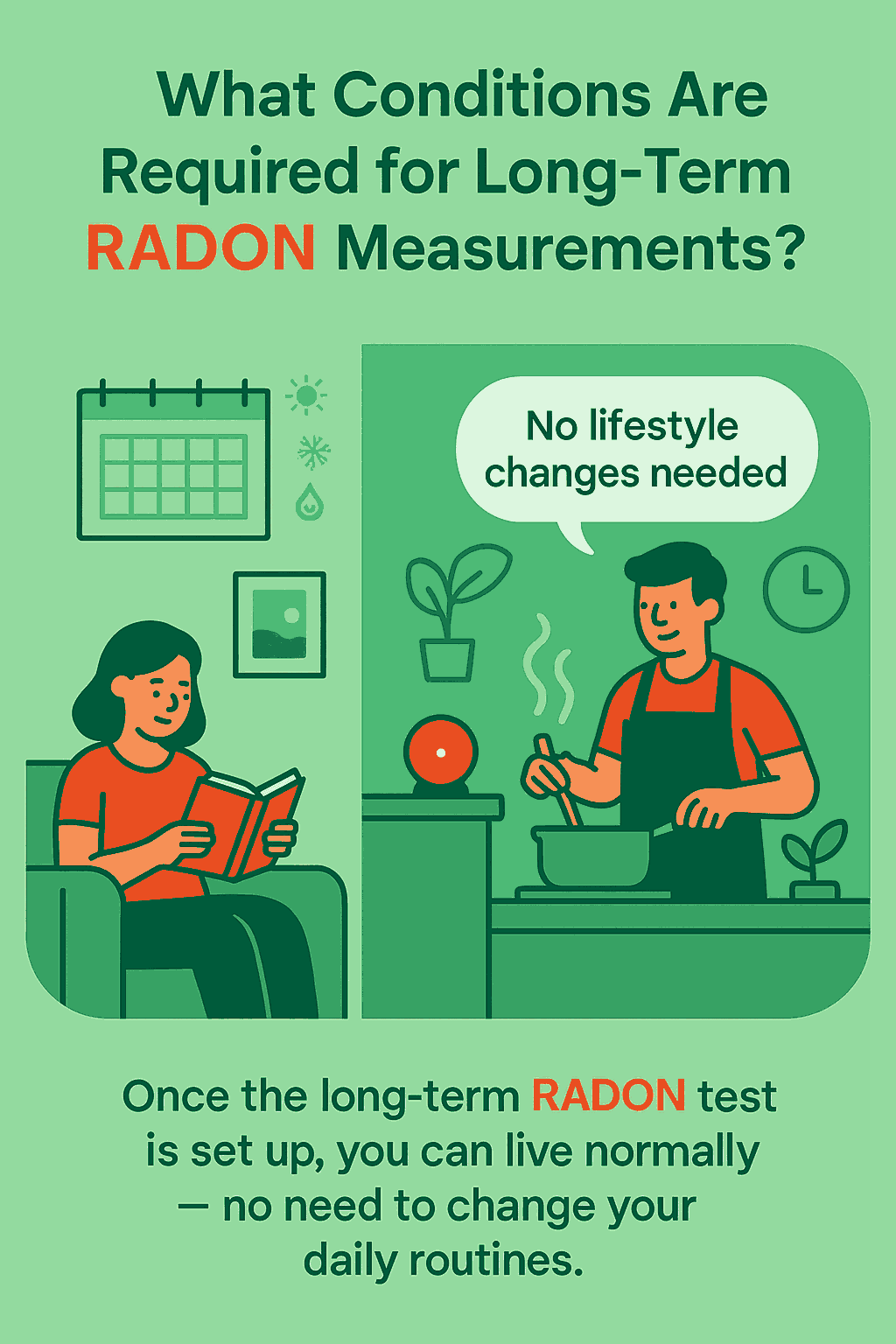
Once the long-term RADON test device is set up, you can live normally-no need to change your daily activities or routines during the test.
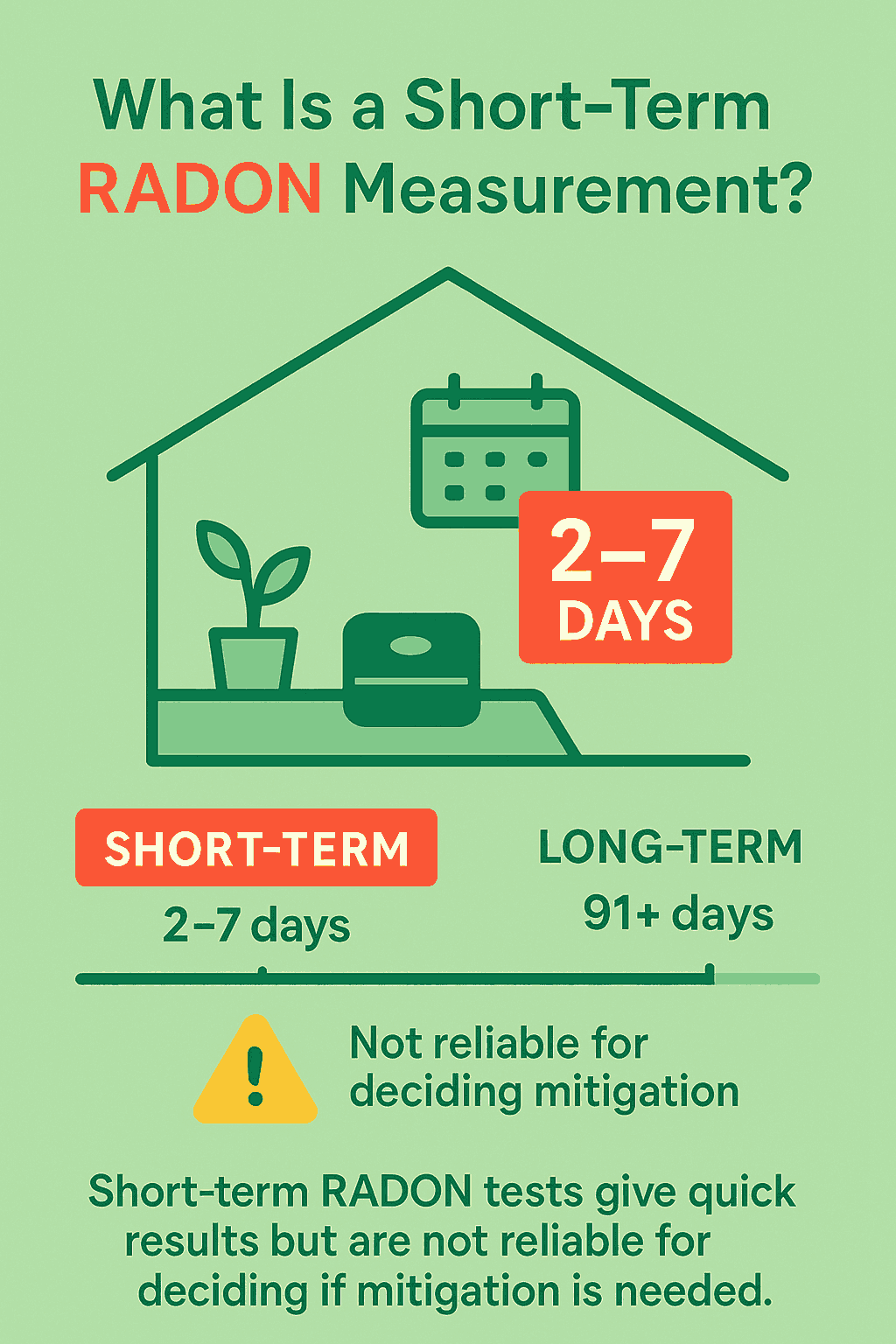
A short-term RADON test usually lasts from 2 to 7 days (up to 3 months). It provides quick results but is not reliable for deciding if mitigation is needed.
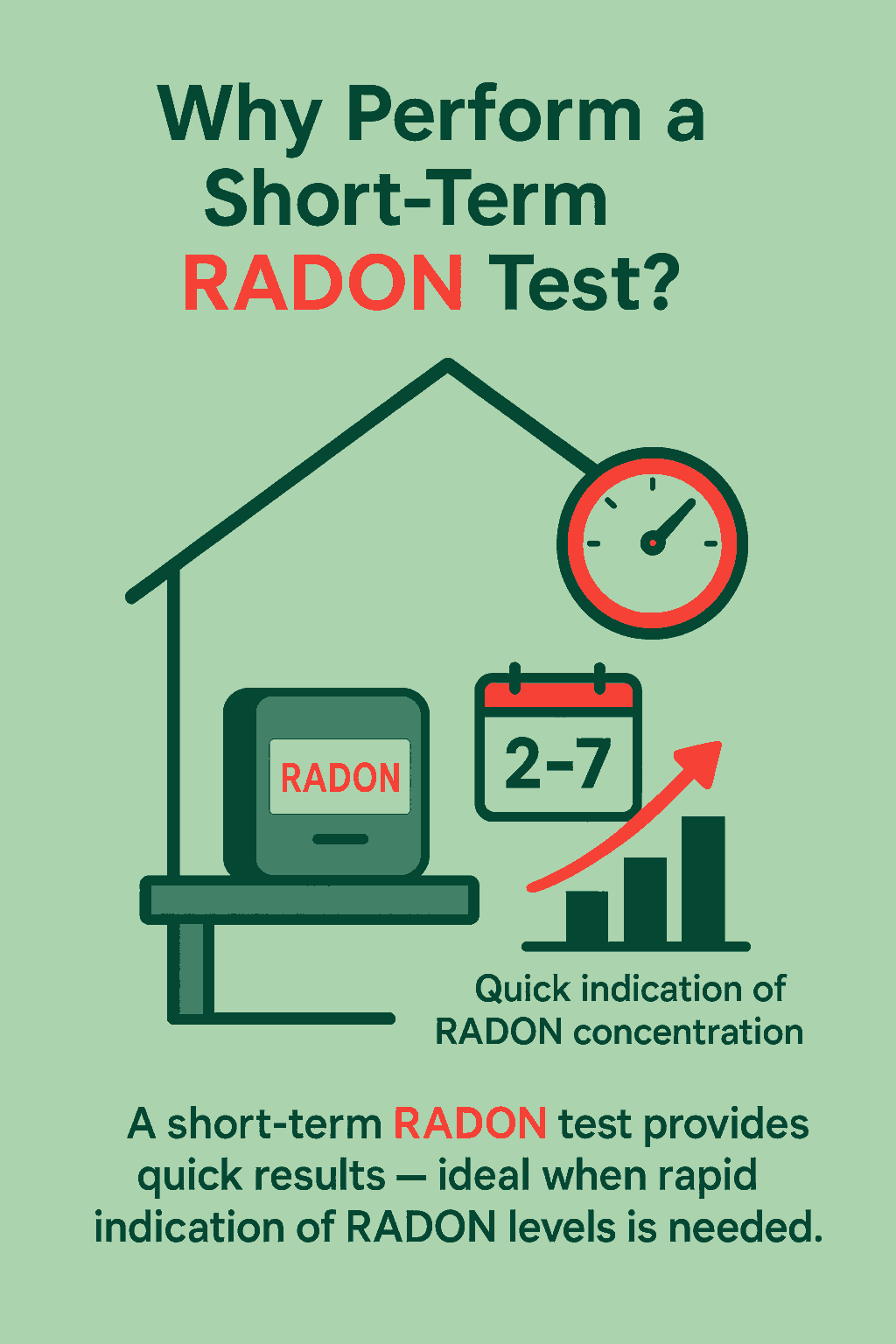
A short-term RADON test is used when quick results are needed. It provides a rapid indication of RADON levels-typically measured over 2 to 7 days.
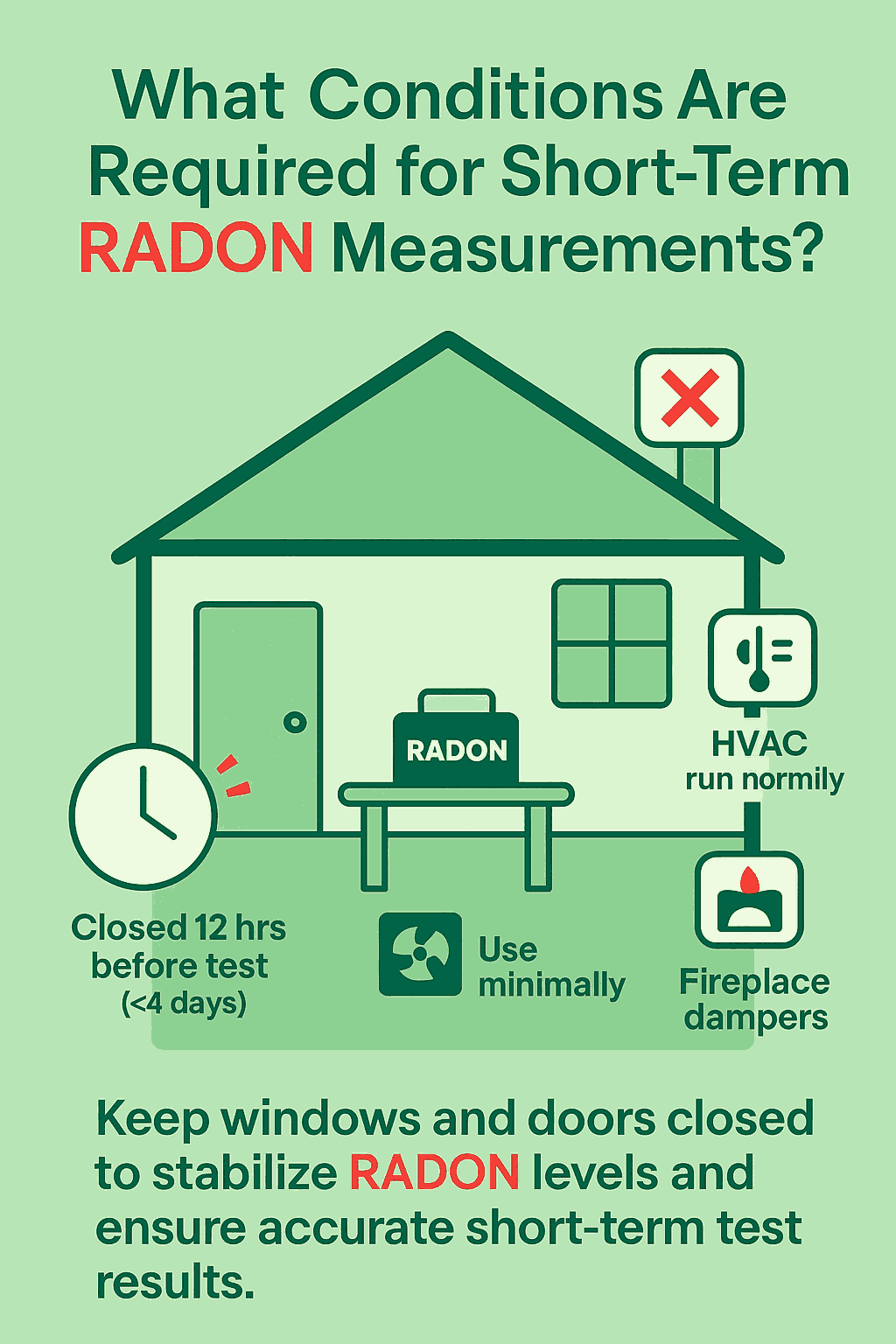
Short-term RADON tests must be conducted under closed-building conditions to stabilize RADON levels and ensure accurate results.
Closed-building conditions mean:
- Keep all windows and exterior doors closed as much as possible.
- Close vents or openings that bring in outdoor air.
- Heating or air conditioning may run normally, but ventilation systems that draw in outside air (like HRVs or fresh-air intakes) should be turned off.
- Close fireplace dampers when not in use.
- Use dryers and exhaust fans only when necessary.
Maintaining these conditions helps minimize outdoor influences and keeps indoor RADON levels stable during the short test period. For tests shorter than 4 days, keep the building closed for at least 12 hours before starting the test.
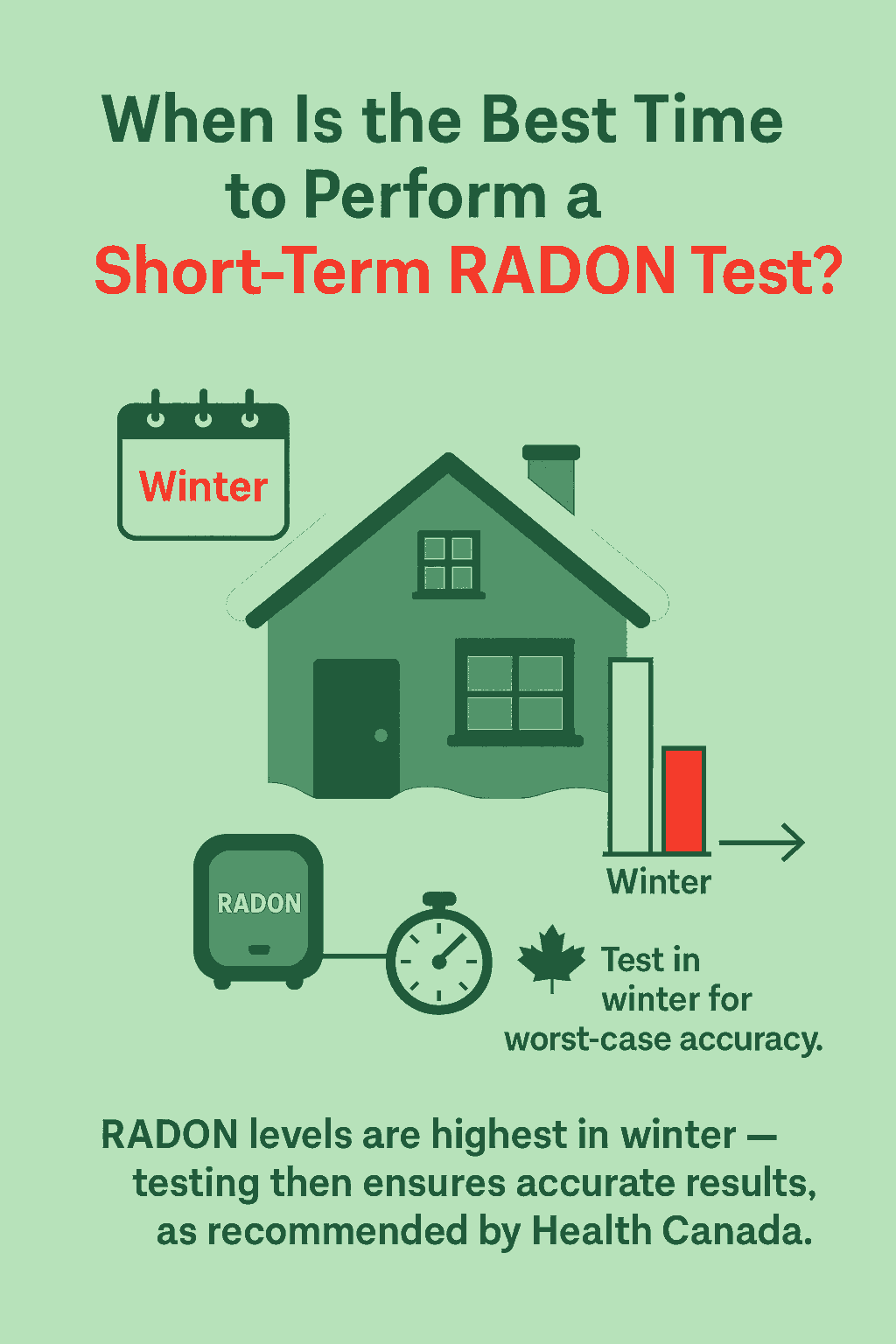
The best time is during the winter, when indoor RADON levels are usually highest. Testing then shows your home’s RADON levels in a worst-case scenario, as recommended by Health Canada.
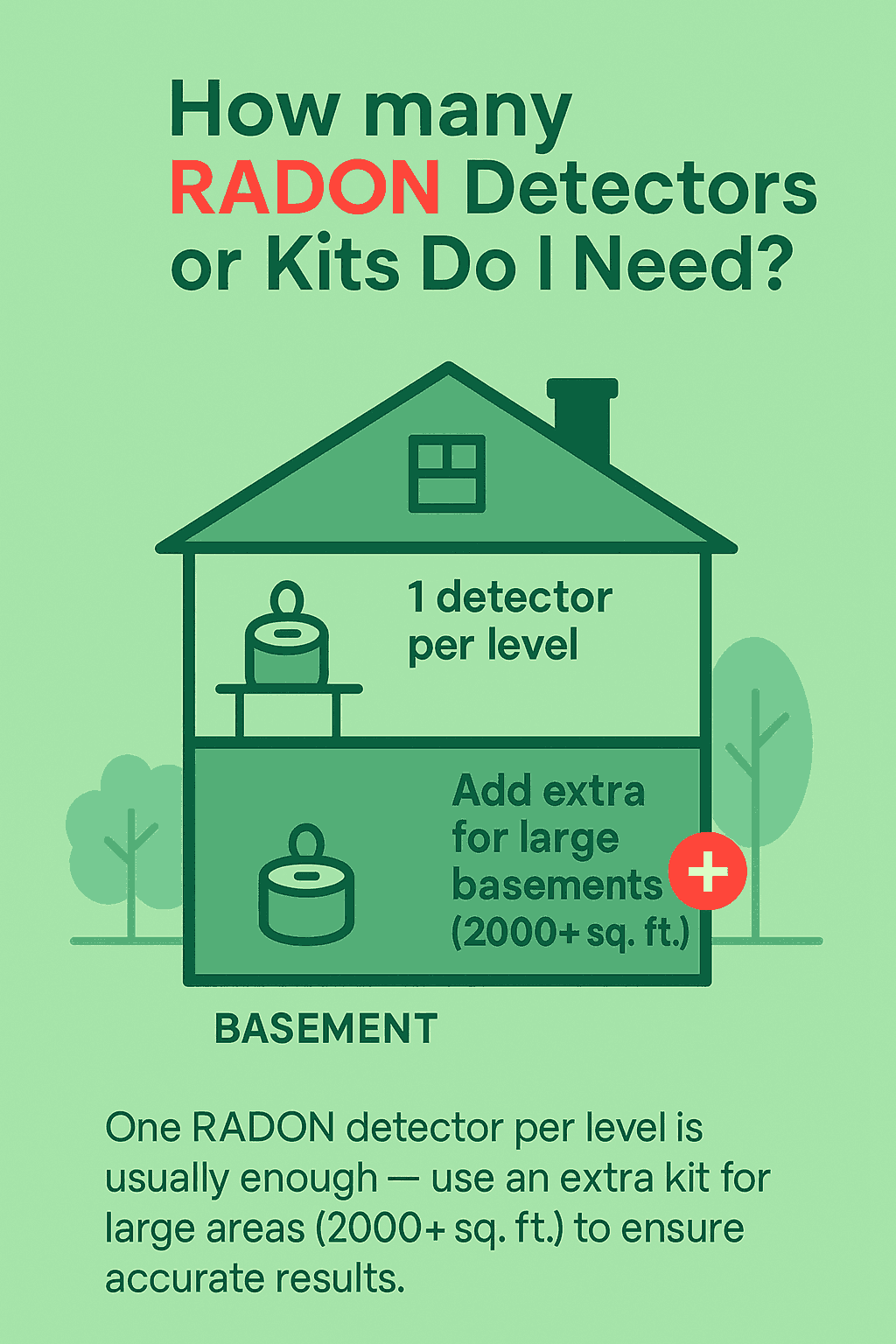
For most homes, one RADON detector per level is enough to represent that floor accurately. However, if your basement or floor area is large (over 2,000 sq. ft.), it’s best to use an additional test kit to ensure full coverage.
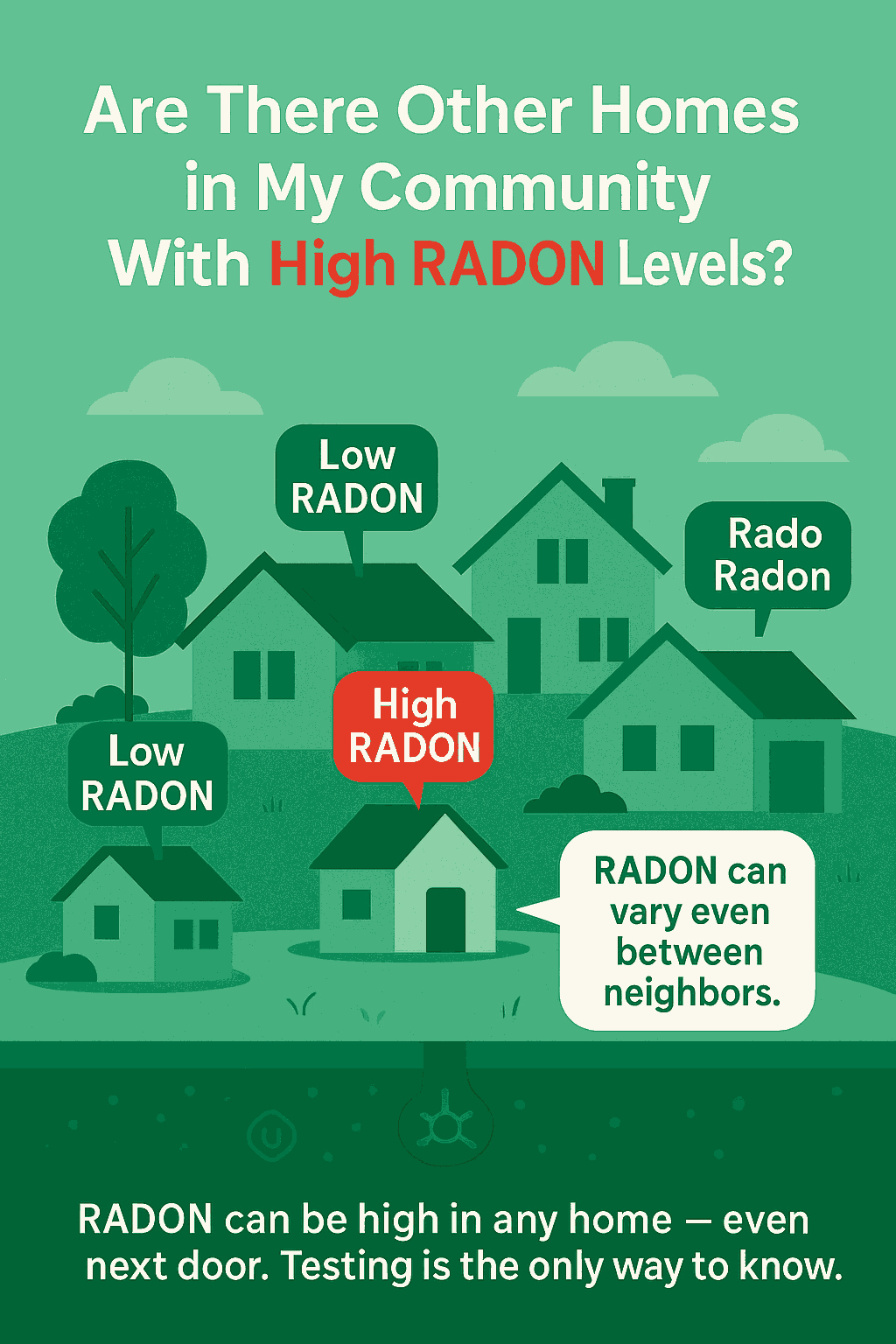
Very likely, yes. RADON levels can vary from house to house - even between neighbors on the same street. Because RADON comes from uranium in the soil, any home can have high levels, regardless of location.