FAQ : About Radon
This section provides clear answers to the most common questions About RADON - what it is, why it matters, and how it can affect your home and health.
You’ll find accurate, science-based information to help you understand RADON exposure, its health risks, and the steps you can take to test and reduce RADON levels in your property.
Whether you’re a homeowner, tenant, or real estate professional, these FAQs are designed to help you make informed decisions and take effective action for a safer, healthier indoor environment.
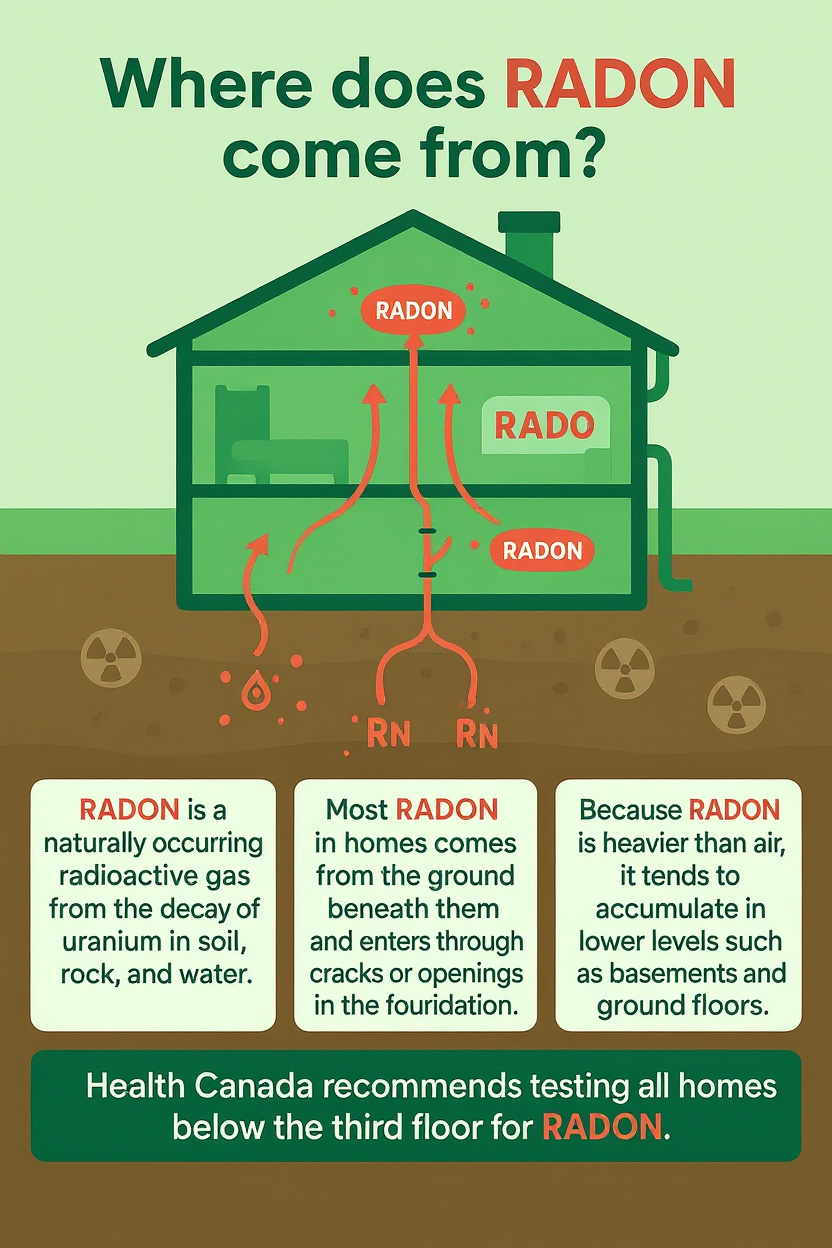
Radon is a naturally occurring radioactive gas that comes from the decay of uranium in soil, rock, and water.
Because most radon in homes originates from the ground beneath them, the gas can seep through cracks and openings in the foundation and accumulate indoors.
Since radon is heavier than air, higher concentrations are typically found in lower levels of a building, such as basements or ground floors.
For this reason, Health Canada recommends testing all homes below the third floor for radon.
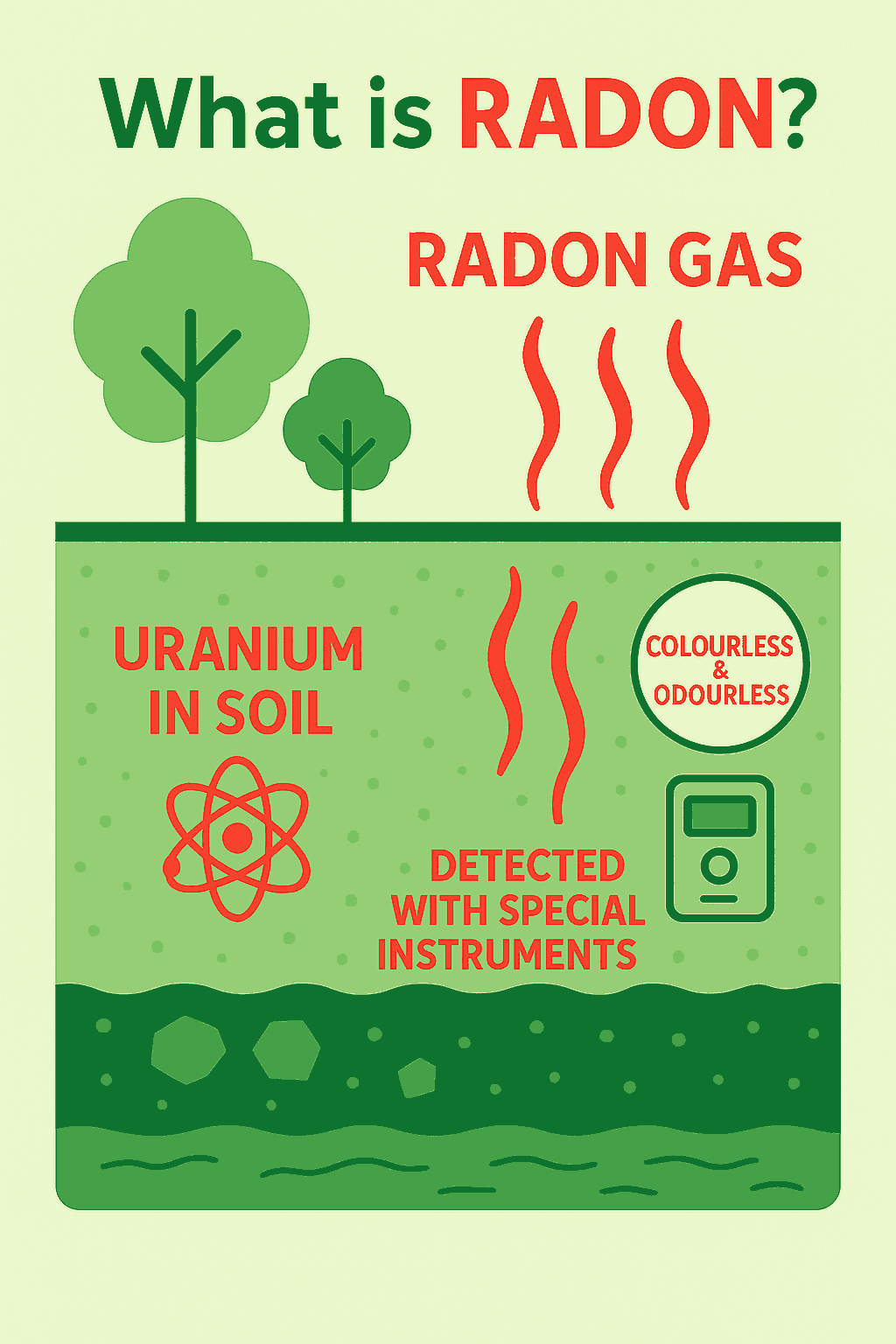
Radon is a naturally occurring radioactive gas produced by the breakdown of uranium in soil, rock, and water.
It is colourless, odourless, and can only be detected with special instruments. Outdoors, radon mixes with fresh air, making its levels too low to be a concern.
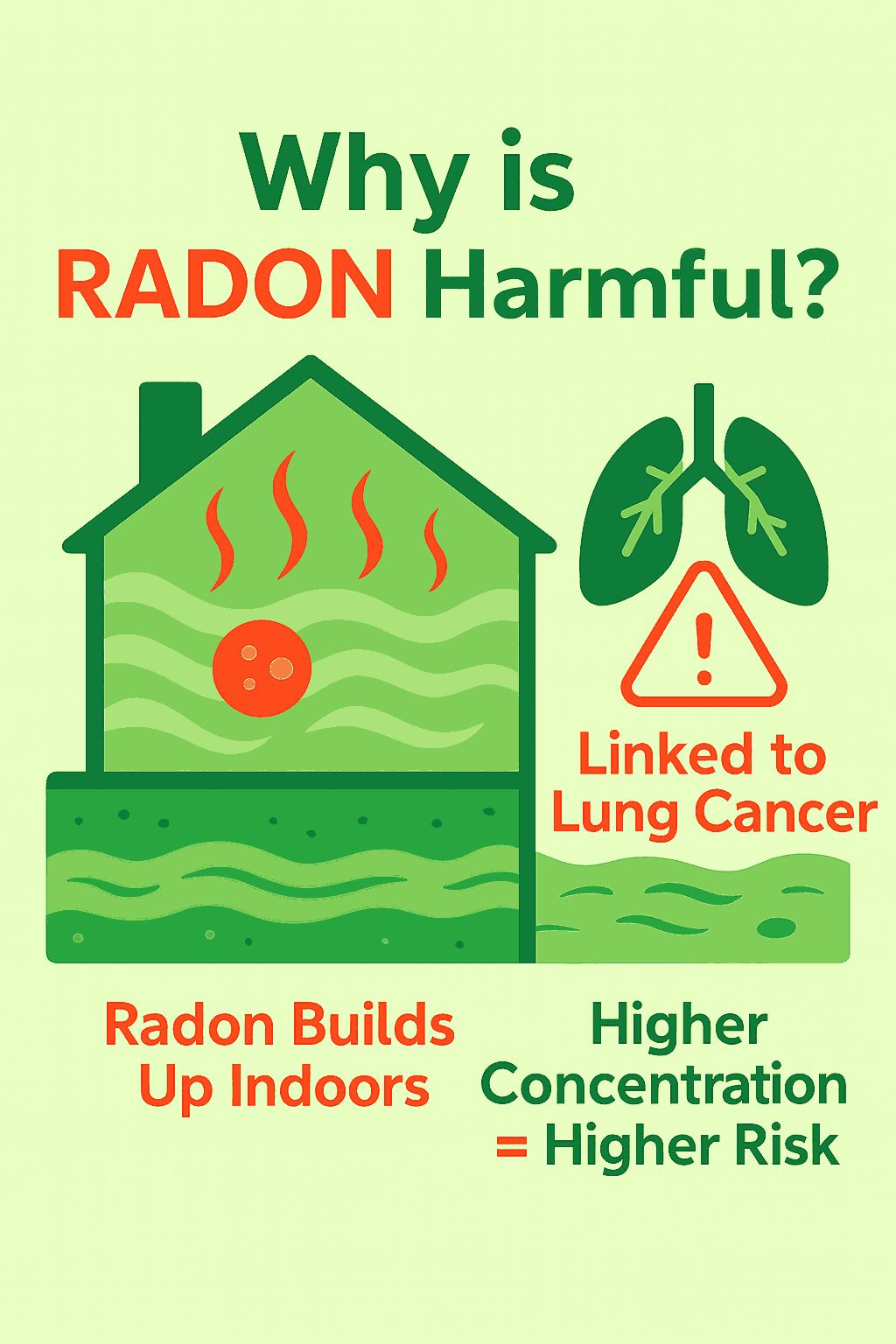
When radon builds up indoors, it can reach high levels.
Long-term exposure to radon increases the risk of lung cancer - the only known health effect.
The higher the concentration and the longer the exposure, the greater the risk.
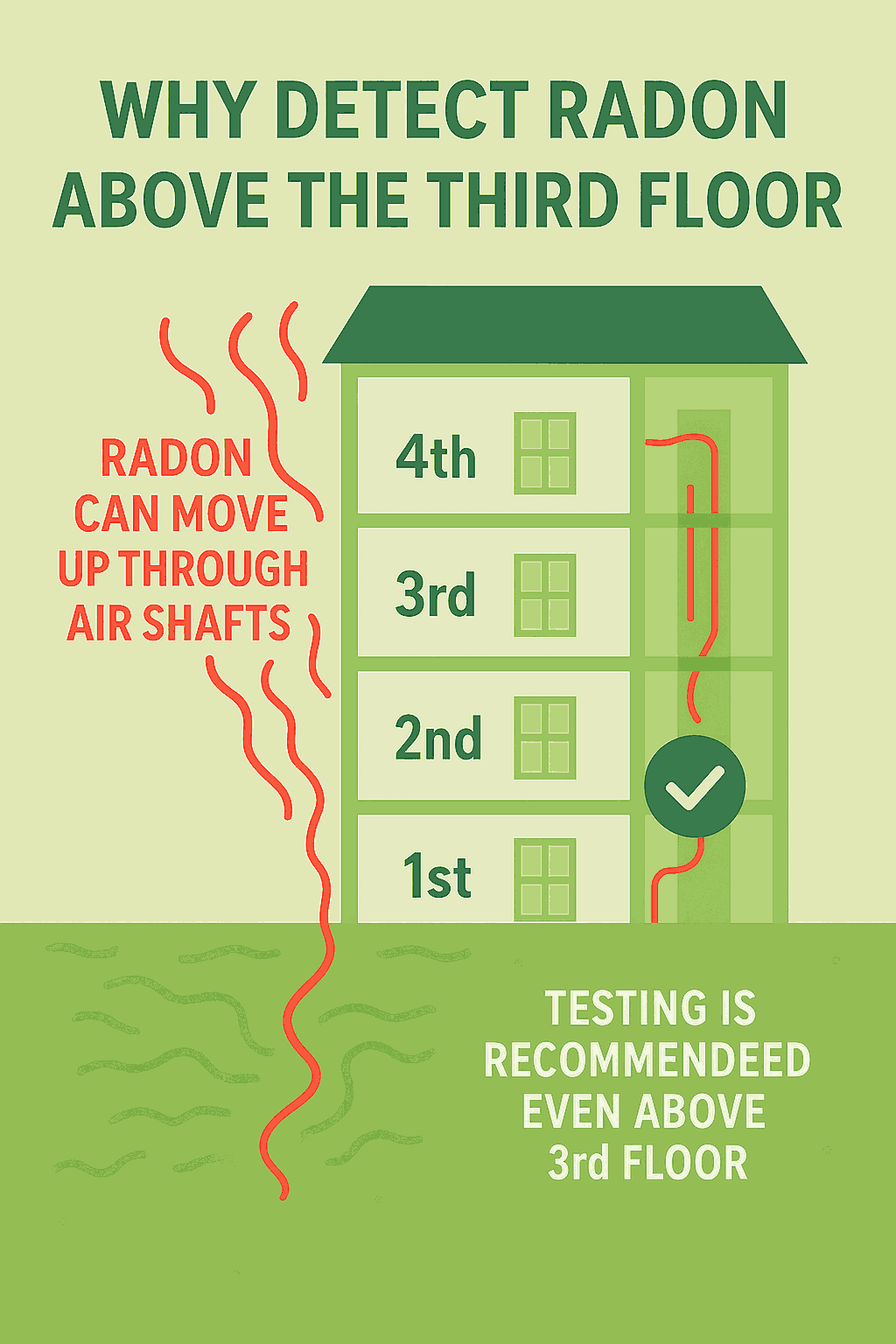
In some buildings, radon can move upward through elevator shafts or air ducts, reaching higher floors.
If you live on or above the third floor and are concerned, testing for radon is still a good idea.
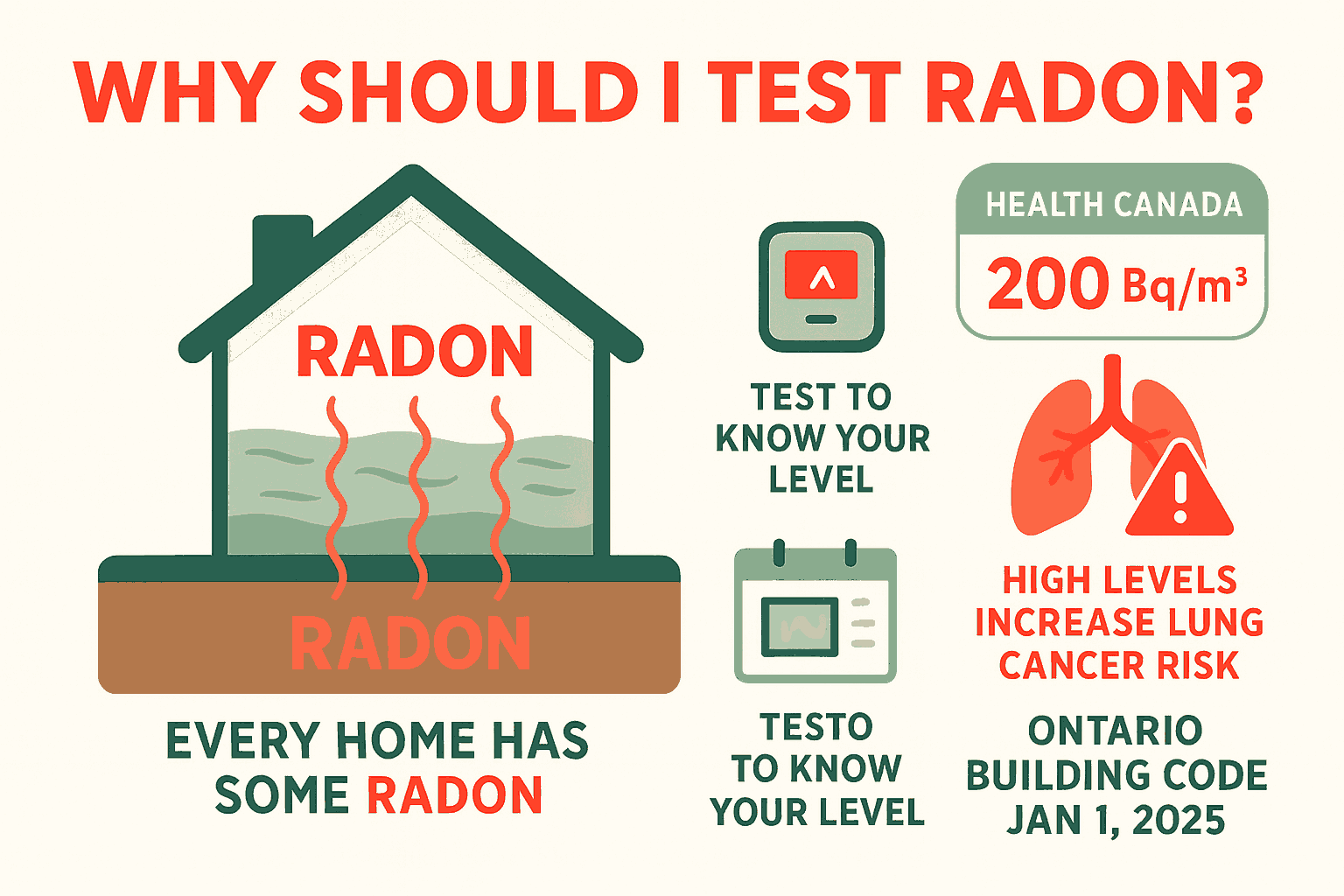
Every home has some level of radon - the question is how much.
Radon is colourless and odourless, and the only way to detect it is with a testing device.
Knowing your home’s radon level helps protect your health, as long-term exposure increases the risk of lung cancer.
Health Canada recommends taking action if levels exceed 200 Bq/m³, and the Ontario Building Code now requires radon system rough-ins in new homes starting January 1, 2025.
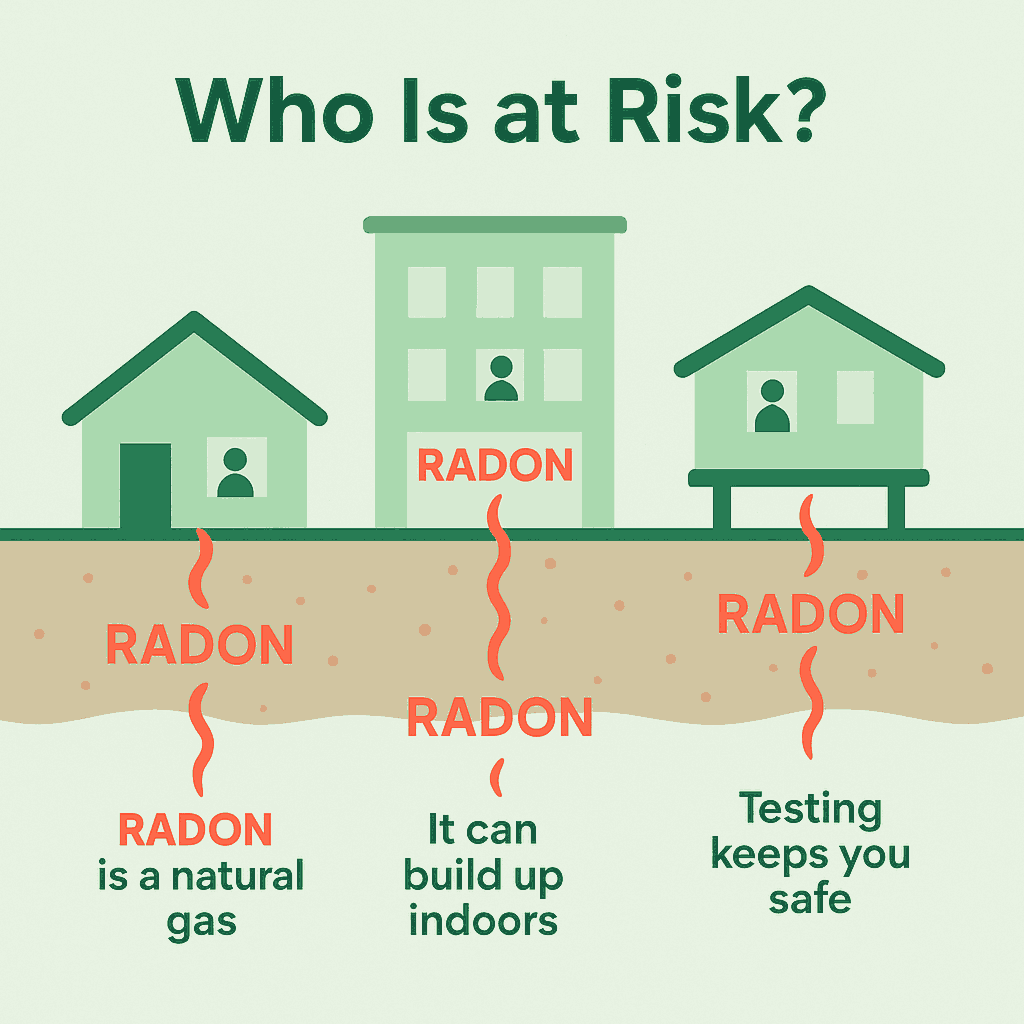
Everyone is at risk.
Radon is a naturally occurring gas that can build up to harmful levels indoors.
It can affect any type of building - even those raised above ground - so testing is the only way to know your risk.
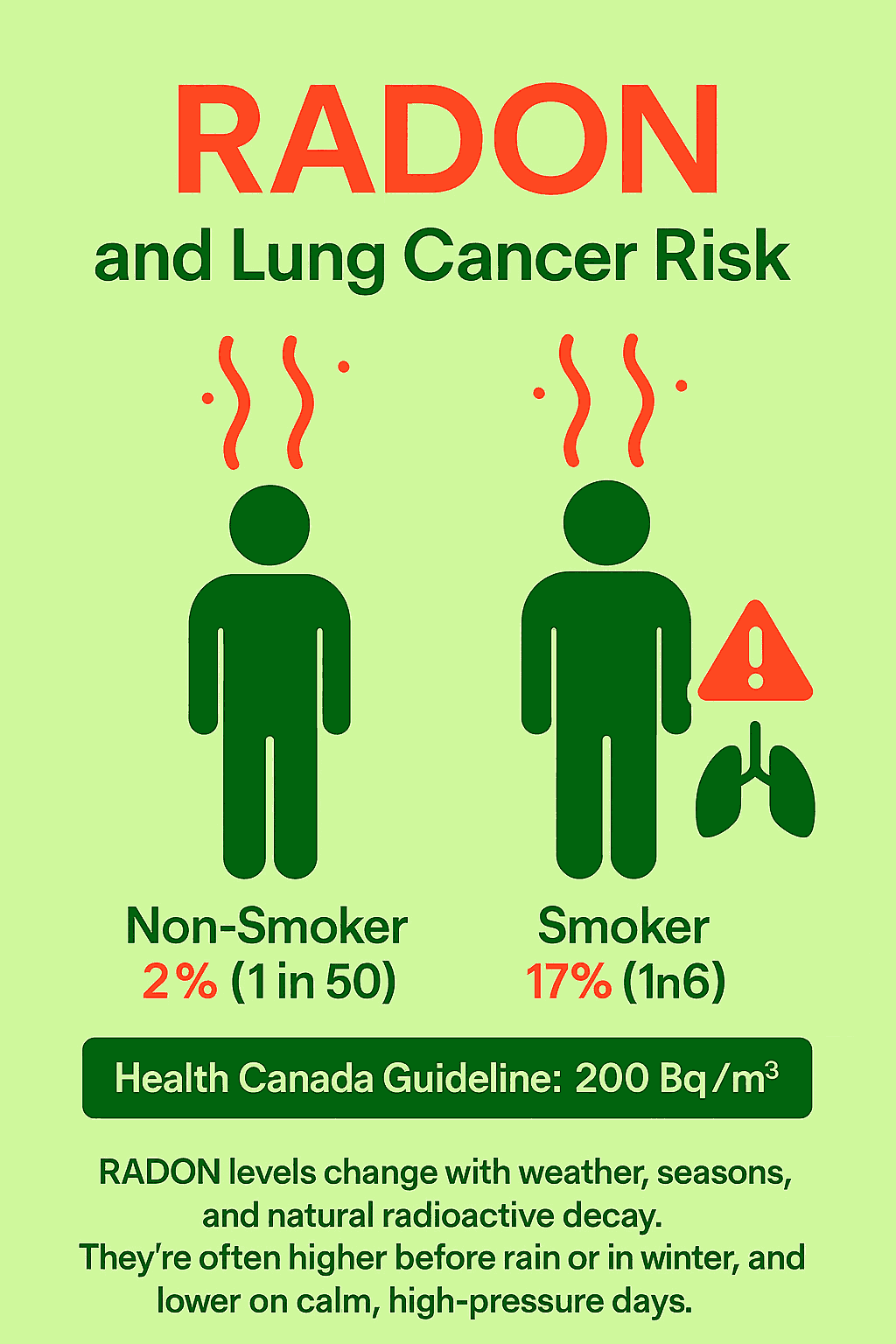
Radon is the second leading cause of lung cancer in Canada after smoking - and the leading cause among non-smokers.
At the Health Canada guideline level of 200 Bq/m³, the lifetime risk of developing lung cancer is about:
- 2% for non-smokers (≈ 1 in 50)
- 17% for smokers (≈ 1 in 6)
Health Canada recommends taking action to reduce radon if levels exceed 200 Bq/m³ - but lowering it further is always better.
RADON releases alpha particles when it decays.
These particles can’t penetrate skin, but when inhaled, they damage lung cells because the inside of our lungs has no protective layer.
Over time, this damage can increase the risk of lung cancer.
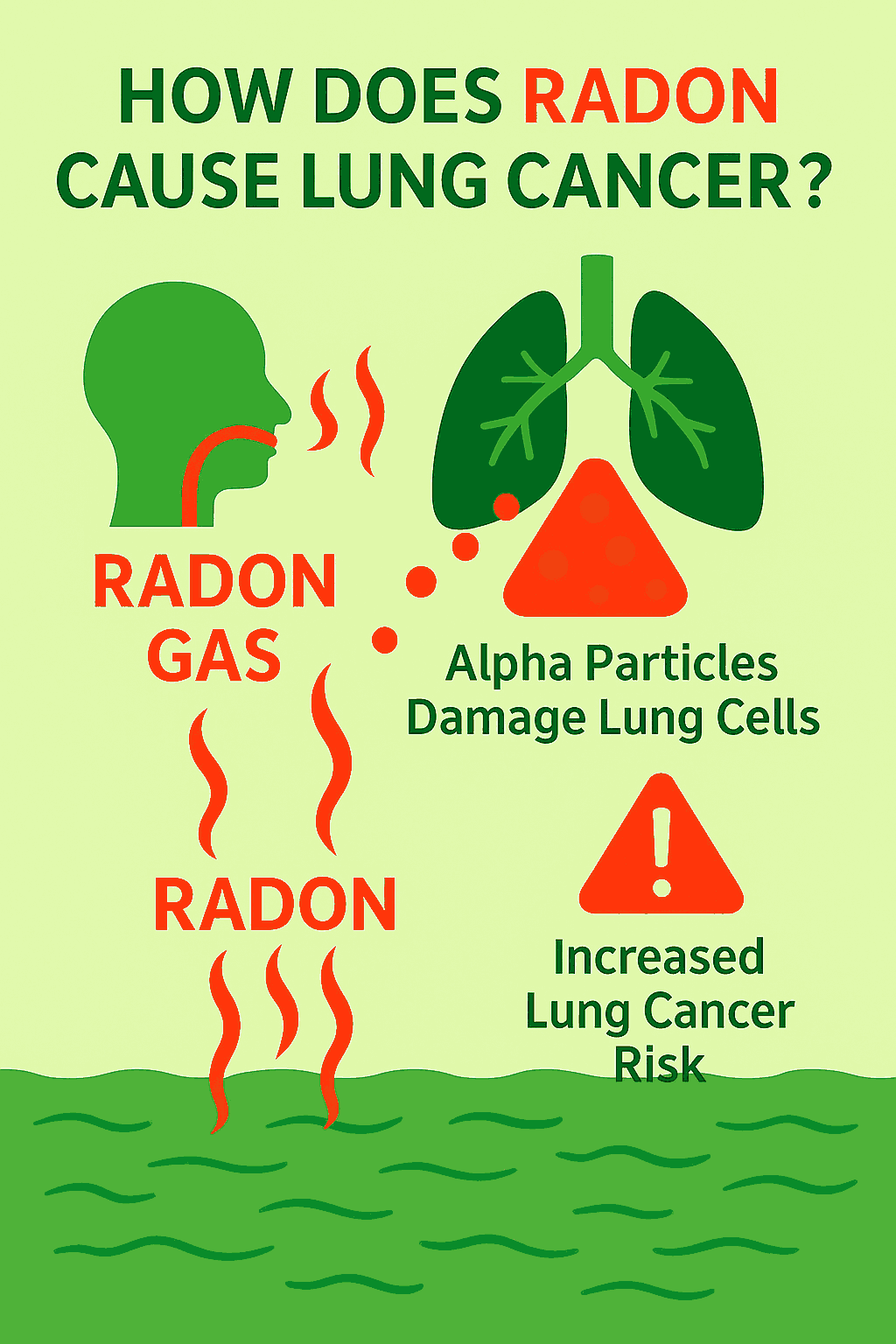
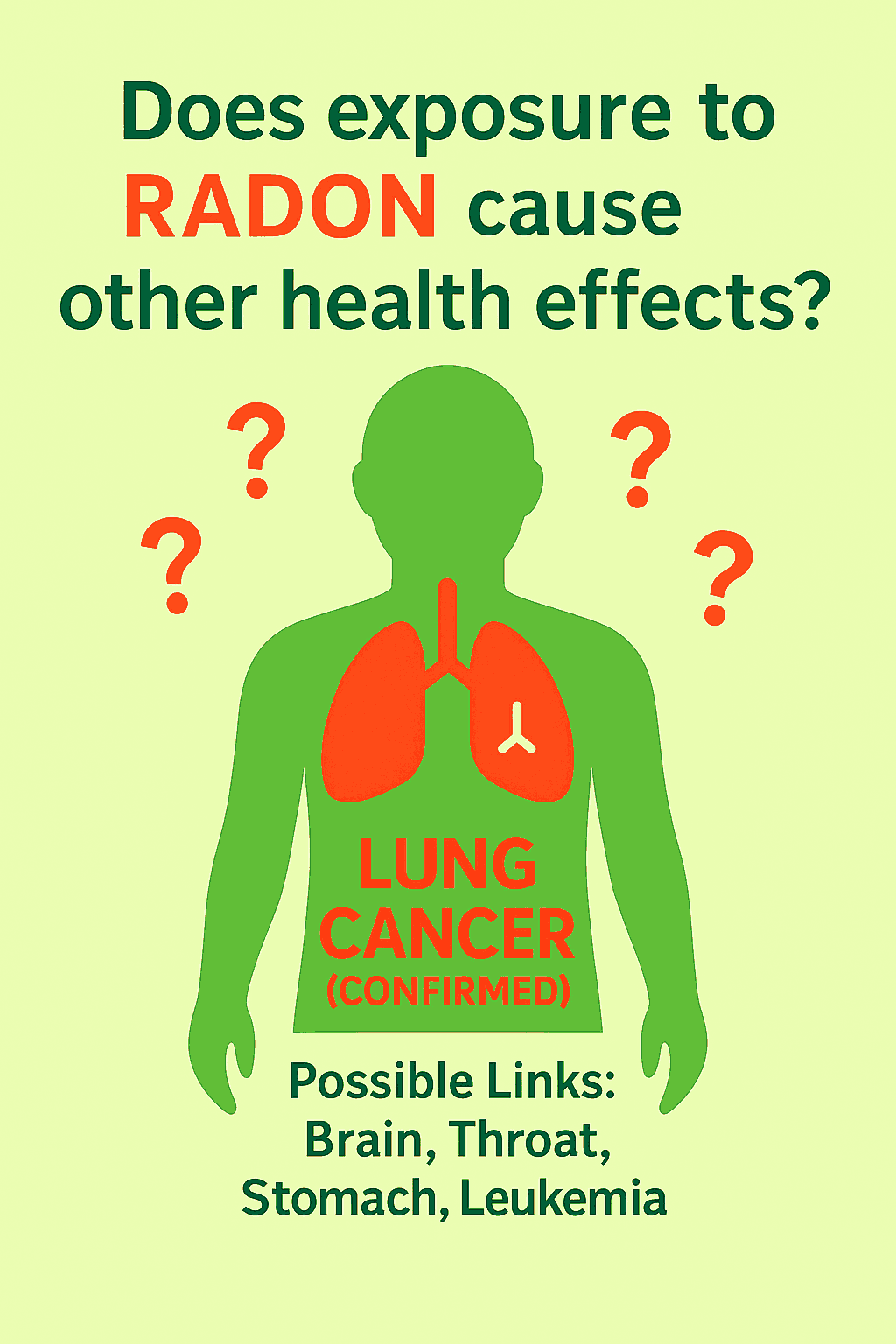
Currently, the only confirmed health effect from RADON exposure is lung cancer.
Some studies suggest possible links to brain cancer, childhood leukemia, throat, and stomach cancers, but these have not been confirmed.
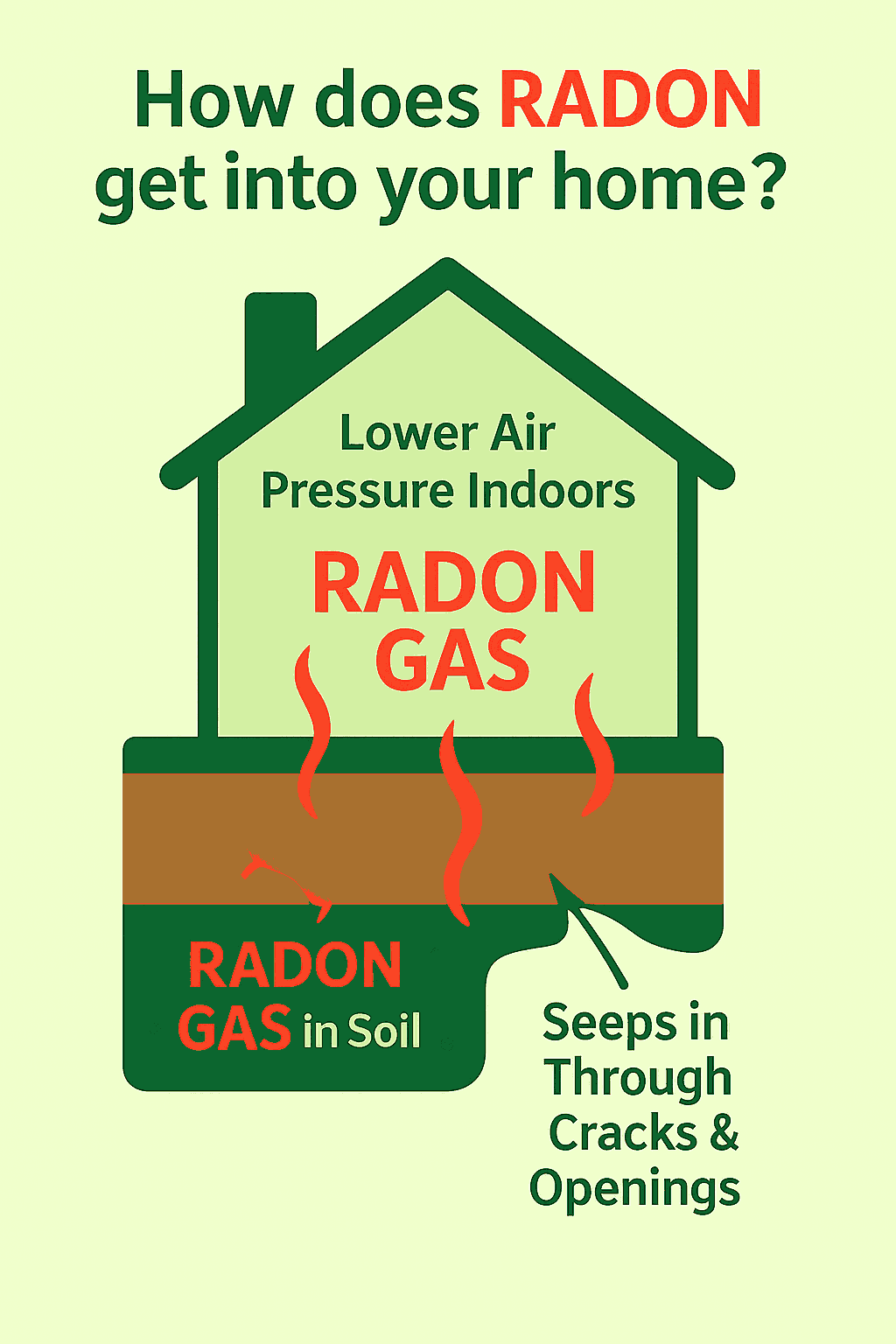
RADON moves from the ground into your home because indoor air pressure is lower than in the soil.
It seeps in through small cracks, gaps, and openings in the foundation or floors.
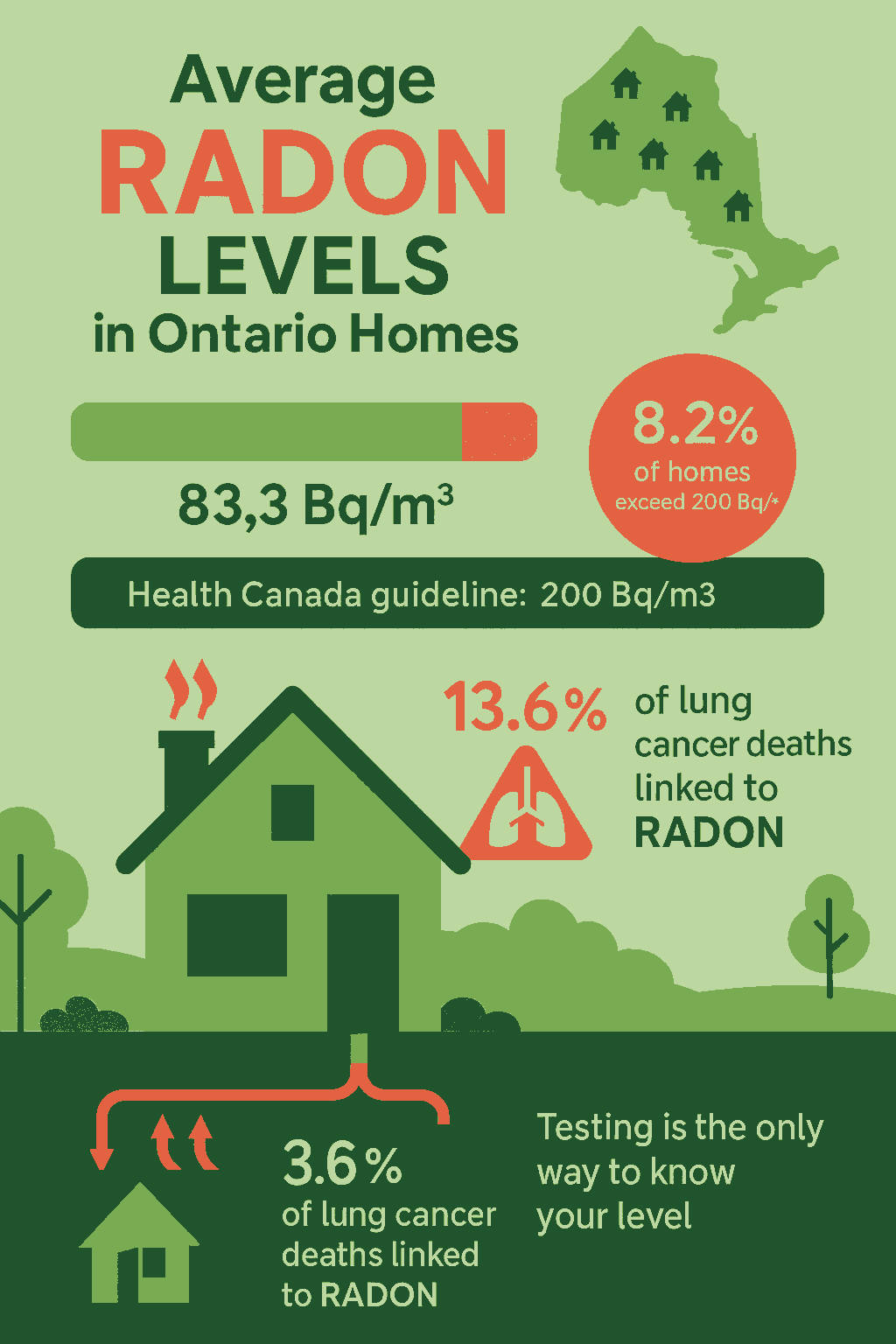
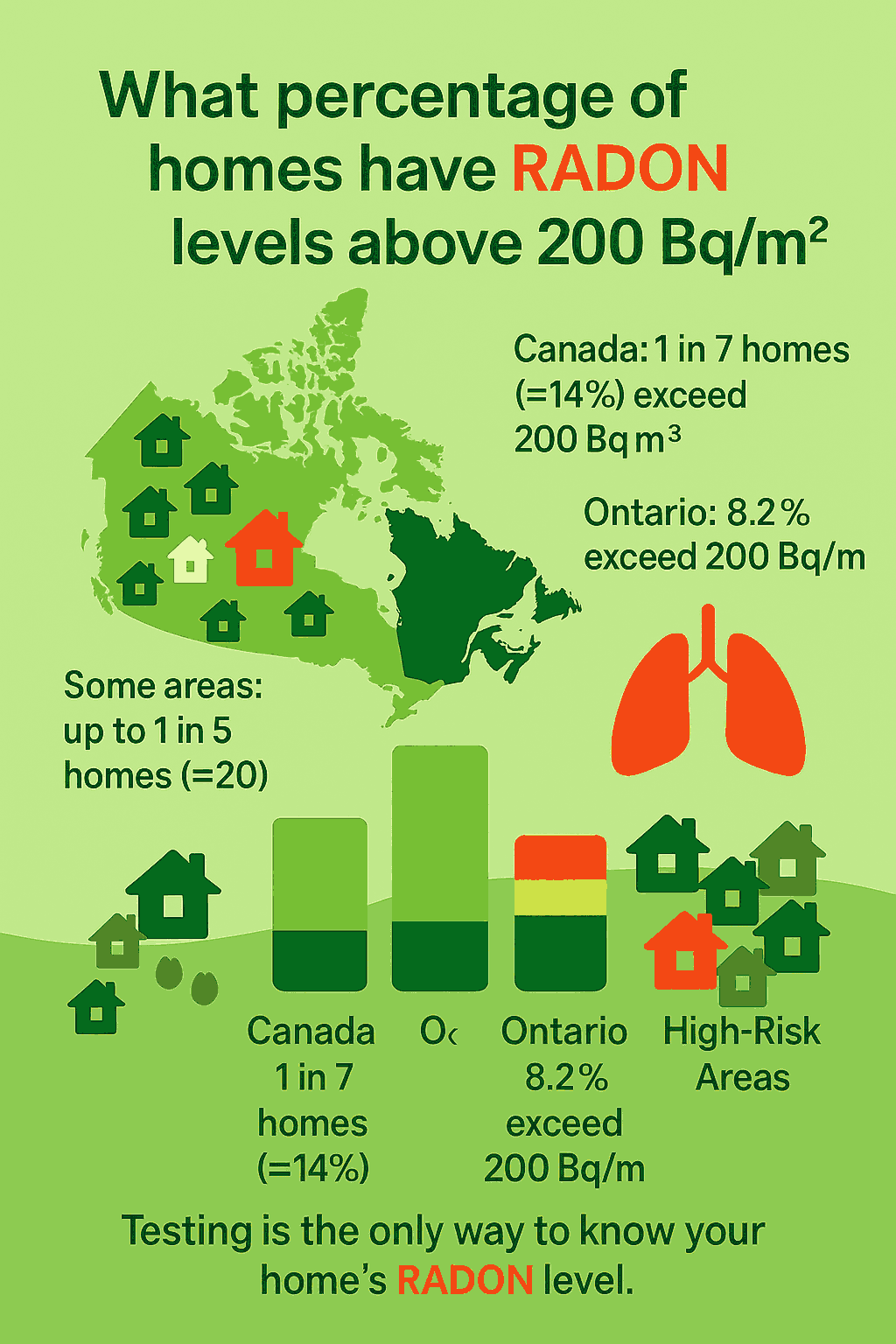
- About 8.2% of homes exceed 200 Bq/m³,
- Around 17% fall between 100–200 Bq/m³,
- An estimated 13.6% of lung cancer deaths in Ontario are linked to RADON exposure.
Health Canada recommends taking action if your home’s RADON level exceeds 200 Bq/m³. However, RADON levels can vary greatly from house to house - the only way to know your home’s level is to test.
Across Canada, about 1 in 7 homes (around 14%) have RADON levels exceeding 200 Bq/m³, which is the Health Canada guideline.
In Ontario, roughly 8.2% of homes are above this level on average, but in some regions, it can be as high as 1 in 5 homes (about 20%).
🟢 Testing is the only way to know your home’s RADON level.
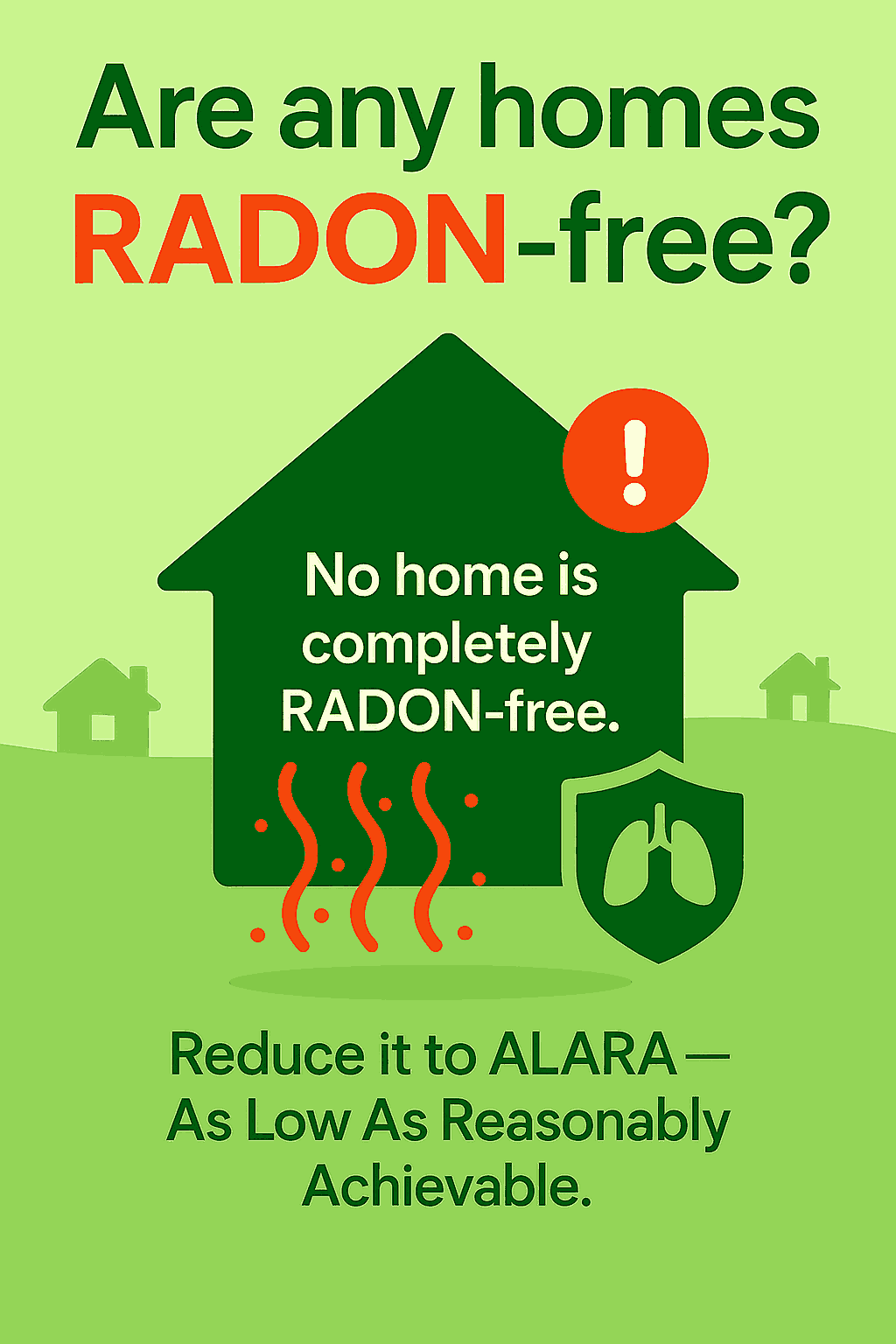
No - it’s nearly impossible to eliminate RADON completely.
Because RADON occurs naturally in soil and air, every home has some level of it.
The goal is to keep it “As Low As Reasonably Achievable (ALARA).”
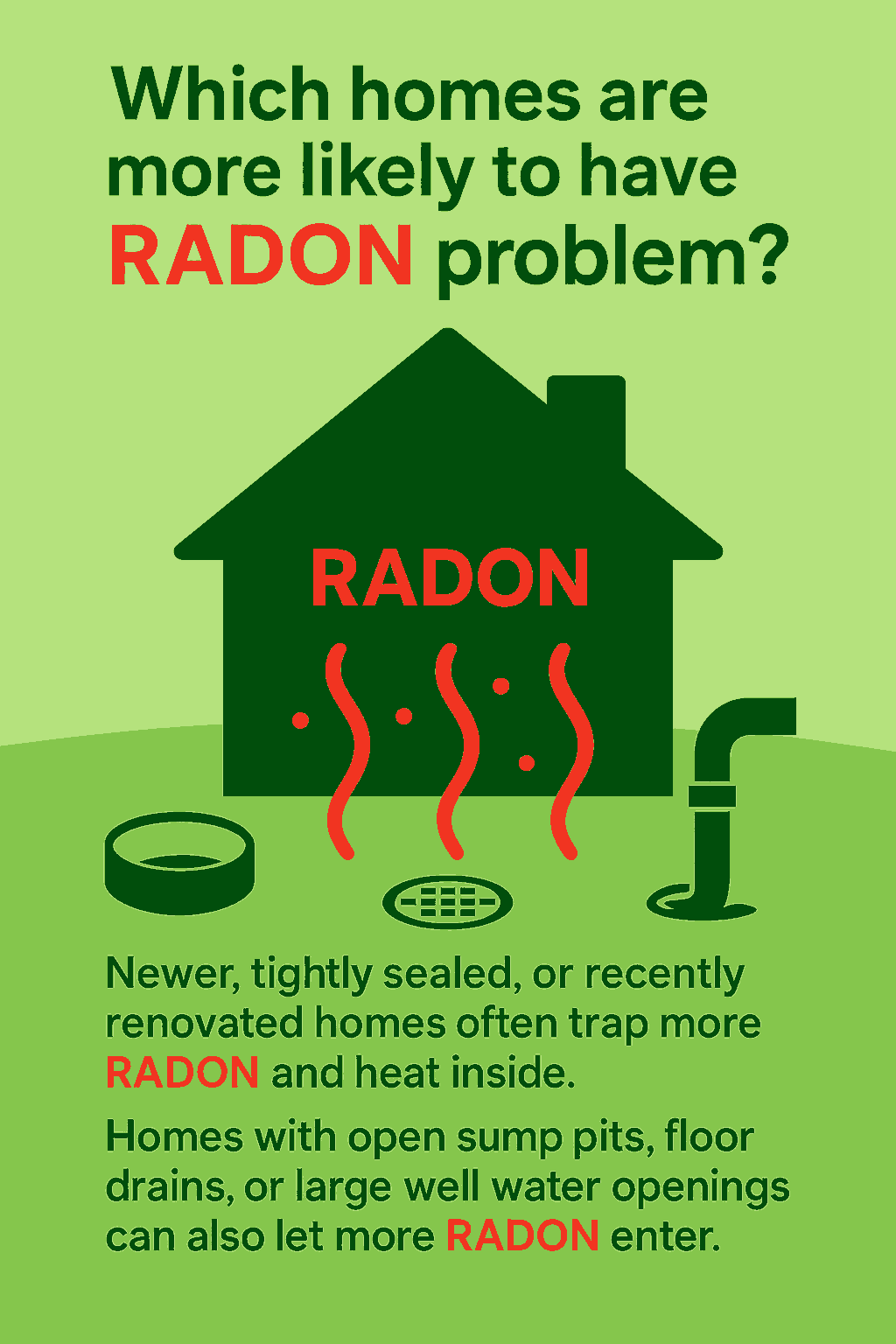
Newer, tightly sealed, or recently renovated homes often trap more RADON and heat inside.
Homes with open sump pits, floor drains leading to soil, or large openings for well water lines can also let more RADON enter.
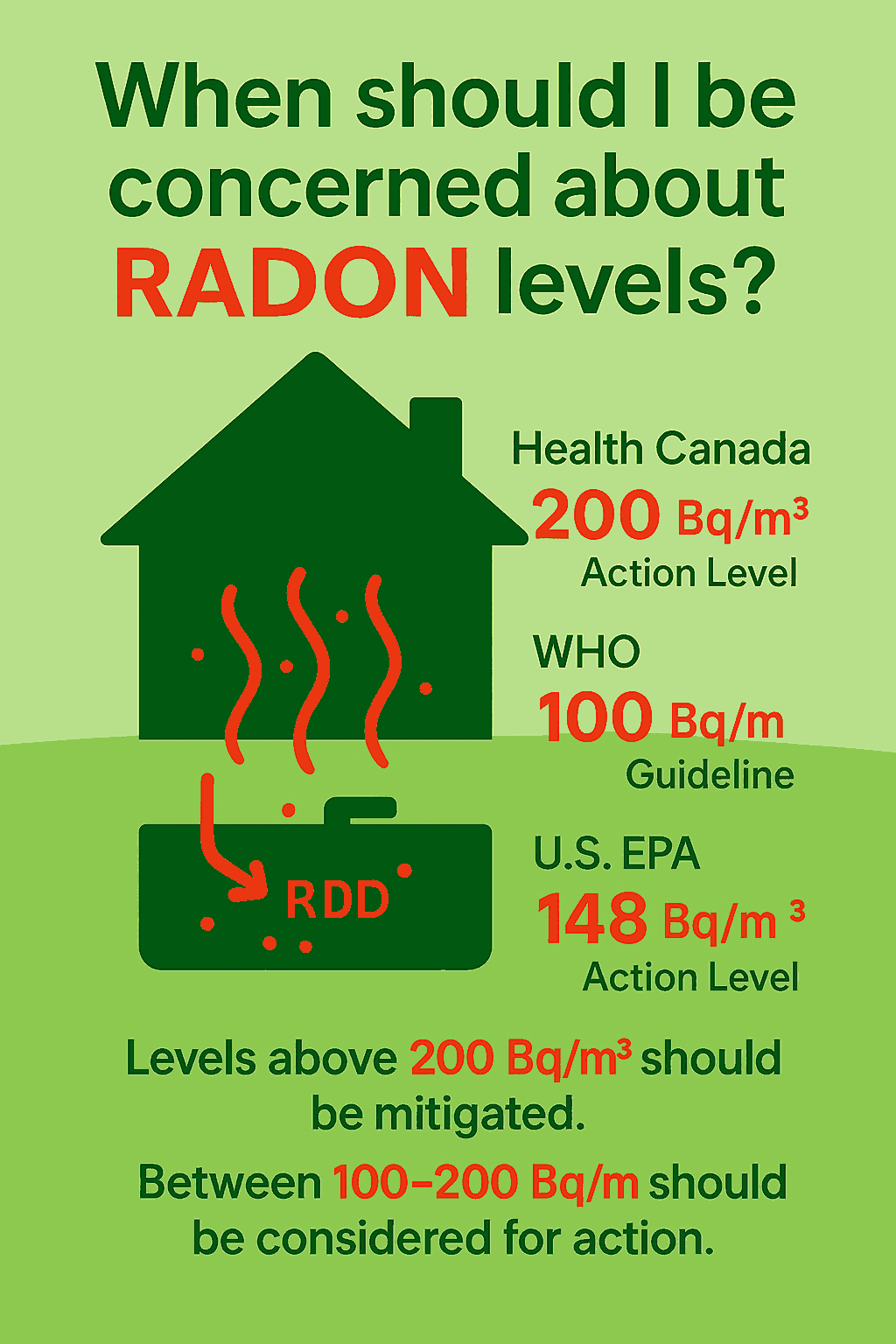
You should take action if your RADON level is above 200 Bq/m³, as recommended by Health Canada.
Levels between 100 – 200 Bq/m³ should also be considered for mitigation, since the World Health Organization’s guideline is 100 Bq/m³ and the U.S. EPA’s action level is 148 Bq/m³.
Ultimately, it’s your decision to choose the level of RADON you’re comfortable living with in your home.
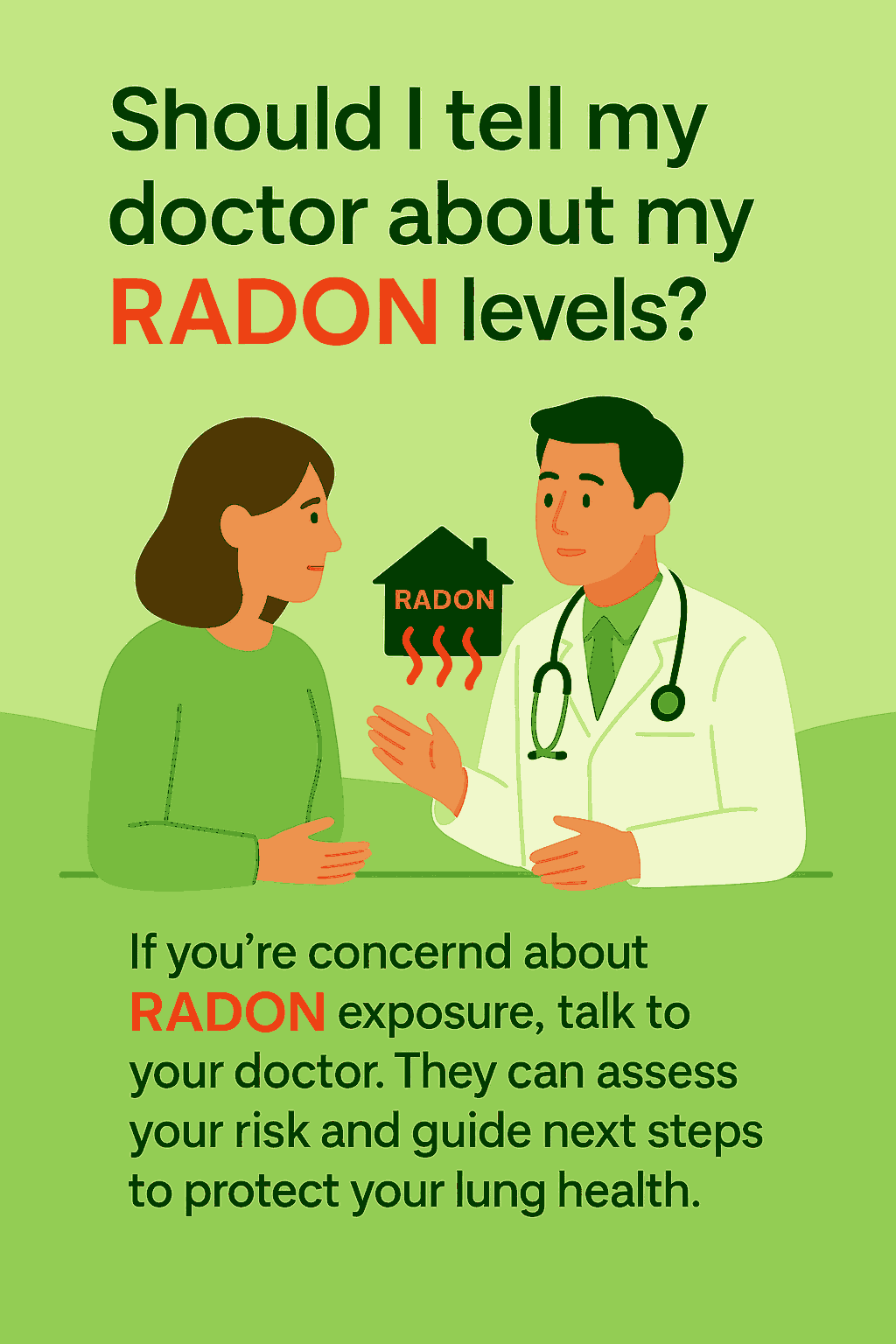
Yes. If you’re concerned about your RADON exposure, talk to your family doctor. They can help assess your risk and decide if any follow-up steps are needed to protect your lung health.
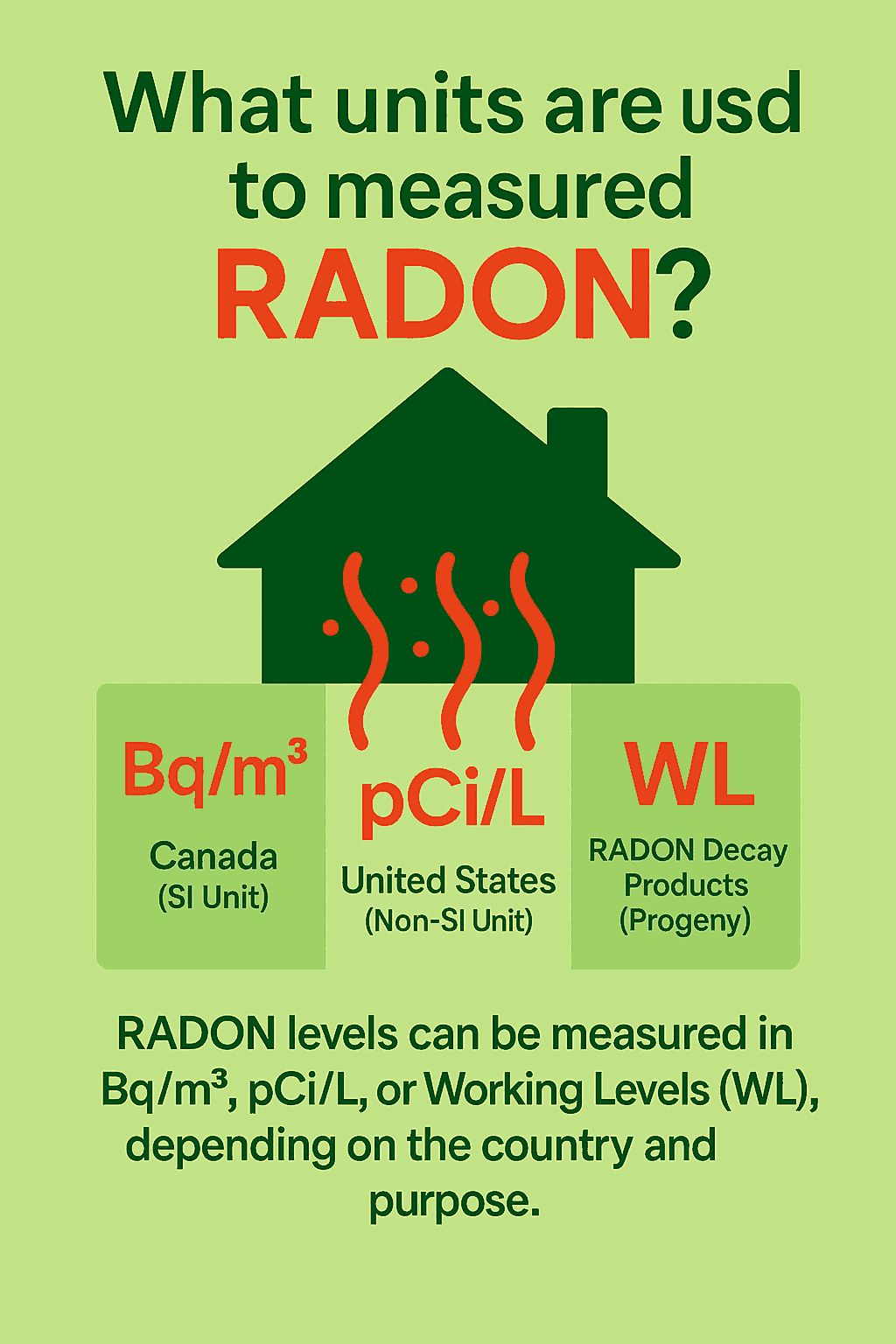
RADON levels are measured in three main units:
1. Becquerels per cubic metre (Bq/m³) – used in Canada (SI unit)
2. picoCuries per litre (pCi/L) – used in the United States (non-SI unit)
3. Working Levels (WL) – used to describe RADON decay products (progeny)
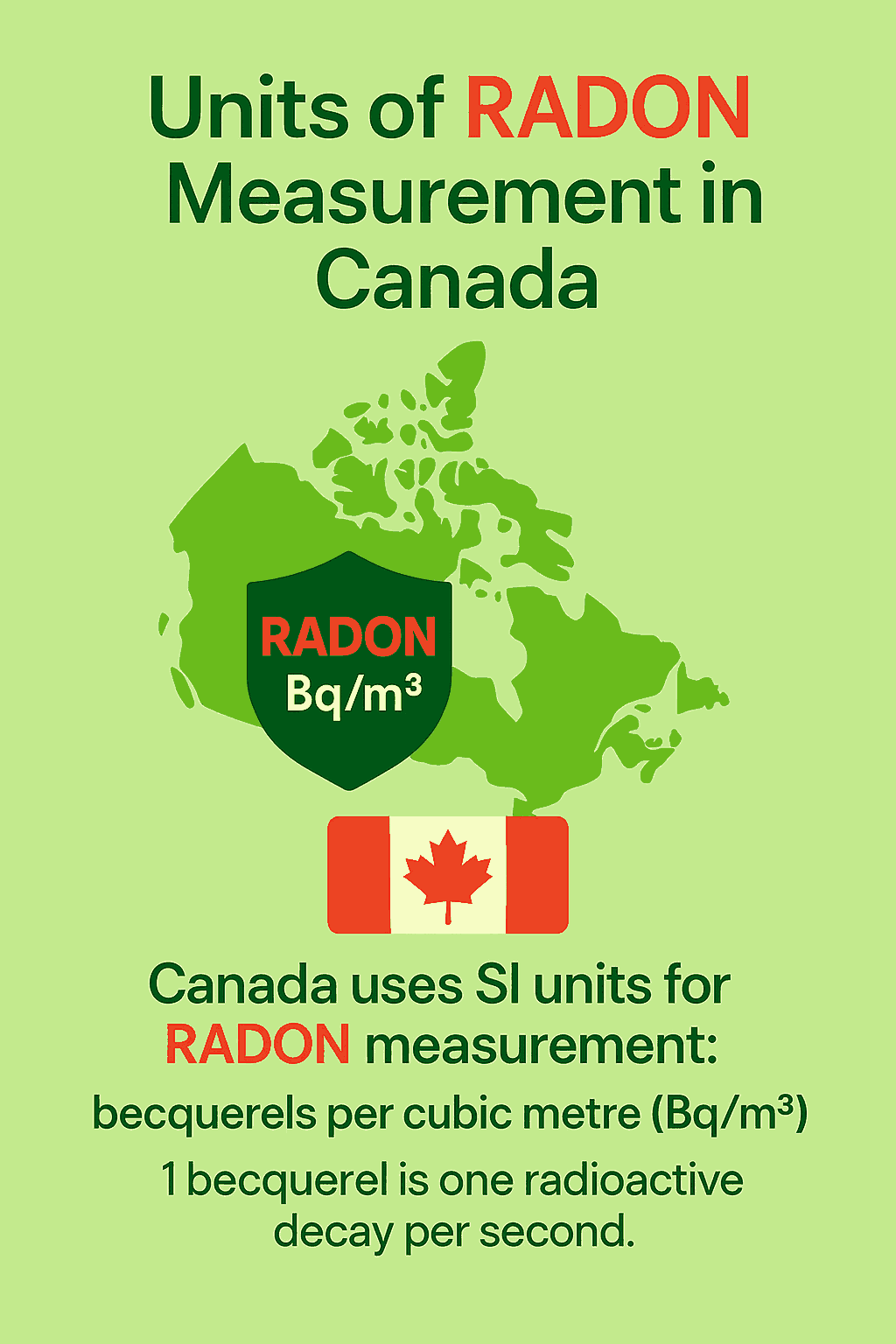
In Canada, RADON is measured in Becquerels per cubic metre (Bq/m³), following the International System of Units (SI).
One Becquerel (Bq) equals one radioactive disintegration per second.
If your test uses a different unit, you should convert it to Bq/m³ to compare it with Canadian guidelines.
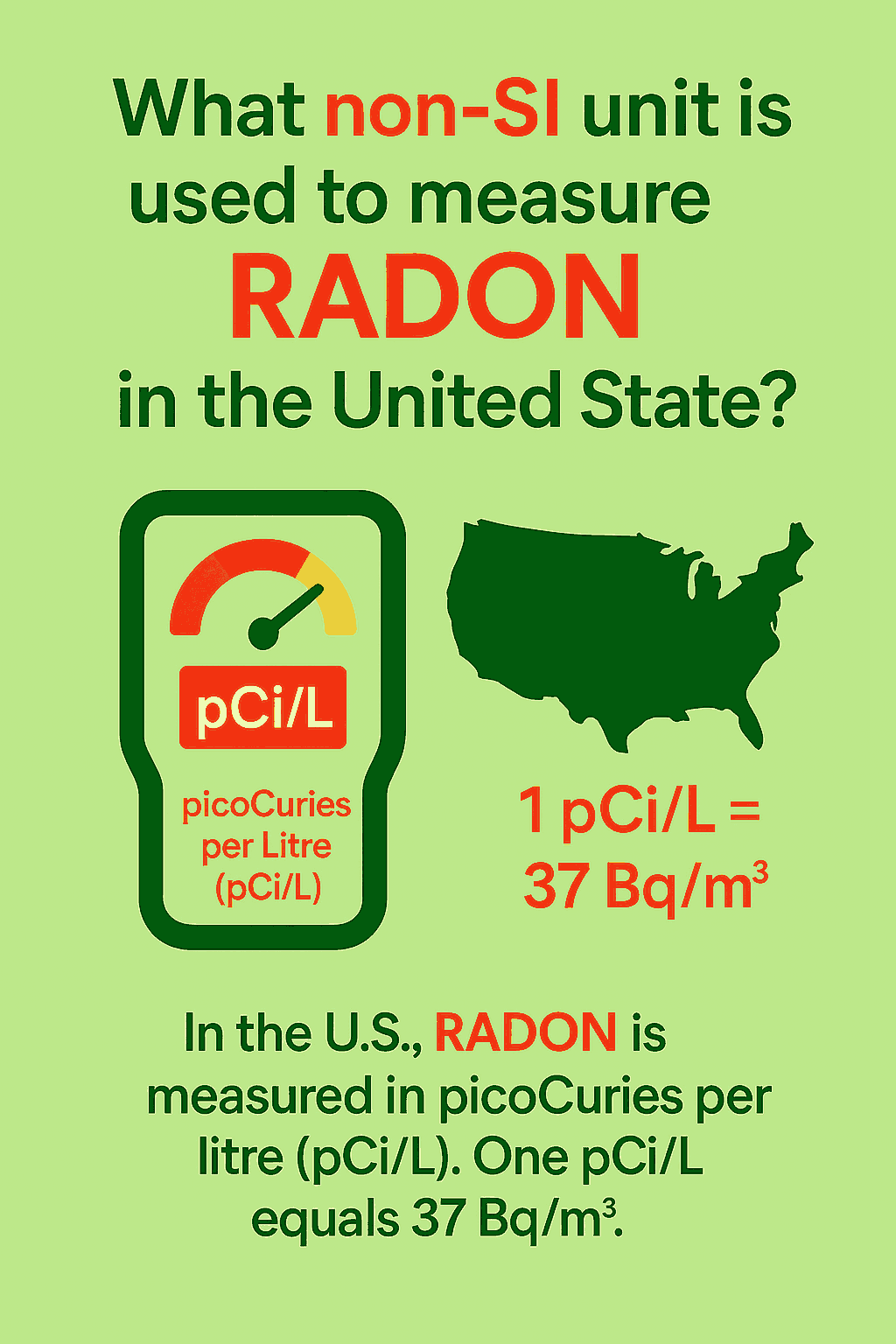
In the U.S., RADON is measured in picoCuries per litre (pCi/L).
One pCi/L is equal to 37 Bq/m³.
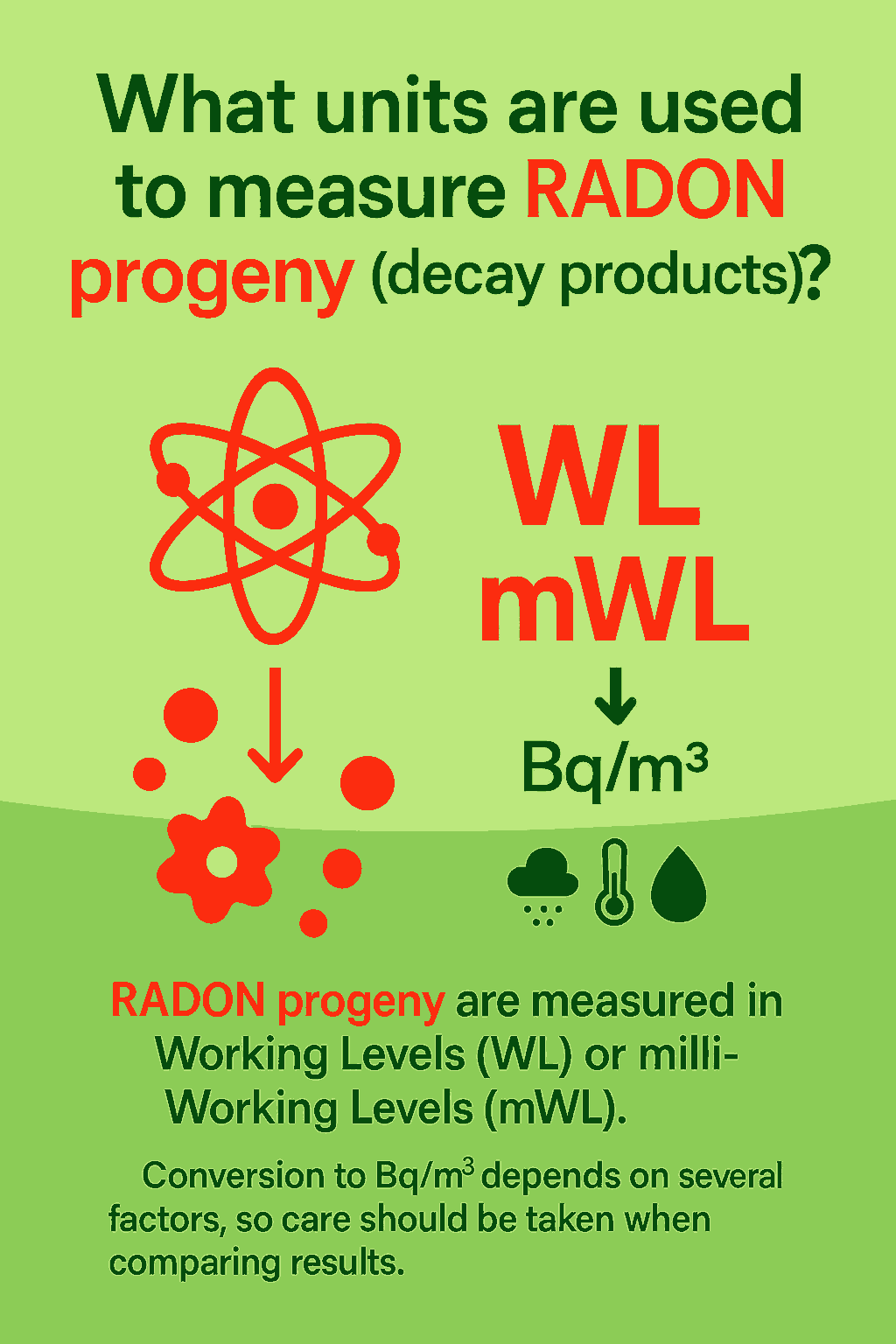
RADON progeny are measured in Working Levels (WL) or milliWorking Levels (mWL).
Converting from WL to Bq/m³ depends on several environmental factors, so caution is needed when comparing RADON progeny measurements to RADON gas levels.
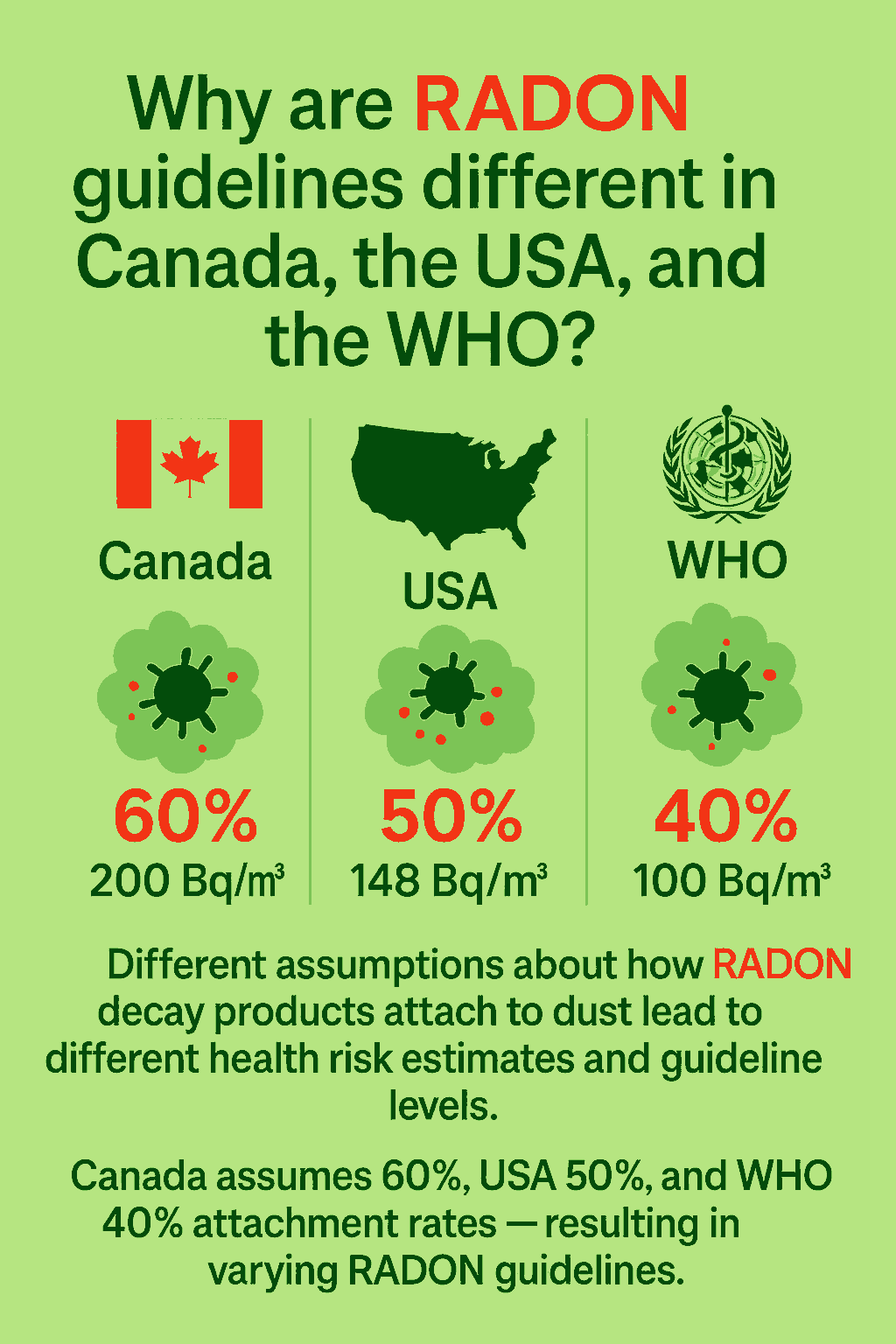
Each organization uses different assumptions about how RADON decay products (RDPs) attach to dust and particles in the air - which affects how much can be inhaled and how risky the exposure is.
- Canada assumes 60% of RDPs attach to airborne particles.
- USA assumes 50%.
- WHO assumes 40%.
These differences lead to varying guideline levels:
- Canada: 200 Bq/m³
- USA (EPA): 148 Bq/m³ (4.0 pCi/L)
- WHO: 100 Bq/m³
Each country also considers practical factors like housing styles, climate, and mitigation feasibility when setting their limits.
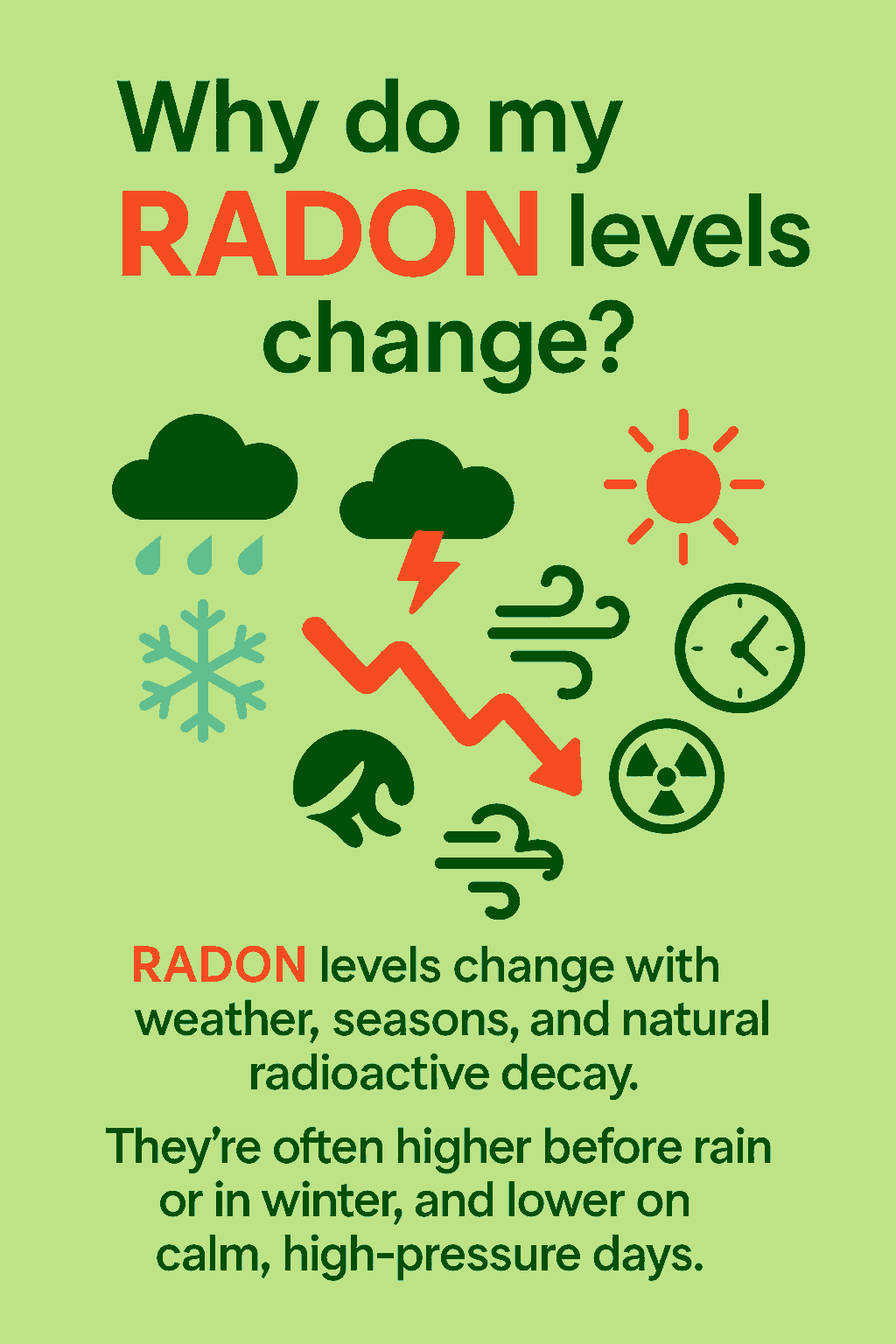
RADON levels naturally fluctuate due to weather and environmental conditions.
They’re often higher before rain, during storms, and in winter, but lower on calm, high-pressure days.
RADON also changes randomly over time because of its natural radioactive decay, measured in “half-lives.”
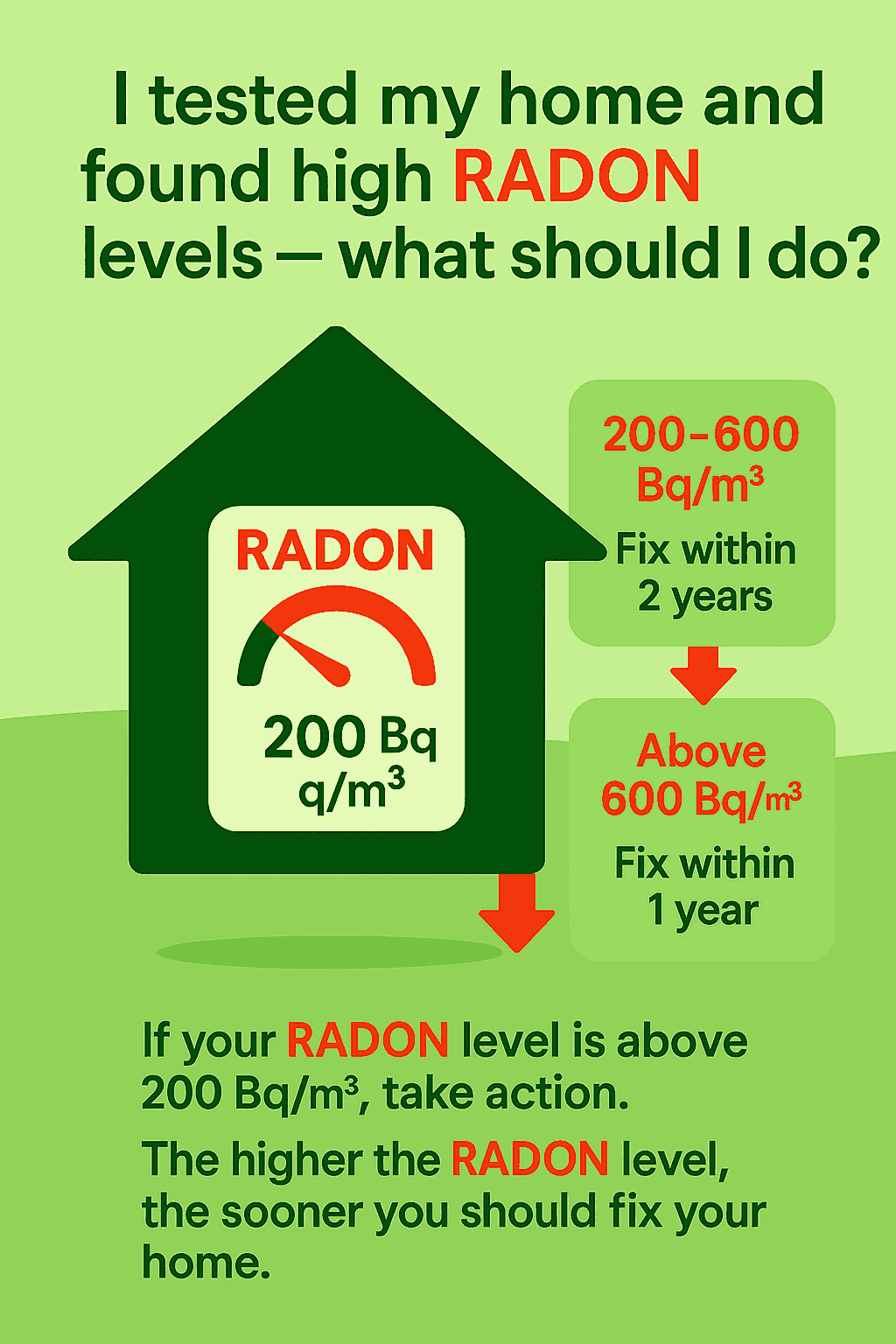
If your RADON level is above 200 Bq/m³, Health Canada recommends taking action to reduce it.
- 200–600 Bq/m³: Fix your home within 2 years.
- Above 600 Bq/m³: Fix your home within 1 year.
The higher the RADON level, the sooner you should act to lower it.