Builders: Best Practices for RADON Control in New Construction
No area of Canada is radon-free.
The level of RADON in a newly built home cannot be predicted, so every homeowner should test their home during the first heating season after completion using a long-term (91+ days) test.
Because concrete continues to cure and the building envelope changes over the first few years, homeowners should retest for RADON after three years to confirm levels remain low.
RADON and the Building Code
The National Building Code (NBC) and many provincial and territorial codes require a rough-in for future radon reduction systems in all new homes.
Three Levels of RADON Systems
1️⃣ Extended Rough-In System
A complete rough-in where piping extends through the building envelope to the exterior.
2️⃣ Passive System
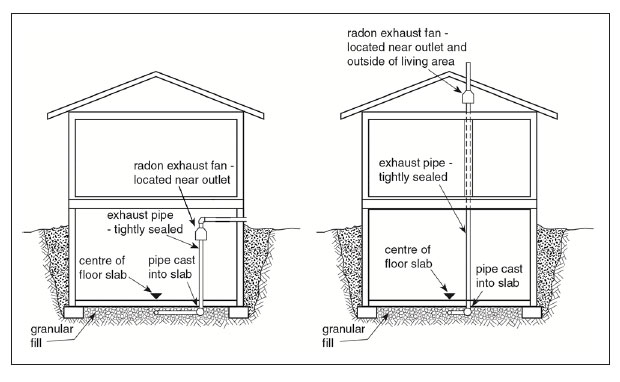
A fully piped system extending through the attic and vented above the roofline.
3️⃣ Active System
Similar to the passive system, but includes a fan to create negative pressure beneath the slab, drawing RADON from the soil and venting it outdoors.
Also known as Sub-Slab Depressurization (SSD) or Sub-Membrane Depressurization (SMD).
Ontario Building Code
2024 OBC 9.13.4.3. Effective Depressurization
The 2024 Ontario Building Code requires all new homes with floors-on-ground to include a subfloor depressurization rough-in.
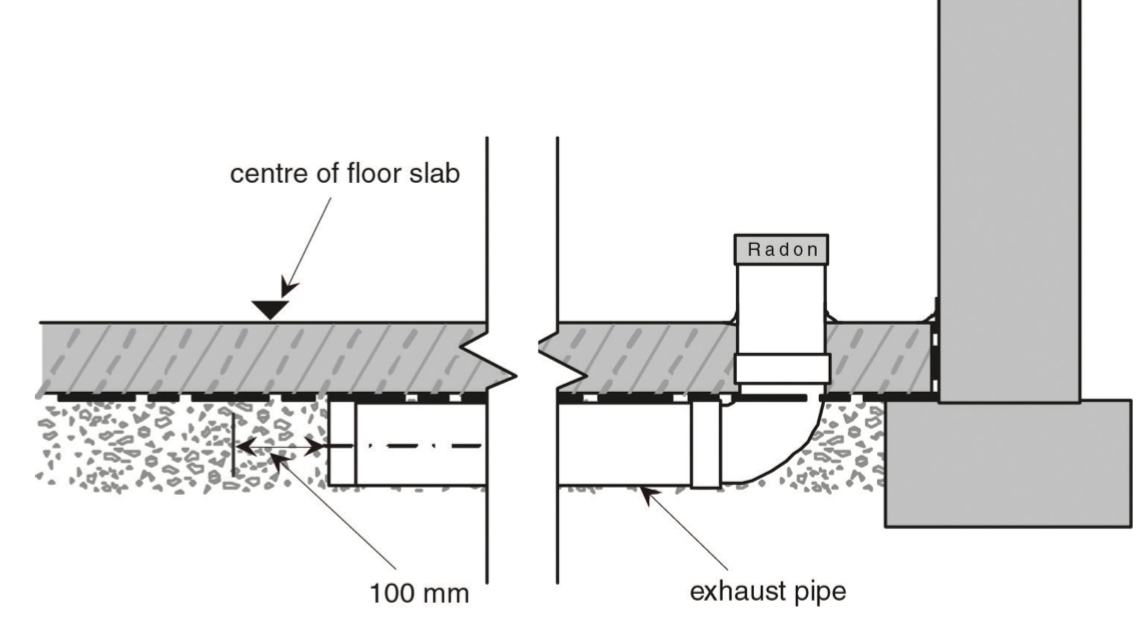
A gas-permeable layer and a labelled RADON vent pipe must be installed so that the space below the slab can be effectively depressurized in the future.
All slab penetrations must be sealed as part of the air-barrier system, and the pipe must vent safely to the exterior.
These requirements ensure the home can be upgraded to an active RADON mitigation system if needed.