FAQ : About Testing Location
This section explains how to choose the Right Location for your RADON Test to ensure accurate and meaningful results.
You’ll learn where to place the detector, which areas of the home should be prioritized, and what locations to avoid during testing.
Understanding the correct testing placement helps guarantee that your RADON measurements truly represent the air you and your family breathe in your living spaces every day.
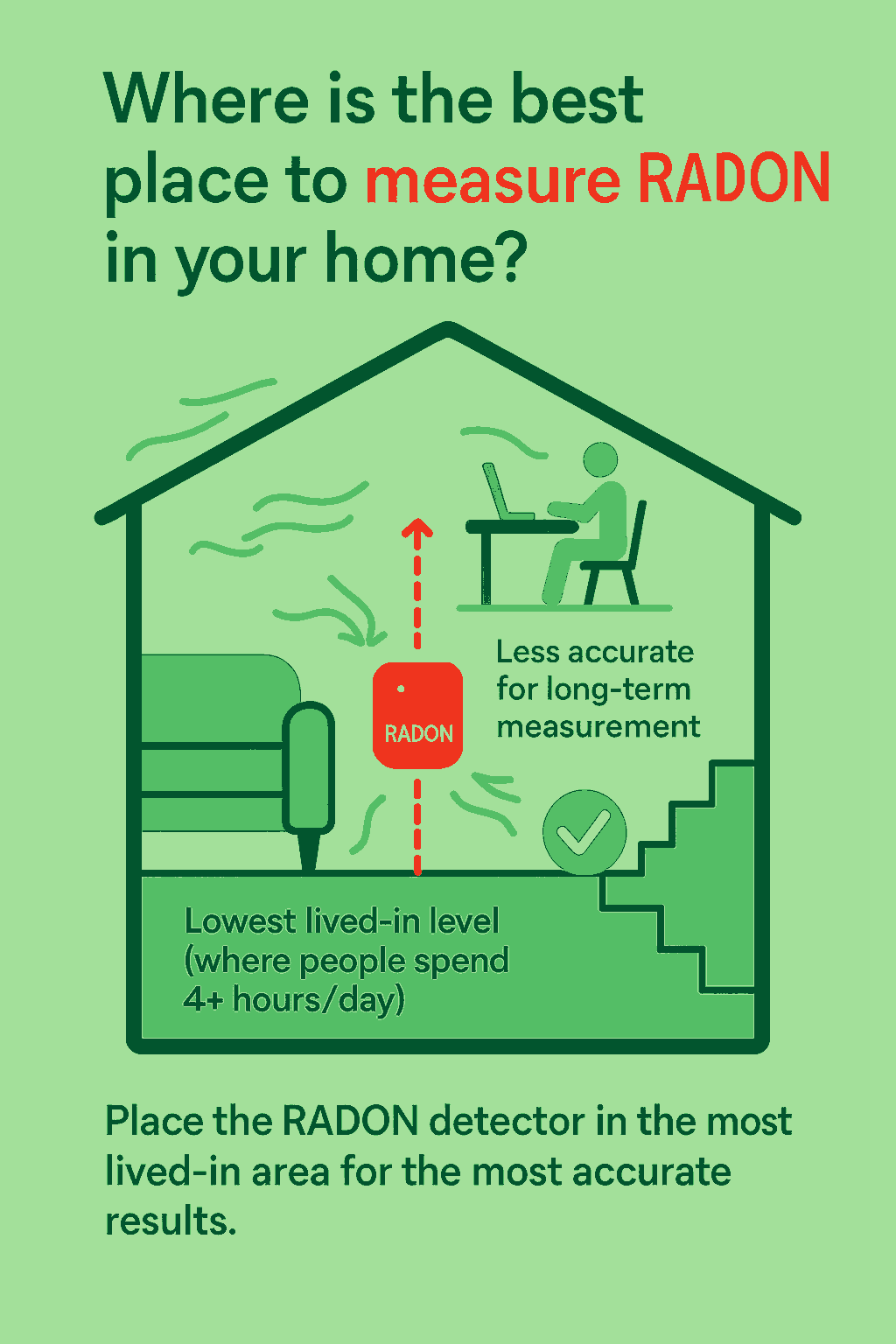
Place the RADON detector in the lowest lived-in level of your home -
the area where people spend the most time.
If the basement is finished (bedroom, playroom, or family room),
place the test device there.
If the basement is unfinished and not used for living,
test on the main floor instead.
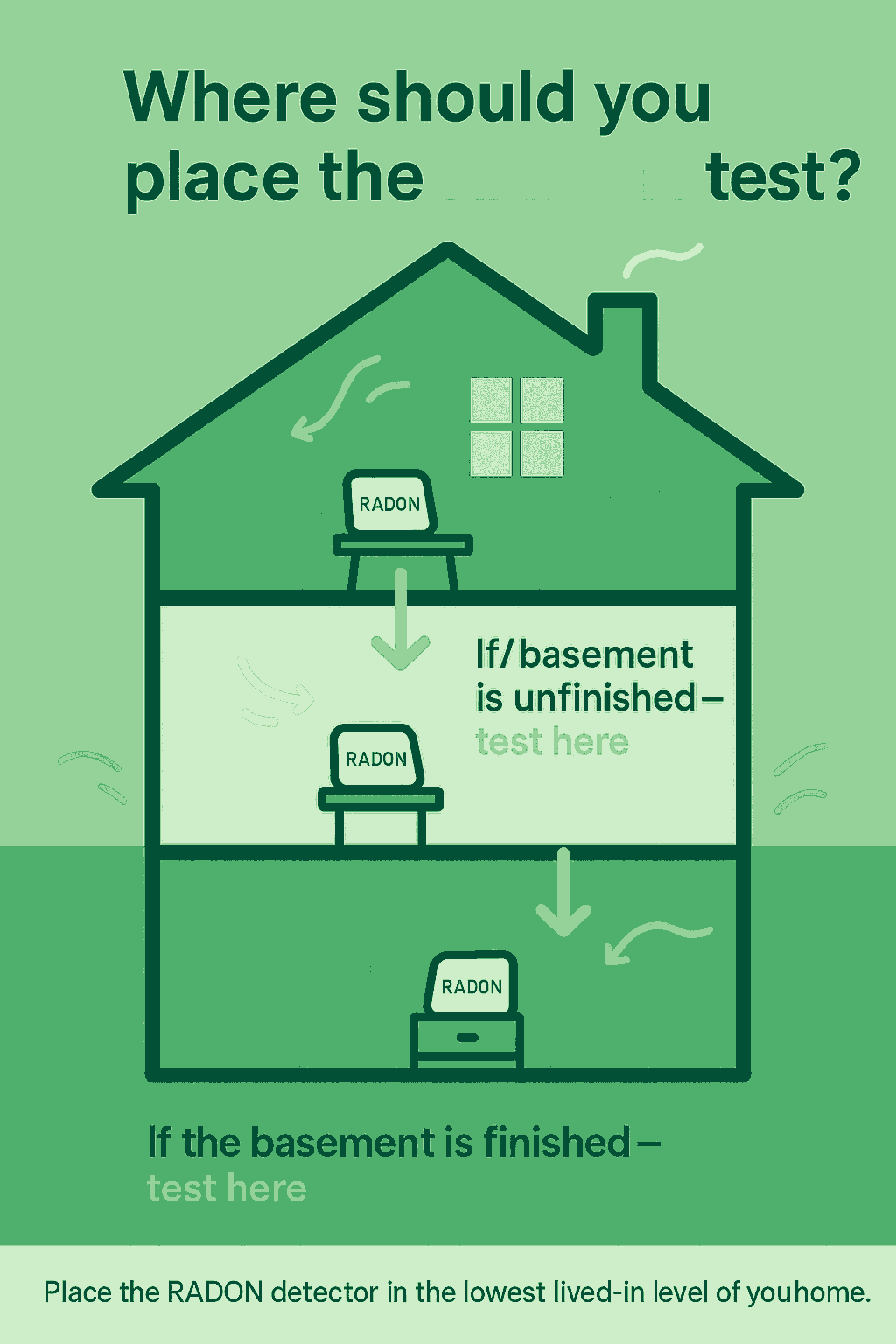
Place the RADON detector in the lowest lived-in level of your home - the area where people spend the most time.
Ideal placement:
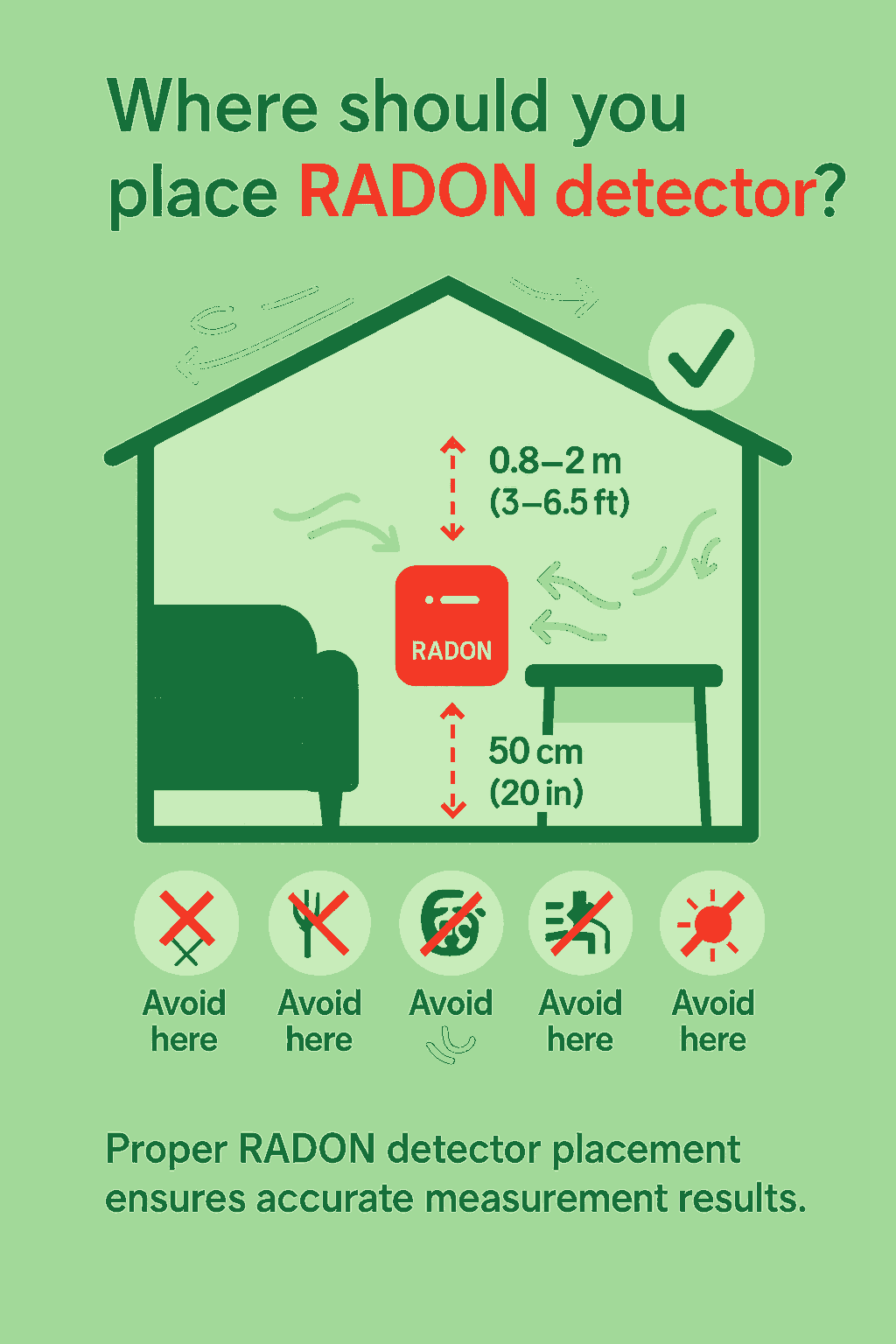
- Height: Between 0.8 m and 2 m (3–6.5 ft) above the floor, near an interior wall - within the normal breathing zone.
- Distance from walls: About 40 cm (16 in) from inside walls and 50 cm (20 in) from outside walls.
-
Clear space: Keep at least 50 cm (20 in) below the ceiling and 20 cm (8 in) away from other objects
so air can circulate freely around the detector.
Avoid placing the detector:
- In kitchens, bathrooms, laundry rooms, closets, crawl spaces, or sumps.
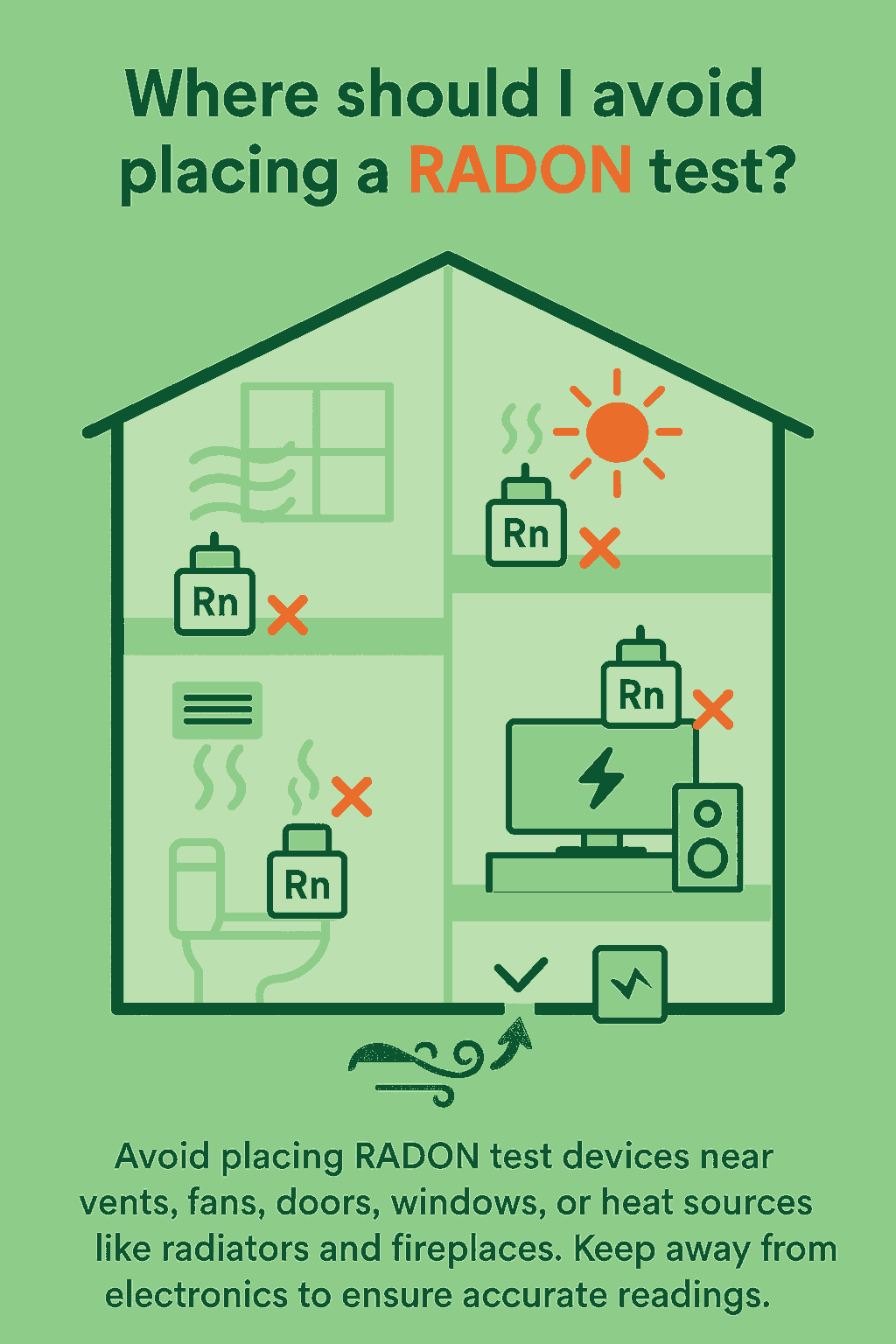
- Near vents, doors, fans, windows, fireplaces, or heating/cooling appliances.
- On top of electronics (TVs, stereos, speakers) or in direct sunlight.
Following these guidelines helps ensure accurate RADON measurement results.
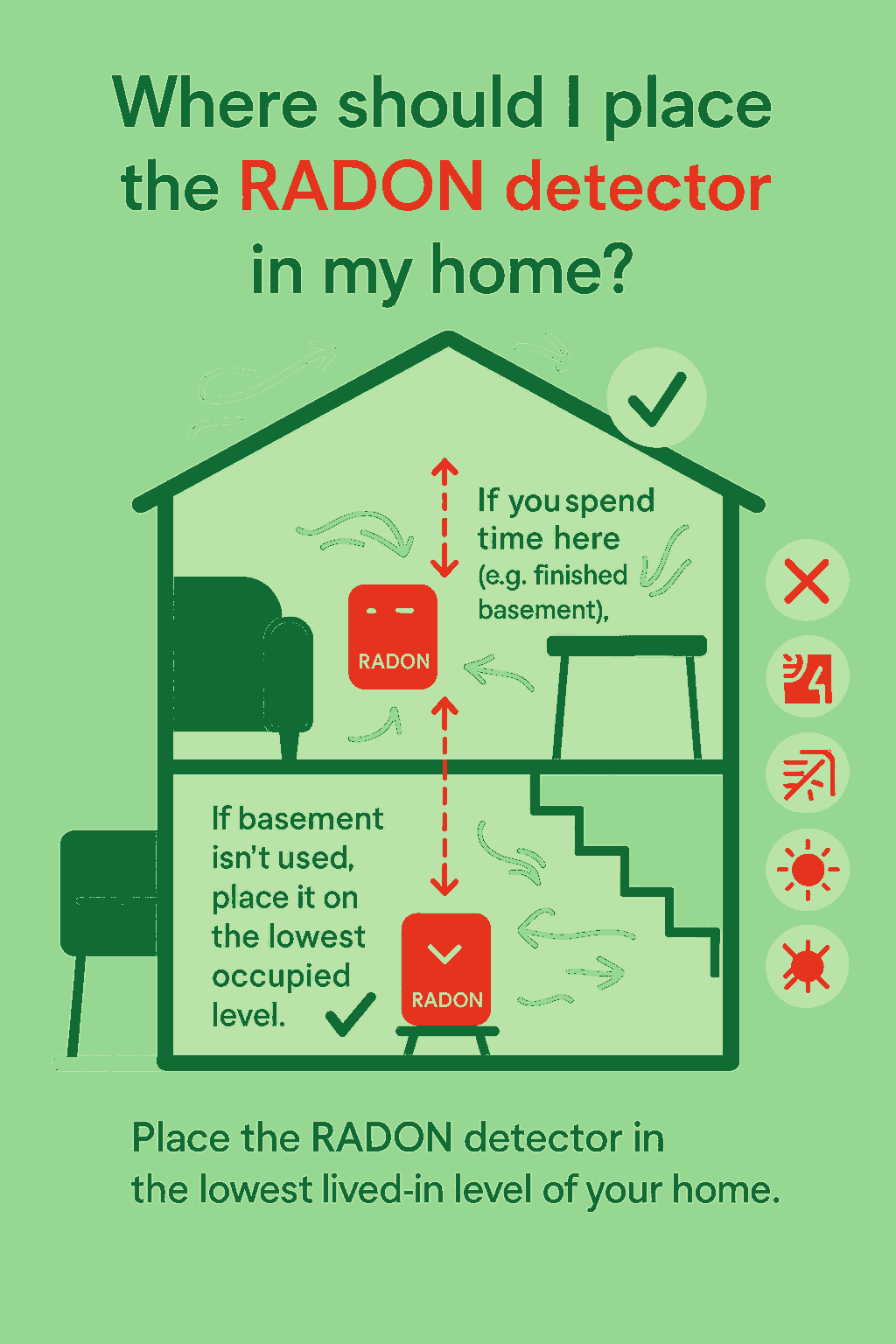
Place the RADON detector in the lowest lived-in level of your home - the area where you or your family spend more than four hours a day.
If you spend time in the basement (finished or regularly used), place the detector there.
If you don’t use the basement, place it on the lowest level you normally occupy, such as the main floor.
For the most accurate results, place the RADON detector in the lowest lived-in level of your home
-
the area where someone spends more than 4 hours a day.
This helps reflect the real exposure level for the people living in your home.
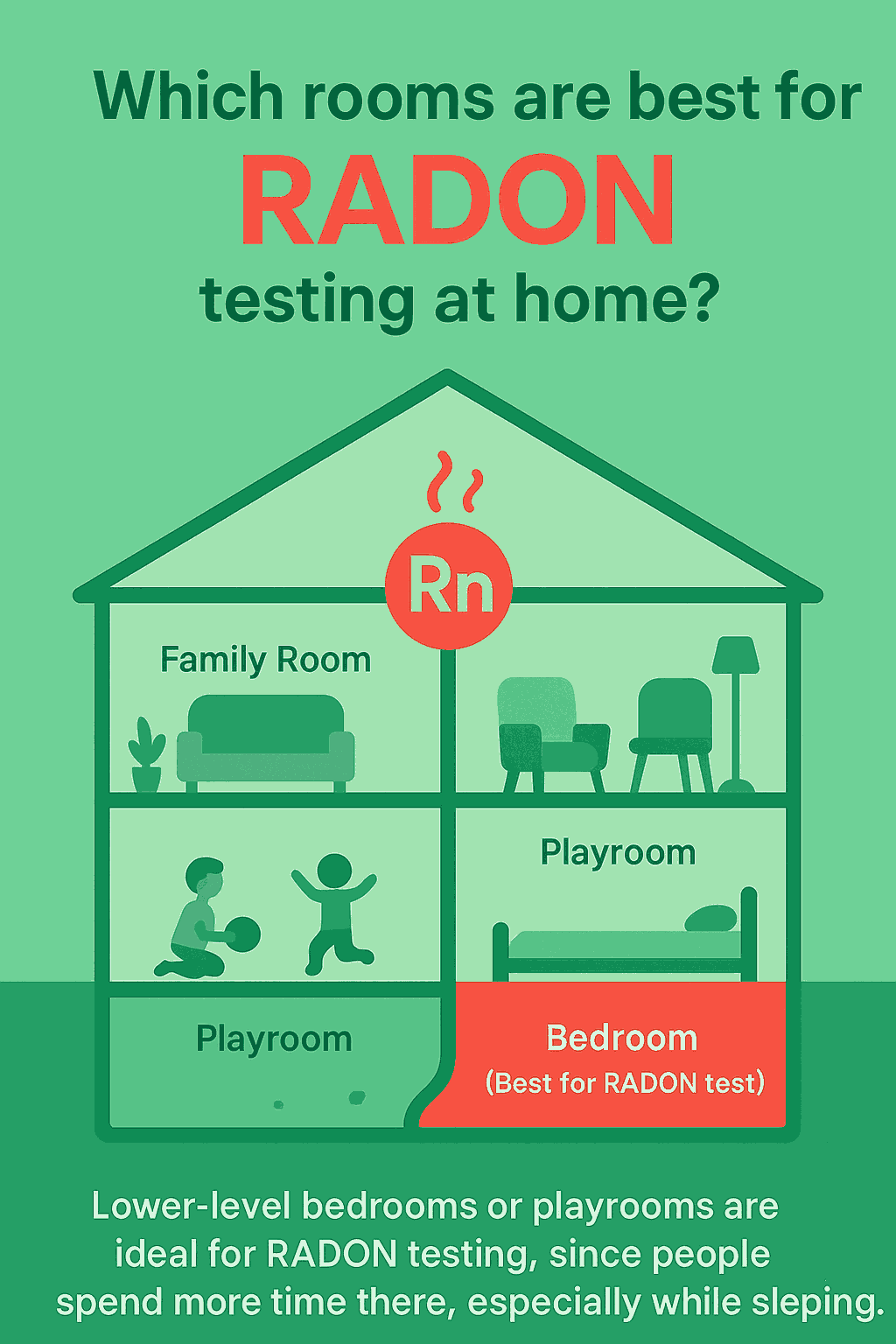
Good testing locations include family rooms, living rooms, dens, playrooms, and bedrooms - places where people spend the most time.
A bedroom on the lowest level is often the best choice, since people spend many hours there while sleeping.
If you have children, testing in lower-level bedrooms or play areas is also recommended.
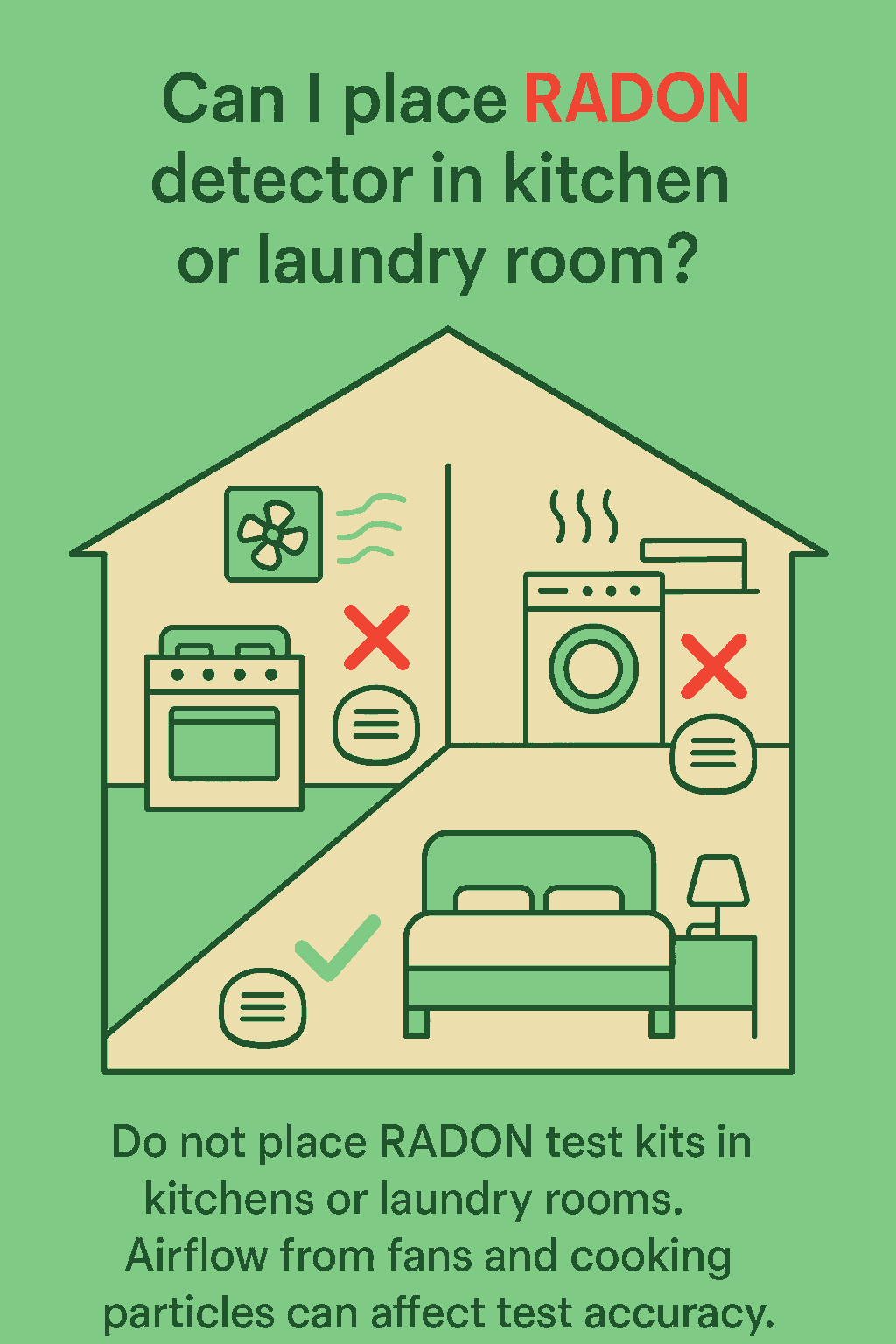
No. Kitchens and laundry rooms are not recommended for RADON testing.
Air movement from exhaust fans and particles from cooking or washing can interfere with the accuracy of some testing devices.
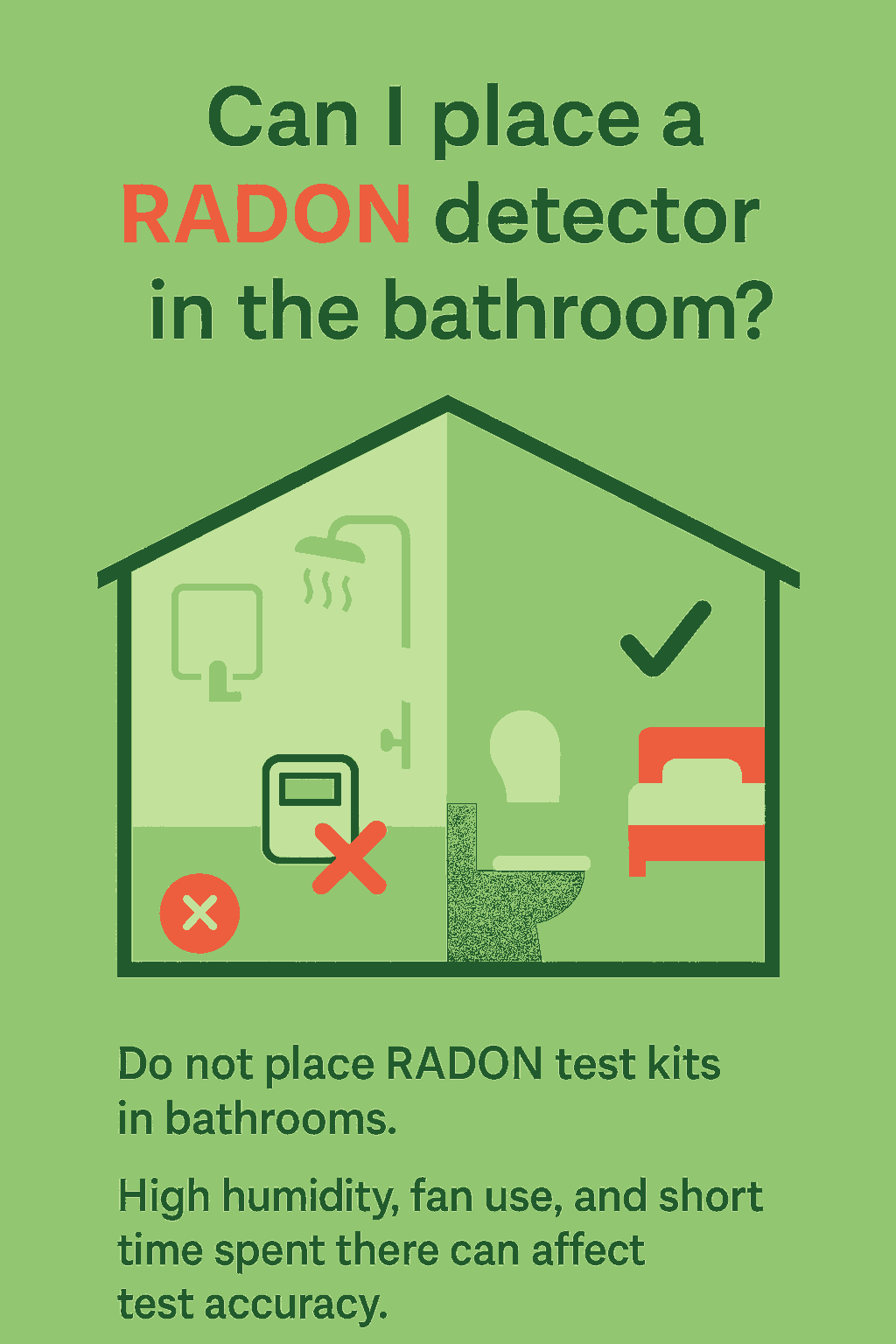
No. Bathrooms are not suitable for RADON testing.
People spend very little time there, and high humidity or exhaust fan use can temporarily change radon levels or affect the accuracy of some testing devices.
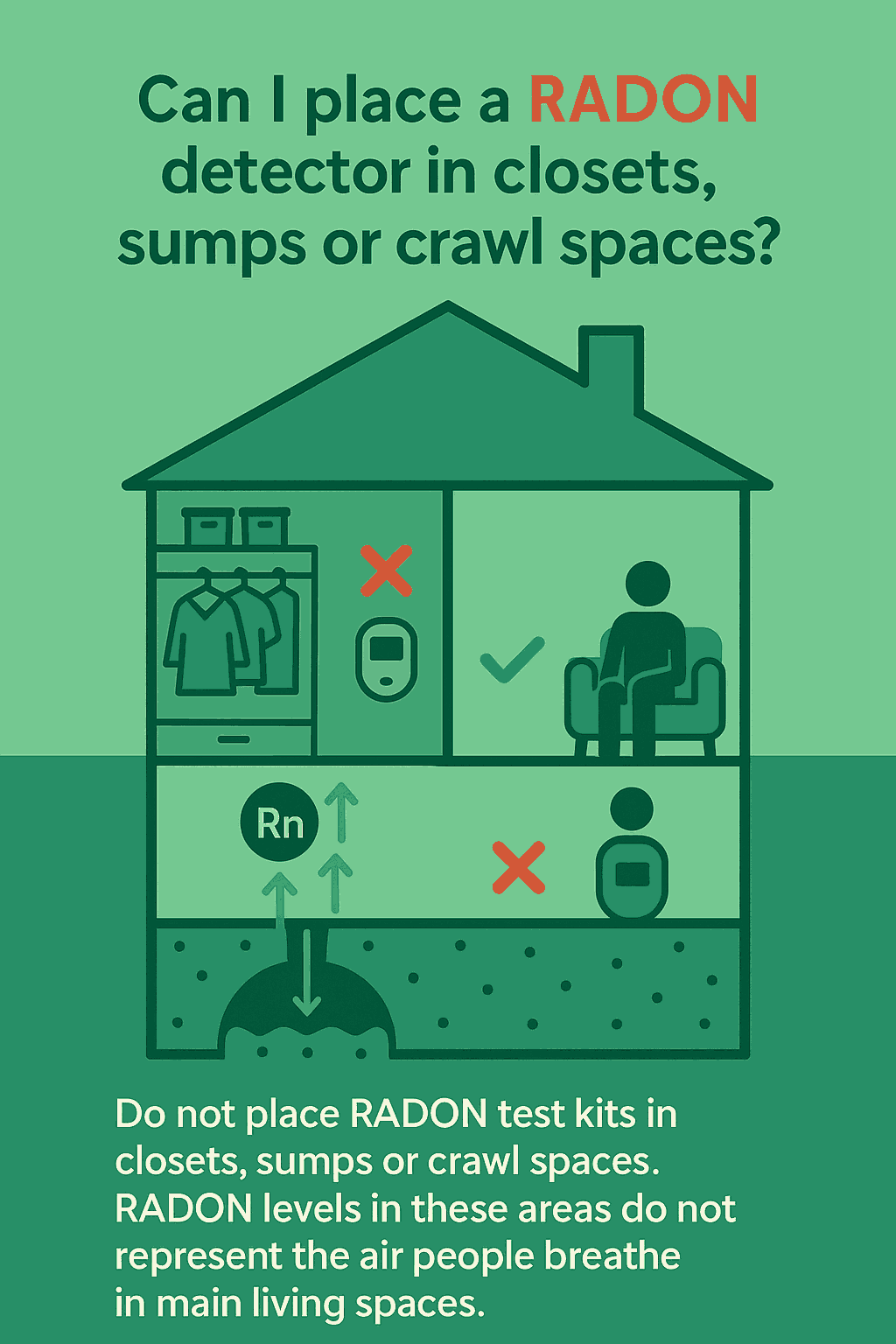
No. Closets, cupboards, sumps, crawl spaces or small foundation nooks are not good locations.
RADON levels in these areas don’t represent the air people actually breathe in the main living spaces of your home.
Avoid placing RADON test devices near air currents or heat sources. Do not set them near vents, fans, doors, or windows where air moves frequently. Also, avoid hot areas like over radiators, near fireplaces, or in direct sunlight, and keep them away from electrical equipment such as TVs, stereos, or speakers, as these can affect the accuracy of the measurement.
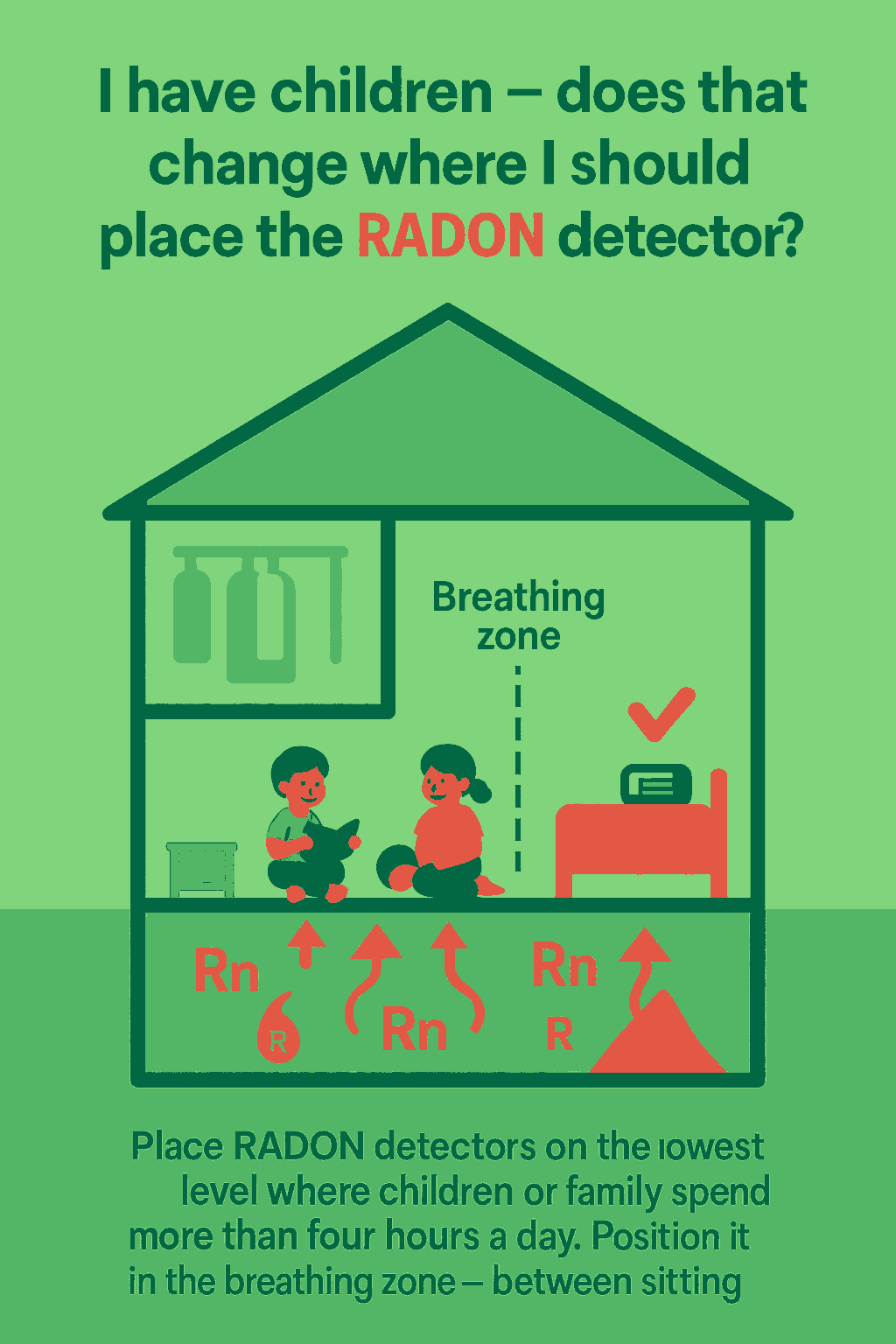
Yes. Place the detector on the lowest level where your children or family spend more than four hours a day.
It should be in the breathing zone - between head height while standing and sitting or lying down.
If possible, place it on a nightstand, table, or shelf near where they spend most of their time.