
Did you Know?
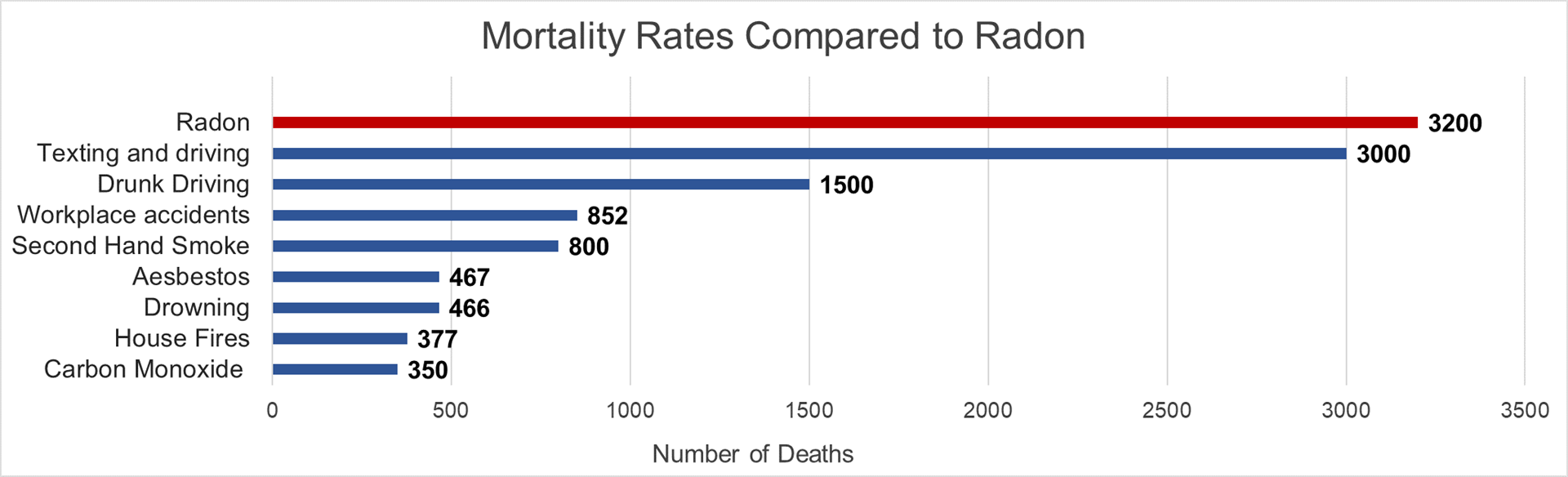
Over 3,000 Canadians die every year from radon-related lung cancer.
LUNG CANCER isn't just for SMOKERS
LUNG CANCER is PREVENTABLE
If you test your home for RADON,
you may be eligible to claim the testing cost on your income tax.

Do you wear a seatbelt?
Do you try to eat well?
Do you limit your exposure to pollutants?
If you protect your family from these risks, you must also consider your RADON exposure.
More Canadians die each year from radon-related lung cancer
than from texting-and-driving accidents.
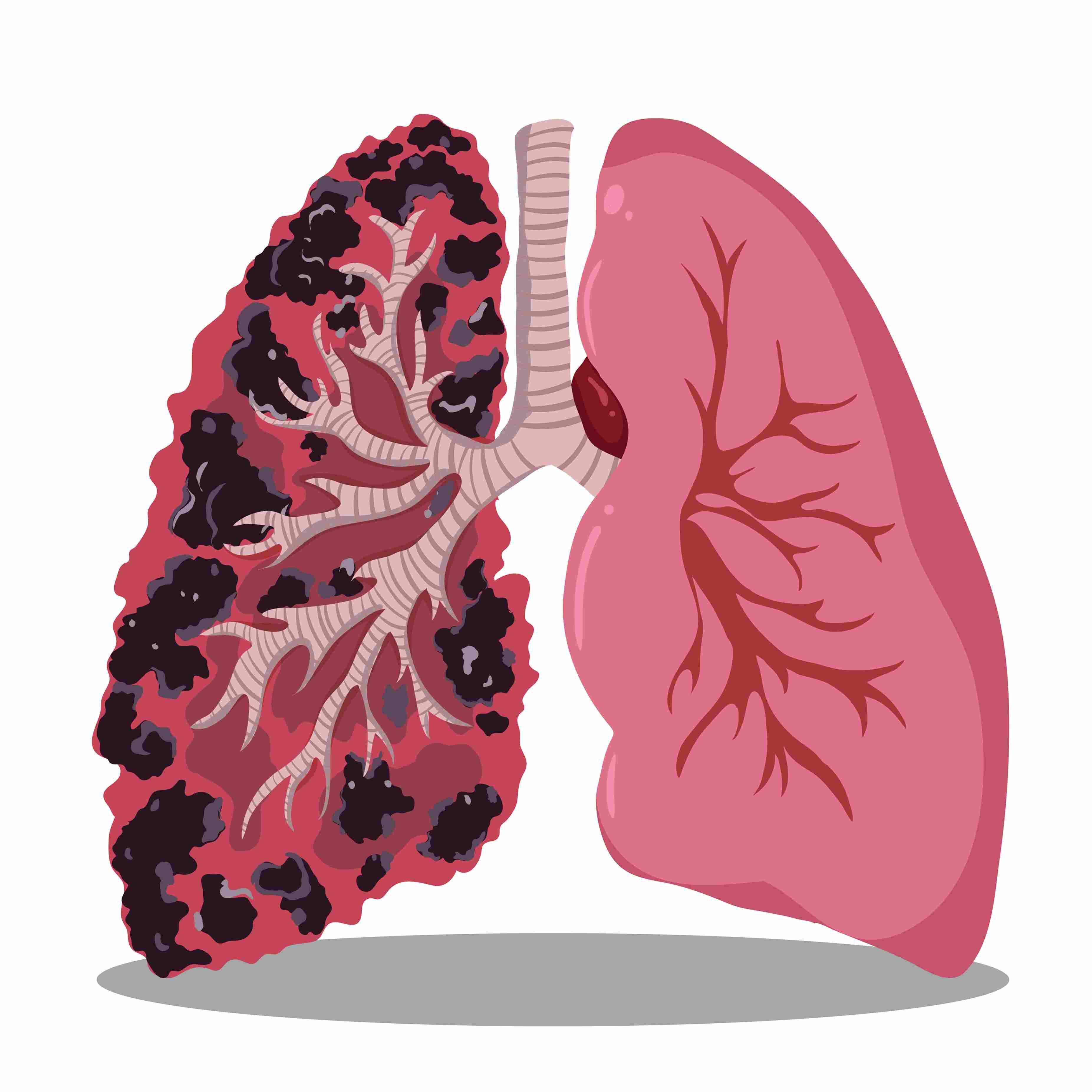
The link between smoking and lung cancer is well known; however, few people realize that non-smokers can also develop lung cancer.

A Statistics Canada survey found that only 6% of Canadians have tested their homes for RADON - yet testing for RADON is one of the easiest and most effective ways to prevent lung cancer.

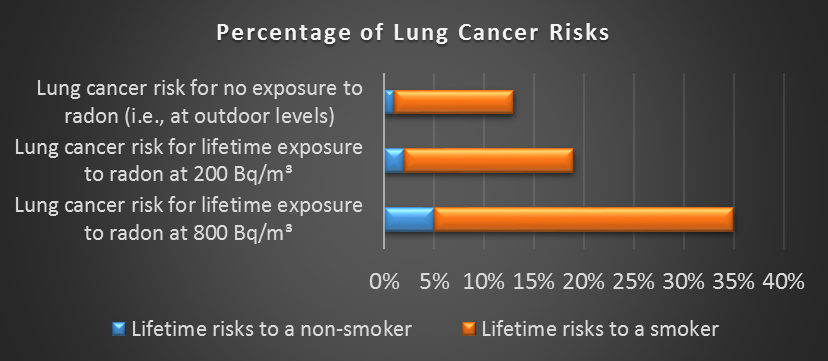
Smokers need to reduce their RADON exposure, too.
If you smoke, you can lower your risk of lung cancer by reducing your RADON exposure.
The combined effect of smoking and high RADON levels greatly increases your risk of lung cancer compared with smoking alone.
KNOW YOUR RADON LEVEL
 Test for RADON
Order a test kit yourself - or contact us for a professional RADON test with inspection.
Start a test in your home.
Choose either a Short-Term Test (more than 3 days and less than 90 days) or a Long-Term Test (more than 3 months and less than 12 months).
If you test your home and discover high RADON levels, we can fix the problem.

A Healthy Home is a mitigated home!
Effective. Efficient. Essential. - Install a RADON Mitigation System today.
RADON levels can be significantly reduced through mitigation.
The most effective method is Active Soil Depressurization (ASD).
An ASD system not only reduces RADON levels, but also:
- Lowers humidity in the basement
- Reduces other soil gases
- Decreases the need for a dehumidifier
- Improves indoor air quality and freshness
RADON Test and Your Income Tax
If you test your home for RADON, you may be able to claim the cost of the test on your income tax if you claim “work-space-in-the-home expenses” or are self-employed.

|
The Canada Revenue Agency (CRA) has confirmed that an employee (salaried or commission) may deduct a portion of the cost of RADON testing - for example, a RADON test kit or the services of a RADON measurement professional - as a work-space-in-the-home expense.
However, if RADON mitigation is required, the cost of the mitigation system (including equipment and installation) cannot be deducted, as it is considered a capital expense. |
Download the CRA ruling letter here.